










In the hierarchy of gym exercises, few movements carry the same level of polarizing controversy as the behind-the-neck press. To some, it is the ultimate "shoulder killer," a relic of the golden era of bodybuilding that belongs in the scrapheap of fitness history. To others, it remains a foundational, albeit advanced, movement for carving out boulder-like deltoids and fostering elite overhead stability.
The behind-the-neck press has developed a "bad-boy" reputation for legitimate, biomechanical reasons. The "high-five" abduction—where the shoulder is externally rotated behind the head—places the glenohumeral joint in a position of significant vulnerability. Because of this, the exercise is frequently relegated to the "never do it" category by physical therapists and trainers faster than one can say "rotator cuff tear." However, dismissing the move entirely ignores a crucial nuance: the difference between a dangerous exercise and an exercise performed by someone who lacks the prerequisite mobility to execute it safely.
The Anatomy of the Controversy: Main Facts
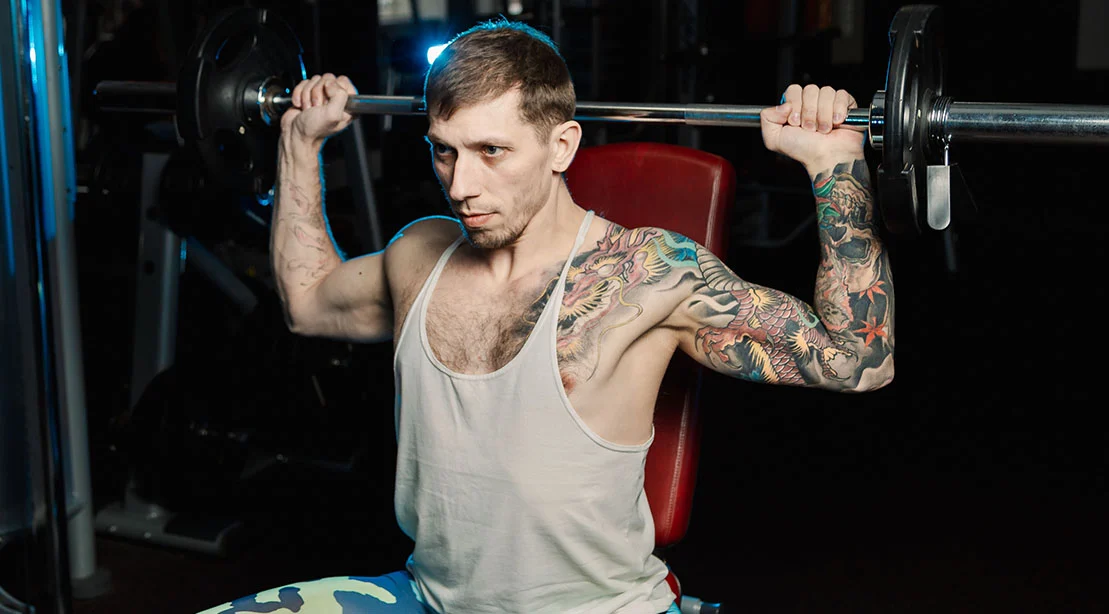
The core of the issue lies in the anatomical demand of the movement. Unlike a standard military press (front press), where the barbell travels in a path that aligns with the natural mechanics of the scapular plane, the behind-the-neck press forces the shoulder into extreme external rotation.
When a lifter presses from behind the neck, they require a high degree of thoracic extension and scapular upward rotation. If a lifter lacks these qualities, they often compensate by hyperextending the lumbar spine or jutting the head forward. This compensation pattern is where the risk-to-reward ratio begins to tilt heavily toward risk.
As strength coach Matt Wenning of Wenning Strength notes, the shoulder is a joint that inherently sacrifices stability for the sake of mobility. When you force extreme external rotation under a heavy load, you are testing the structural integrity of the labrum and the rotator cuff. For those with poor overhead mechanics, this isn’t just a challenging lift; it is an injury waiting to happen.
A Chronological Shift: From Golden Era Staple to Gym Pariah
To understand why the behind-the-neck press is so heavily debated, one must look at its history. During the 1970s and 80s—the "Golden Era" of bodybuilding—the behind-the-neck press was a staple. Legends like Mike Mentzer championed the movement for its ability to isolate the lateral and posterior heads of the deltoids. It was viewed as a rite of passage for anyone wanting to achieve the coveted "capped" shoulder look.
However, as the fitness industry transitioned into the 1990s and 2000s, there was a shift toward "functional" training and injury prevention. Biomechanical studies began to highlight the impingement risks associated with behind-the-neck work. Suddenly, gym culture turned on the exercise. It became the poster child for "ego lifting"—a movement that looked cool, felt heavy, but arguably caused more long-term damage than it was worth.
Today, the exercise sits in a purgatory of sorts. It is rarely taught by mainstream personal trainers, yet it remains a clandestine favorite for those in the powerlifting and Olympic lifting communities who understand how to utilize it as a specialized, rather than general, tool.
Supporting Data: What Does the Science Say?
The scientific community offers a nuanced view that contradicts the "it’s inherently evil" narrative. While researchers have identified associations between the "high-five" position (external rotation and abduction) and anterior shoulder instability, correlation does not equate to causation.
A study published in the Journal of Strength and Conditioning Research compared the muscle activation patterns of front-loaded versus back-loaded overhead presses. The results were telling: the behind-the-neck press consistently demonstrated higher involvement of the medial and posterior deltoids. Conversely, front-loaded presses showed greater recruitment of the pectoralis major.
From a hypertrophy perspective, this data suggests that the behind-the-neck press provides a unique stimulus that cannot be replicated by front-pressing variations. Furthermore, research comparing barbell presses to machine presses highlights that the instability of a free-weight barbell requires greater motor unit recruitment, potentially leading to better long-term strength adaptations. The consensus, therefore, is that the movement is not "useless"; it is simply a high-precision tool that requires a high-precision user.
Professional Perspectives and Expert Commentary
Matt Wenning, a renowned strength expert, emphasizes that the primary failure of the behind-the-neck press is not the movement itself, but the lack of "technical ownership" by the athlete.
"The shoulder is already a complex, mobile joint," Wenning explains. "When you ask it to perform under extreme rotation and abduction, you are asking for perfect scapular rhythm. If the lifter lacks thoracic mobility or has poor scapular upward rotation, the shoulder capsule becomes the path of least resistance for that stress."
The expert view is that the behind-the-neck press should be treated as an advanced shoulder builder. It is not a beginner’s movement, nor is it a movement meant for high-repetition endurance sets. Coaches suggest that if a lifter chooses to incorporate this move, it should be done with strict tempo, lower volume, and absolute attention to the bar path—ensuring the elbows are tucked and the movement is controlled through the entire range of motion.
The Implications: Who Should—and Should Not—Include This Move
The decision to perform the behind-the-neck press carries significant implications for a lifter’s training longevity. It is a "selective lift," meaning it belongs in the programs of specific populations, not the general public.
The "Must-Avoid" List:
- Lifters with Pre-existing Impingement: If you have a history of rotator cuff issues or clinical shoulder instability, the behind-the-neck press is an unnecessary gamble.
- The Mobility-Challenged: If you cannot reach your arms fully overhead without your lower back arching, your thoracic spine is likely too stiff to handle the load behind the neck safely.
- The Ego-Lifter: If your primary goal is to add weight to the bar at the expense of technique, the behind-the-neck press will eventually catch up to you in the form of injury.
The "Candidate" List:
- Olympic Weightlifters: These athletes require specific strength in the "snatch" position. The behind-the-neck press is essential for building the stability needed to catch a heavy bar overhead.
- Advanced Bodybuilders: Those who have exhausted all other avenues for lateral and rear delt growth may find this movement provides the necessary "extra" stimulus.
- Athletes with High Overhead Demands: Throwers or overhead-sport athletes who possess the requisite mobility can use this lift to build strength in their sport-specific ranges.
The Verdict: A Tool, Not a Trap
Ultimately, the behind-the-neck press is a victim of its own reputation. It is frequently trashed because it is often performed incorrectly by people who have no business attempting it. When a lifter sees someone at the gym slamming a heavy bar behind their head with flared elbows and a struggling spine, it is easy to label the exercise as "evil."
However, in the hands of an athlete with the mobility to execute it properly and the discipline to treat it as an advanced stimulus rather than a heavy ego-lift, the behind-the-neck press remains one of the most effective ways to challenge the shoulders.
The takeaway for the modern lifter is clear: Do not treat this as a default exercise. Treat it as a conditional one. If your thoracic spine is mobile, your scapular control is dialed in, and your shoulders are healthy, the behind-the-neck press offers a unique hypertrophy stimulus and a level of overhead stability that few other movements can provide. If you cannot meet those prerequisites, there is absolutely no shame in sticking to front presses, landmine presses, and machine variations.
The behind-the-neck press is not a trap, but it is a test—and it is a test that the vast majority of lifters would be better off skipping. For the few who pass, however, the rewards in strength and development are undeniable.