









By Editorial Staff
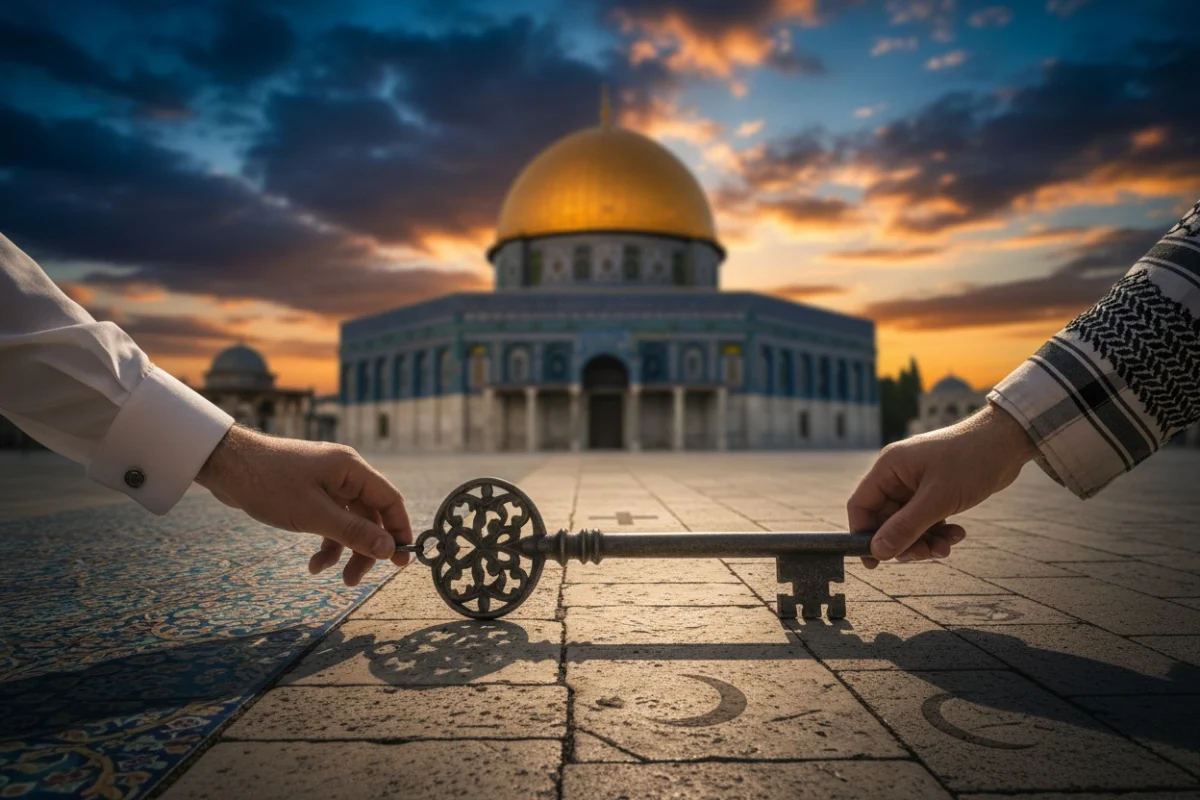
A seismic shift in the geopolitical landscape of the Middle East may be underway, as reports emerge of a clandestine initiative led by the United States and Israel to strip the Hashemite Kingdom of Jordan of its historic custodianship over the Al-Aqsa Mosque complex in Jerusalem. The move, if verified, would represent a radical departure from decades of international consensus and the fragile status quo that has governed the holy site since 1967.
According to a network of American, Jordanian, and Palestinian officials, alongside intelligence gathered from Western and Gulf Arab sources, the plan is being spearheaded by high-level figures within the Trump administration, including Jared Kushner and U.S. Ambassador to Israel Mike Huckabee. The proposal seeks to dismantle the Jordanian-backed Islamic Waqf—the body that has managed the site for over half a century—and replace it with a new, Israeli-sanctioned administrative entity.
The Architecture of the Proposed Shift
The core of the proposal, as detailed by sources speaking on condition of anonymity, is to redefine the Al-Aqsa compound from an exclusively Islamic site into a "multi-faith center." Under this new governance structure, the exclusive Muslim identity of the site would be effectively dissolved.
Core Provisions of the Plan:
- Equal Access and Prayer Rights: The plan would formally permit large-group Jewish prayer within the compound, a move currently prohibited under the status quo, which limits non-Muslims to visitation during specific hours.
- Administrative Oversight: Israel would gain substantial influence over the appointment of imams, preachers, and senior mosque officials. Furthermore, the plan includes a mechanism for Israeli review and approval of the content delivered during Friday sermons.
- Restructuring the Waqf: The Islamic Waqf’s administrative authority, which has been the bedrock of internal site management since the 1967 war, would be rendered obsolete, replaced by a body designed to manage the complex as a "landmark tourist attraction" serving all three Abrahamic faiths.
"Washington has been increasingly frustrated by Jordan’s insistence on its custodianship and its frequent diplomatic protests regarding Israeli actions at the site," noted one source familiar with the administration’s internal thinking. The proposed arrangement appears to be modeled loosely on the division of the Ibrahimi Mosque in Hebron, where following a 1994 massacre, the site was partitioned to accommodate both Jewish and Muslim worshipers.
A Chronology of the Status Quo and Its Erosion
To understand the gravity of these reports, one must look at the historical framework that has defined Jerusalem’s most sensitive site for over 50 years.
- 1924: The Hashemite custodianship of Islamic and Christian holy sites in Jerusalem is formalized under British Mandate rule, a role the Jordanian monarchy has guarded as a central pillar of its domestic and regional legitimacy.
- 1967: Following the Six-Day War, Israel occupies East Jerusalem. A delicate "status quo" is established: the Islamic Waqf maintains internal administrative control, while Israel retains external security responsibility.
- 1994: The Jordan-Israel Peace Treaty is signed. Article 9 explicitly recognizes the "special role" of the Hashemite Kingdom in Muslim holy shrines in Jerusalem.
- 2010s–Present: Far-right Israeli factions and police units have steadily increased their presence at the compound. Frequent incursions and the gradual restriction of Waqf authorities have led scholars to argue that the status quo is being dismantled in practice, even if not yet in law.
- 2025–2026: Reports surface of a formal U.S.-led policy paper, allegedly drafted under the direction of Ambassador Mike Huckabee, proposing the permanent end of Jordanian custodianship.
Regional Responses and Diplomatic Tensions
The disclosure of the proposal has sent shockwaves through regional capitals. While several nations—including Bahrain, Egypt, Morocco, and the United Arab Emirates—have been briefed on the U.S. proposal, the response has been largely one of concern or, in the case of Saudi Arabia, overt opposition.
The Saudi Position
Gulf Arab sources indicate that Riyadh views the Jordanian custodianship as a vital component of regional stability. Crown Prince Mohammed bin Salman has reportedly signaled that any unilateral move to alter the status of Al-Aqsa could have catastrophic consequences for the normalization processes currently being pursued in the region.
The Jordanian Stance
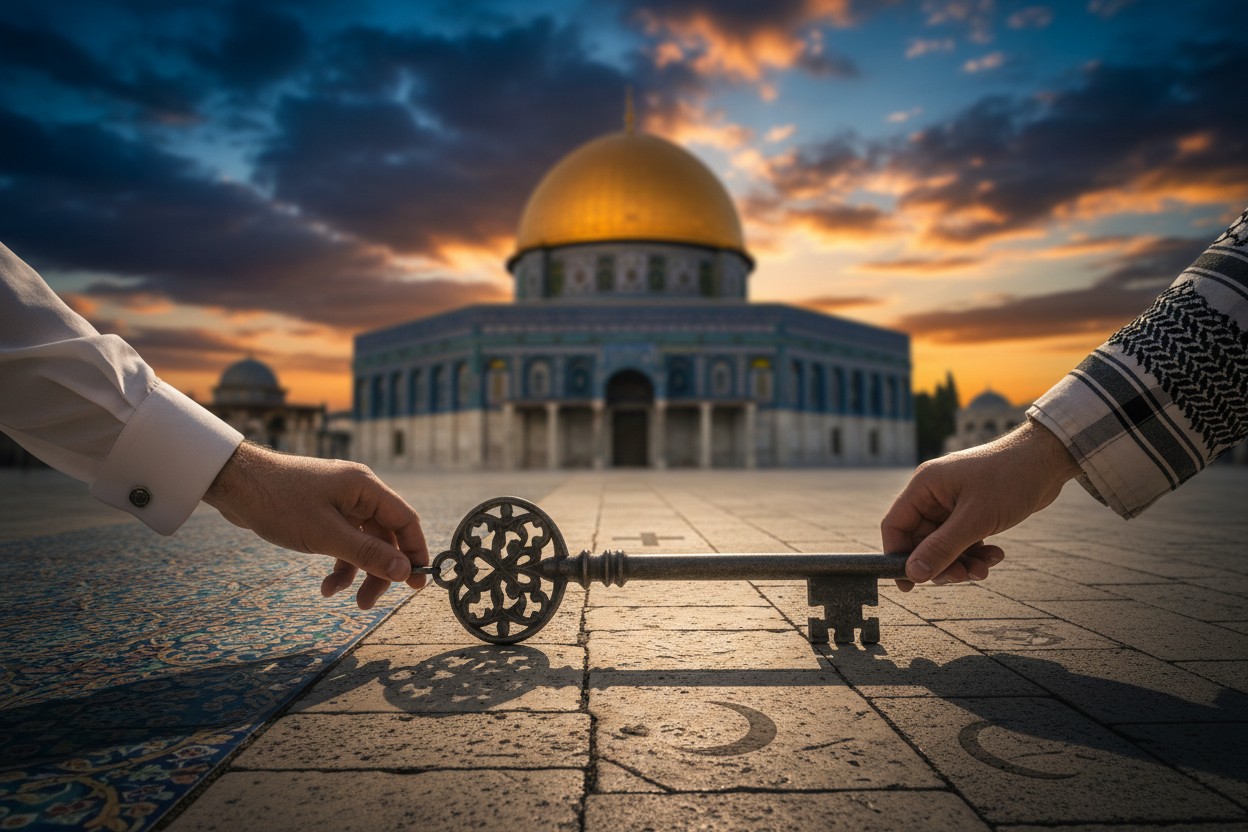
For Amman, the threat is existential. A Jordanian government official reiterated that the Hashemite role is not merely a diplomatic preference but a treaty-bound responsibility. "Jordan is actively coordinating with Palestinian, Arab, and international partners to preserve the site’s Arab, Islamic, and Christian identity," the official stated, emphasizing that any change would be a violation of international law.
Wider Muslim World Reactions
Turkish President Recep Tayyip Erdogan has been among the most vocal critics, calling for a unified front against what he describes as the "creeping annexation" of the holy site. The recent closures of the mosque during the holy month of Ramadan were cited by eight Muslim-majority nations as a "flagrant violation of international law," further hardening the stance of regional powers against the perceived U.S.-Israeli coordination.
Implications: A Potential Regional Flashpoint
The potential repercussions of the U.S. plan are profound. Analysts suggest that any attempt to alter the governance of Al-Aqsa could serve as a catalyst for widespread instability, potentially triggering violence that would transcend the borders of Israel and the Palestinian territories.
Religious and Political Legitimacy
The custodianship is not just a diplomatic arrangement; for the Hashemite monarchy, it is a foundation of its claim to religious legitimacy. Undermining this could destabilize the Jordanian government, a key Western ally in the Middle East. As Mustafa Abu Sway, deputy head of the Waqf council, noted, "The Hashemite custodianship is a cornerstone for stability. Undermining it is tantamount to undermining the very principles of peace."
Uncertainty for Christian Holy Sites
The report also highlights a troubling ambiguity regarding Christian holy sites in Jerusalem, such as the Church of the Holy Sepulchre, which are also under Jordanian protection. If the U.S. successfully facilitates a change in the management of Al-Aqsa, it sets a dangerous precedent for the status of Christian sites, which have long relied on the existing treaty-based protections to remain shielded from political maneuvering.
The Role of U.S. Foreign Policy
The involvement of Ambassador Mike Huckabee—a long-time proponent of the Israeli settlement movement and a staunch Evangelical advocate—has been noted as a significant driver of this policy shift. Critics argue that the U.S. is moving away from the role of a mediator to that of a partisan actor, following a pattern established by the Trump administration’s previous decisions to move the U.S. Embassy to Jerusalem and recognize Israeli sovereignty over the Golan Heights.
Official Denial and the Road Ahead
In the wake of these reports, the U.S. State Department issued a formal denial, labeling the claims that Washington is seeking to terminate Jordan’s custodianship as "totally false." However, observers point out that the administrative pressure on the Waqf has been steadily mounting since the change in U.S. diplomatic personnel last year.
As the situation develops, the international community faces a critical juncture. The status quo at Al-Aqsa has historically served as a fragile dam against religious conflict. If that dam is breached through unilateral political engineering, the resulting fallout may redefine the Middle East for generations to come. The coming months will likely see intense diplomatic maneuvering as Jordan and its allies attempt to reaffirm the existing treaties and prevent a unilateral restructuring of one of the world’s most contested and sacred sites.