









Introduction
As the World Health Organization (WHO) officially declared the Ebola outbreak in the Democratic Republic of the Congo (DRC) and Uganda a Public Health Emergency of International Concern (PHEIC) on May 16, 2026, the international community finds itself at a familiar, yet evolving, crossroads. The current crisis, characterized by the aggressive Bundibugyo strain, has once again exposed the fragility of traditional healthcare systems in conflict-prone regions. However, unlike previous epidemics, this response is unfolding in an era where digital health infrastructure, artificial intelligence (AI), and remote diagnostic tools are transitioning from supplementary luxuries to essential pillars of pandemic preparedness.
As healthcare systems grapple with the dual burden of infectious disease surges and geopolitical instability, the integration of digital health is no longer a matter of technological novelty—it is a matter of survival.
The Escalating Crisis: A Chronology of the 2026 Ebola Outbreak
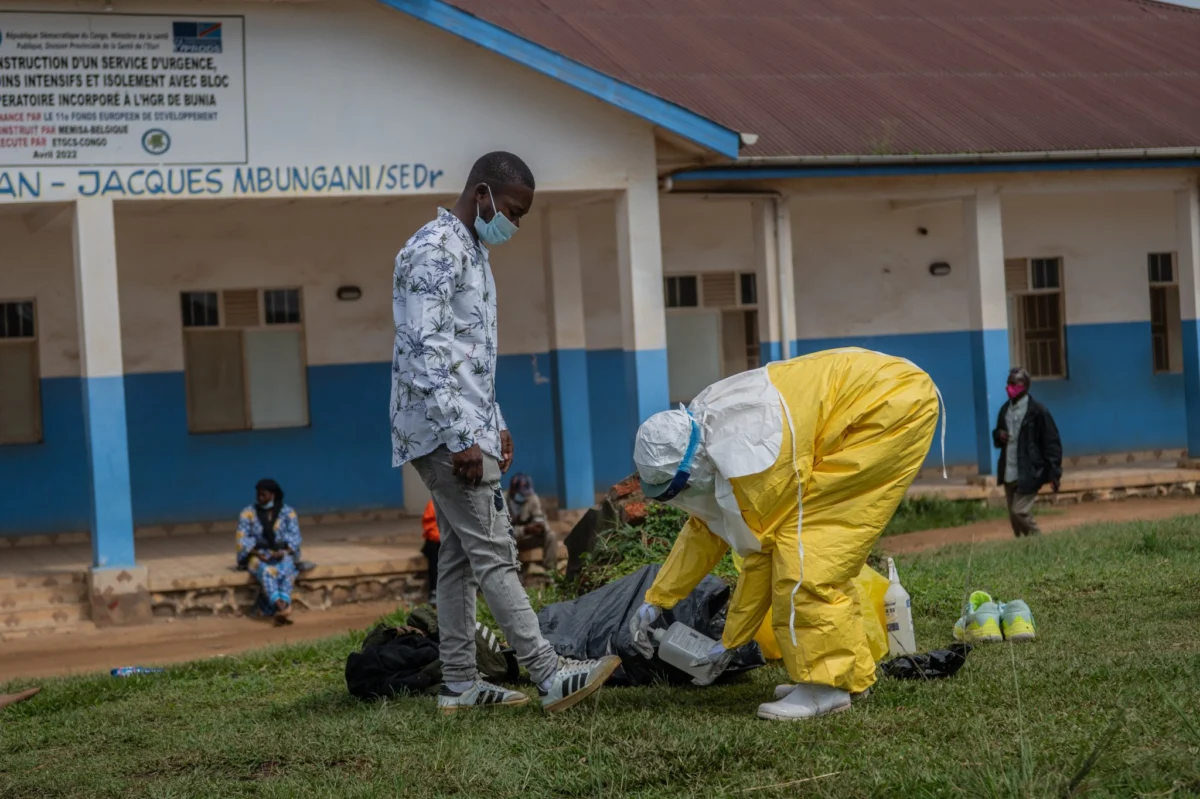
The current outbreak has moved with alarming speed. Since its initial detection, the virus has thrived in the chaotic intersection of displacement and limited medical resources.
- Mid-May 2026: The WHO formally designates the outbreak a PHEIC as cases begin to cross international borders between the DRC and Uganda.
- Late May 2026: The death toll reaches 130, with confirmed and suspected cases exceeding 500. Dr. Tedros Adhanom Ghebreyesus, Director-General of the WHO, highlights that the "perfect storm" of armed conflict and forced population displacement is effectively paralyzing traditional containment efforts.
- Current Status: Containment remains difficult as health workers struggle to reach remote areas where infrastructure has been dismantled by conflict.
This chronology is mirrored by concurrent concerns regarding other pathogens, such as the global hantavirus outbreak, which has prompted health ministries worldwide to re-evaluate the resilience of their disease surveillance mechanisms.
Supporting Data: The Case for Digital Intervention
The pivot toward digital health is backed by a growing body of evidence. A comprehensive systematic review published in 2025 emphasized that telehealth is not merely a convenience but a vital tool for infection control. By facilitating remote triage, telehealth platforms significantly reduce the "in-person exposure" risk for both patients and clinicians.
Preserving Capacity
During an epidemic, hospital wards are quickly overwhelmed. Digital health solutions allow for the "de-hospitalization" of stable patients, preserving critical beds and protective equipment (PPE) for those requiring intensive care.
Economic and Environmental Efficiency
Beyond the immediate emergency, the environmental and economic benefits are quantifiable. A 2024 retrospective study revealed that the widespread adoption of telemedicine during the early 2020s resulted in significant reductions in carbon emissions and fuel consumption. In 2026, as geopolitical tensions contribute to volatile fuel prices and supply chain disruptions, the ability to deliver care without moving people or physical resources is a strategic advantage. Virtual care effectively decouples medical service delivery from the limitations of physical transportation infrastructure.
AI Surveillance: The New Digital Epidemiologist
While telehealth handles the delivery of care, AI-powered disease surveillance is transforming how we detect the next wave. The era of waiting for manual reports to crawl through bureaucratic channels is ending; in its place is a landscape of real-time data ingestion.
Predictive Analytics and Early Warning
Modern surveillance systems now leverage:
- Social Media Monitoring: Identifying spikes in symptoms via linguistic patterns and community reporting.
- Wearable Integration: Utilizing real-time biometric data from population segments to detect early physiological shifts associated with viral infection.
- Outbreak Forecasting: Utilizing machine learning models to map the movement of displaced populations, thereby predicting where the next cluster of cases will likely emerge.
In a 2025 viewpoint, researchers argued that integrating these data streams into a unified dashboard could provide a "command center" view of an epidemic. This is particularly vital in lower-resource settings where the traditional "shoe-leather epidemiology"—sending investigators door-to-door—is too slow to keep pace with the spread of the Bundibugyo strain.
Official Responses and the Governance Gap
The WHO and various national health agencies have acknowledged that while the tools exist, the "infrastructure readiness" is currently insufficient. Dr. Tedros has repeatedly called for a more robust international framework to share digital resources.
However, a major point of contention remains the degradation of international cooperation. The dissolution of key pandemic response offices in the United States and the subsequent political friction regarding international health funding have created a "governance gap." When global surveillance systems are underfunded, the first line of defense is weakened. Experts note that the withdrawal of major donor nations from global health initiatives risks creating "digital silos," where data cannot be shared across borders due to lack of interoperability standards or regulatory alignment.
Implications: The Path Forward
1. Building Interoperability
For digital health to be effective, systems must talk to one another. Currently, telehealth platforms often exist in isolation from public health databases. Future preparedness strategies must mandate that all emergency response software uses standardized, open-access protocols to ensure that data captured in a rural village can inform global policy decisions in real-time.
2. The Human Element: Digital Literacy and Culture
Technology is only as effective as its implementation. In the DRC and Uganda, successful digital health deployment requires "culturally appropriate implementation." This means moving beyond English-language interfaces and high-bandwidth requirements. It requires localized, low-bandwidth, mobile-first solutions that respect the digital literacy levels of the communities being served.
3. Addressing the Infrastructure Deficit
The most sophisticated AI model in the world is useless without a reliable power grid or internet connection. Global health policy must shift its focus toward "hard" infrastructure in volatile regions. Solar-powered, offline-capable medical devices and community-level digital hubs should be prioritized as essential medical infrastructure, equivalent to hospitals and labs.
4. Cybersecurity and Ethics
As we centralize health data to improve surveillance, we also create massive targets for cyberattacks. The "digitalization" of an epidemic response necessitates a parallel investment in cybersecurity. Protecting patient privacy during a conflict is not just an ethical requirement; it is a security necessity to ensure community trust in health interventions.
Conclusion
The Ebola outbreak of 2026 serves as a sobering reminder that infectious diseases are not a relic of the past but a permanent fixture of our interconnected future. The transition to a digital-first response is not merely a technical upgrade; it is a fundamental shift in how we define public health capacity.
As global health organizations and governments assess the current crisis, the lesson is clear: if we do not invest in a resilient, interoperable, and AI-augmented digital health infrastructure during the periods of relative calm, we will be forced to improvise during the next storm. The tools for a more effective, efficient, and equitable response are within our reach. The challenge is no longer technological—it is political, financial, and organizational. To succeed, we must move beyond the dissolution of institutional memory and commit to a sustained, global strategy that bridges the digital divide, ensuring that even the most remote corners of the world have access to the protective shield of modern medicine.
The digital frontier is open. The question is whether we have the collective will to inhabit it.