





In a landmark decision for emergency medicine and battlefield trauma care, the U.S. Food and Drug Administration (FDA) has granted licensure to Ezplaz Freeze Dried Plasma (FDP). This authorization marks a historic milestone as the first freeze-dried plasma product approved for use within the United States. Designed specifically for situations where traditional cold-chain logistics fail, Ezplaz promises to revolutionize how healthcare providers manage life-threatening hemorrhaging in remote, austere, and combat-heavy environments.
The product, developed by Vascular Solutions, LLC—a subsidiary of the medical technology giant Teleflex—represents the culmination of years of collaborative research between civilian regulators and military defense partners. By eliminating the requirement for specialized freezer storage, Ezplaz addresses a long-standing "unmet medical need" for patients far removed from the infrastructure of modern hospital blood banks.
Main Facts: What is Ezplaz and Why Does It Matter?
At its core, Ezplaz is a therapeutic breakthrough in transfusion medicine. It is derived from single units of fresh frozen plasma (FFP) and processed into a stable, powdered form.
The Product Profile
- Mechanism: Ezplaz is a freeze-dried biologic intended for the transfusion of adult patients.
- Target Indications: It is indicated for patients experiencing life-threatening bleeding, those requiring massive transfusion protocols, and patients undergoing anticoagulant therapy (such as warfarin) who suffer from acute hemorrhage.
- Strategic Blood Types: To ensure safety during the "golden hour" of trauma—before a patient’s specific blood type can be determined—Ezplaz is available in Group AB and Group A (low-titer anti-B) formats. These selections minimize the risk of adverse transfusion reactions in emergency settings.
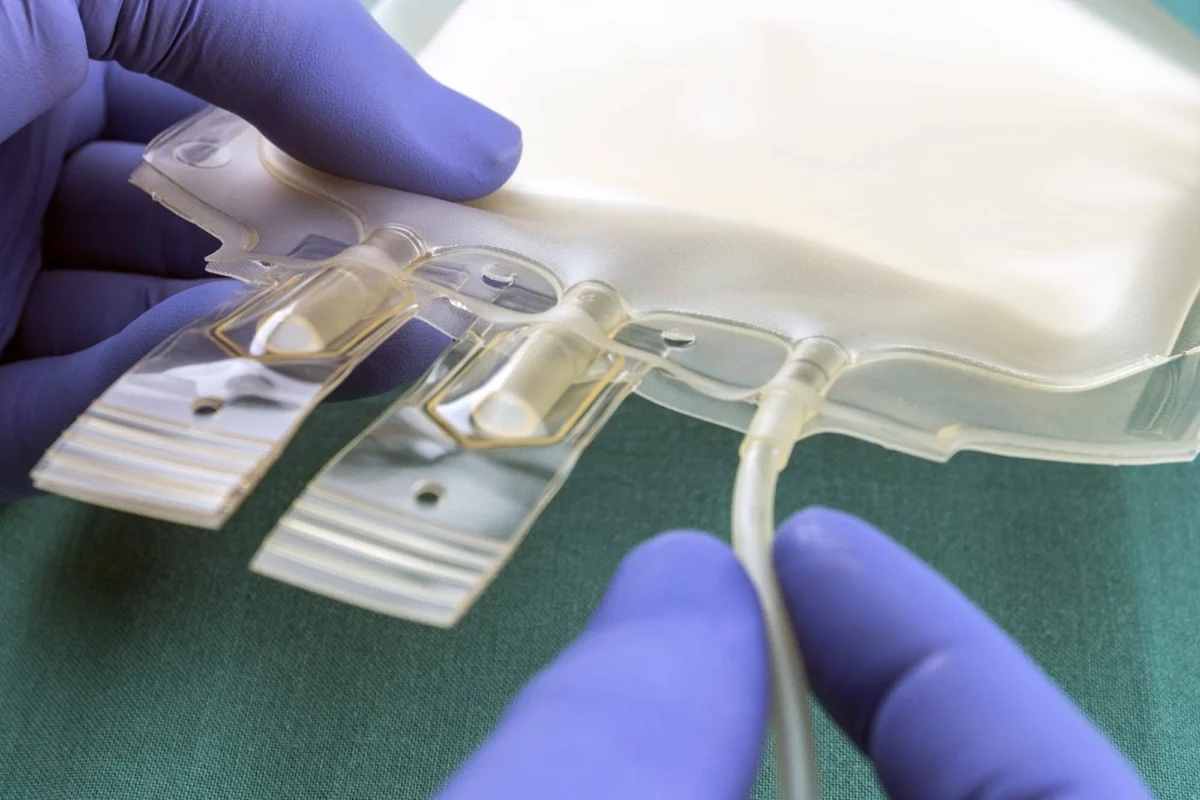
- Logistical Superiority: Unlike conventional plasma, which must be kept at freezing temperatures and subsequently thawed (a process that can take significant time), Ezplaz is room-temperature stable. It is packaged in a durable plastic bag, effectively removing the risks of glass breakage and the logistical burdens of cold-chain transport.
The kit is designed as a "total solution." Each unit is self-contained, including the freeze-dried plasma, a bag of sterile water for injection, a fluid transfer set, and the necessary blood transfusion apparatus.
Chronology: From Military Necessity to Regulatory Approval
The path to FDA licensure for Ezplaz was not a typical commercial development cycle; it was a mission-critical initiative fueled by the requirements of the Department of Defense (DoD).
- Pre-2017: The military identifies a critical gap in trauma care. During conflicts in Iraq and Afghanistan, the inability to transport frozen plasma to the point of injury resulted in higher mortality rates for soldiers suffering from hemorrhagic shock.
- 2017: The U.S. government enacts legislation authorizing a formalized partnership between the DoD and the FDA. This law was designed specifically to expedite the regulatory review of medical products intended to treat life-threatening conditions faced by military personnel.
- 2019: The FDA formalizes its commitment to this field by issuing comprehensive guidance to manufacturers, outlining the rigorous scientific standards required to develop and validate dried plasma products for transfusion.
- 2024 (The Approval): Following extensive clinical data review and manufacturing assessment, the FDA grants a biologics license to Vascular Solutions, LLC, signaling that the product meets all federal standards for safety, purity, and potency.
This timeline reflects a strategic shift in regulatory philosophy, moving from a purely passive review process to an active, collaborative effort to bring life-saving technology to the front lines.
Supporting Data and Technical Specifications
The regulatory approval of Ezplaz was predicated on a comprehensive analysis of its clinical safety and functional efficacy. The FDA’s Center for Biologics Evaluation and Research (CBER) conducted a thorough evaluation of the product’s consistency compared to standard fresh frozen plasma.
Efficacy and Safety Profile
The FDA concluded that the benefits of Ezplaz outweigh the potential risks, finding its safety profile consistent with existing plasma products. The freeze-drying process—or lyophilization—preserves the essential clotting factors and proteins found in liquid plasma, ensuring that when the product is reconstituted with sterile water, it provides the same therapeutic coagulation support required for trauma patients.
Logistics and Deployment
The shift from glass to plastic packaging is a critical engineering improvement. In rugged environments—such as a helicopter medical evacuation (MEDEVAC), a search-and-rescue operation in mountainous terrain, or a disaster relief zone following a natural catastrophe—equipment is subject to extreme mechanical stress. The plastic container ensures the product remains sterile and intact even under physically demanding transit conditions.
The rapid reconstitution time is perhaps the most vital metric for clinicians. In cases of exsanguination (severe blood loss), every minute counts. By eliminating the thawing process, Ezplaz allows responders to initiate life-saving therapy immediately upon arrival at the patient’s side.
Official Responses: The Regulatory Perspective
The approval of Ezplaz was met with significant praise from both regulatory and medical leadership. The sentiment among high-level officials is that this product represents a synergy between innovation and the core mission of public health.
"Patients experiencing life-threatening bleeding in combat zones, disasters, rural settings, or other austere environments may now have faster access to plasma when conventional frozen plasma is unavailable," said Karim Mikhail, acting director of the Center for Biologics Evaluation and Research (CBER). He emphasized that this action serves a vital role in supporting military personnel who operate far from the traditional hospital infrastructure.
Dr. Anne Eder, director of the Office of Blood Research and Review, highlighted the rigorous nature of the review process: "This licensure demonstrates that innovation and rigorous scientific review can advance together, expanding treatment options and novel blood components while maintaining FDA’s standards for safety, purity, and potency."
The collaborative spirit of the project is underscored by the involvement of the Department of Defense, which viewed the development of a shelf-stable plasma as a high-priority national security objective.
Implications: The Future of Trauma Care
The introduction of Ezplaz into the medical market is expected to have far-reaching implications for emergency medicine.
1. Expanding the "Golden Hour"
In trauma medicine, the "Golden Hour" refers to the window of time following a traumatic injury during which there is the highest likelihood that prompt medical treatment will prevent death. By making plasma available in environments where refrigeration is impossible, the "Golden Hour" is effectively extended, potentially saving countless lives in remote regions.
2. A Paradigm Shift for Rural Health
While the product was developed with military use in mind, the civil sector stands to gain immensely. Rural hospitals and emergency medical services (EMS) that lack the capacity to maintain high-cost, frozen blood bank infrastructure can now keep a supply of Ezplaz on hand. This levels the playing field, ensuring that a patient in a rural community has access to the same life-saving plasma therapy as a patient in a major metropolitan trauma center.
3. Disaster Preparedness
Natural disasters often destroy power grids, rendering hospital freezers useless. Ezplaz provides a resilient alternative for disaster response teams, ensuring that critical care capabilities remain functional even when local infrastructure is completely compromised.
4. Important Clinical Considerations
While the approval is a monumental step forward, healthcare providers are cautioned to remain diligent. The FDA mandates that providers review all prescribing information thoroughly. As with any transfusion, there are inherent risks, including potential allergic reactions or transfusion-related acute lung injury (TRALI). The success of this product in the field will rely on proper training, storage protocols, and the continued vigilance of the medical teams who administer it.
Conclusion
The licensure of Ezplaz Freeze Dried Plasma is a testament to what can be achieved when scientific innovation is aligned with urgent, real-world needs. By bridging the gap between the laboratory and the battlefield, the FDA, the DoD, and Teleflex have provided a new, indispensable tool for the most critical of medical situations. As this product begins to populate the medical kits of military units and rural trauma centers, it marks a new chapter in the history of transfusion medicine—one where distance and lack of infrastructure are no longer barriers to survival.
The industry will be watching closely as Ezplaz moves into wide-scale deployment, setting a new benchmark for how we prepare for, and respond to, the most severe injuries imaginable.