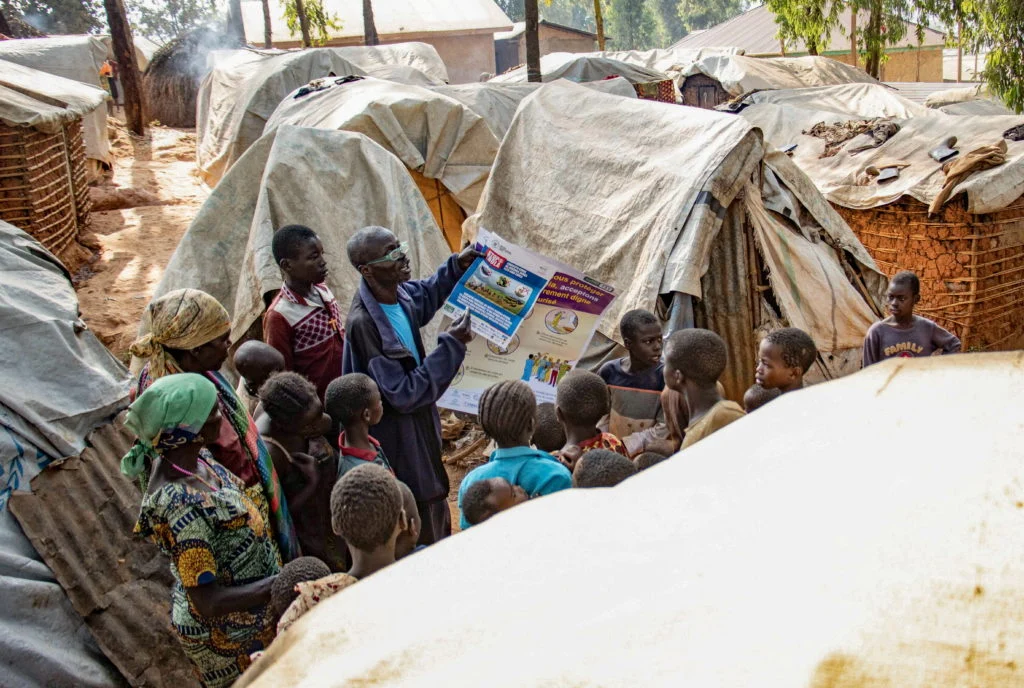
BUNIA, Democratic Republic of the Congo — The eastern provinces of the Democratic Republic of the Congo (DRC) are currently trapped in a harrowing, multi-layered catastrophe. As the region grapples with the fallout of long-standing civil conflict and the exploitation of its mineral-rich soil, a new, virulent threat has emerged: the fastest-growing Ebola outbreak in recorded history.
Carl Skau, acting executive director of the United Nations World Food Program (WFP), issued a stark warning this week from the heart of the crisis in Ituri province. Describing the situation as a "crisis on top of a crisis," Skau highlighted how the epidemic is not merely a health emergency, but a profound humanitarian collapse that is pushing millions of already vulnerable people into the depths of starvation.
Main Facts: The Anatomy of a Dual Emergency
The situation in eastern Congo has reached a breaking point. For years, the region has been defined by insecurity, with nearly 10 million people facing emergency levels of food insecurity. Now, the rapid spread of the Ebola virus has shuttered markets, severed supply chains, and forced the abandonment of critical agricultural land.
The Ebola outbreak, which was officially declared on May 15, has exhibited a terrifying velocity. In just over two months, the death toll surpassed 1,000. For context, during the 2014-2016 West Africa outbreak—previously considered the deadliest in history—it took approximately eight months to reach that same threshold.
According to the WFP, over 2.7 million people in the 48 health zones directly impacted by the virus are facing acute food insecurity. Of that number, 628,000 are currently living in emergency conditions, where the lack of food is not just a chronic hardship, but an immediate threat to survival.
Chronology of the Surge
To understand the severity of the current crisis, one must look at the timeline of the outbreak’s escalation. Since its identification in mid-May, the virus has moved through the eastern provinces with unprecedented speed.
- May 15: The government of the DRC officially declares an Ebola outbreak. The response is immediately hampered by pre-existing regional instability and a lack of infrastructure.
- Late June: Epidemiologists note that the rate of infection is significantly higher than previous regional outbreaks, with the virus jumping across geographic boundaries despite movement restrictions.
- Late July: The death toll reaches 1,000. International health organizations scramble to re-evaluate their projections, as the virus spreads from two provinces into four.
- August: WFP officials, including Carl Skau and U.N. Ebola coordinator Julien Harneis, conduct site visits to Ituri to assess the secondary impact of the disease. They discover that for every patient treated, dozens of families are falling deeper into poverty due to the collapse of local trade.
Supporting Data: The Cost of Underfunding
The humanitarian response is currently operating in a state of chronic deficit. The United Nations’ $2.1 billion humanitarian appeal for the Congo is only 45% funded. This shortfall has had direct, lethal consequences for aid delivery.
The WFP, which provided food assistance to 3 million people in the DRC last year, has been forced to slash its operations to just 1 million beneficiaries this year. The disparity between the need and the reality is stark:
- 1,487: Total confirmed deaths from the current Ebola outbreak.
- 3,360: Total confirmed cases of the virus.
- 50: The number of people succumbing to the virus in a single 24-hour period, according to recent field reports.
- 160,000: Hot meals delivered by the WFP to patients and frontline workers in 17 treatment centers, a drop in the ocean compared to the millions in need.
The virus itself presents a unique medical challenge. Unlike the strains seen in past outbreaks, the Bundibugyo virus responsible for this surge currently lacks approved vaccines or highly effective treatments. While vaccine trials are underway, officials estimate that a viable, deployable vaccine remains months away from being ready for mass distribution.
Official Responses and the Challenge of Trust
The United Nations, working in conjunction with local authorities and community leaders, is attempting to bridge the gap between medical responders and the civilian population. A significant hurdle remains: widespread distrust of health facilities.
"Our number one message is that this situation requires much, much more attention," Skau told a video conference with U.N. correspondents. "The lack of resources is not just preventing us from treating the sick; it is preventing us from feeding the vulnerable."
Julien Harneis, the U.N. senior Ebola coordinator, noted that the strategy is shifting toward community-based engagement. "We are working with local workers to build trust so that people with symptoms will seek treatment quickly," Harneis explained. "If they do, they have a very good chance of surviving. But if they stay away because they are afraid, or because they are too busy trying to find their next meal, we lose them."
Safety concerns are not unfounded. There have been more than 12 documented attacks on health facilities and medical personnel. These incidents have not only hindered the medical response but have also created "no-go zones" for aid workers, further isolating communities that are already cut off from supply chains.
Implications: The Human Cost in the Fields
In the mining town of Mongbwalu, 69 kilometers from the provincial capital of Bunia, the data points take on human faces. For families like that of 40-year-old Kahambu Deborah, a mother of six, the crisis is a daily struggle for basic survival.
"Sometimes, because of the insecurity, we can’t even go to our fields, and our children are suffering as a result," Deborah says. Her experience is representative of thousands of families who are trapped between the threat of the virus and the threat of starvation.
Dr. Richard Lokudu, director-general of the Mongbwalu General Hospital, reports a visible rise in malnutrition cases. "We are seeing more malnourished children coming into the hospital than we did before the outbreak," he noted. "Even at the Ebola treatment center, we see the signs of hunger, which weakens the immune system and makes the fight against the virus even harder."
The economic fallout is also compounding the misery. Border closures, movement restrictions, and the banning of large gatherings—all necessary to curb the spread of the virus—have effectively destroyed the local micro-economies. Prices for staple food items and fuel have surged, placing them out of reach for the average citizen.
The Road Ahead
The international community stands at a crossroads. As the WFP and other U.N. agencies look to revise their humanitarian appeals upward to account for the expanding geography of the outbreak, the success of these efforts hinges on two pillars: funding and access.
Without a significant increase in donor support, the WFP warns that the humanitarian footprint in eastern Congo will continue to shrink, leaving millions more to face the dual threats of a lethal virus and extreme hunger. The "fastest-growing" nature of this outbreak is a signal that traditional response mechanisms are insufficient.
"The World Food Program needs resources and donors to step up so that we can do more to alleviate the pressures on the people here in Ituri," Skau concluded. For the residents of eastern Congo, the time for international debate is running out. Every day that passes without adequate resources is a day where the virus gains ground, and the hunger crisis deepens. The goal of the international community must be to stop the virus before it consumes the entire region, ensuring that the people of the Congo are not left to face this "crisis on top of a crisis" alone.