











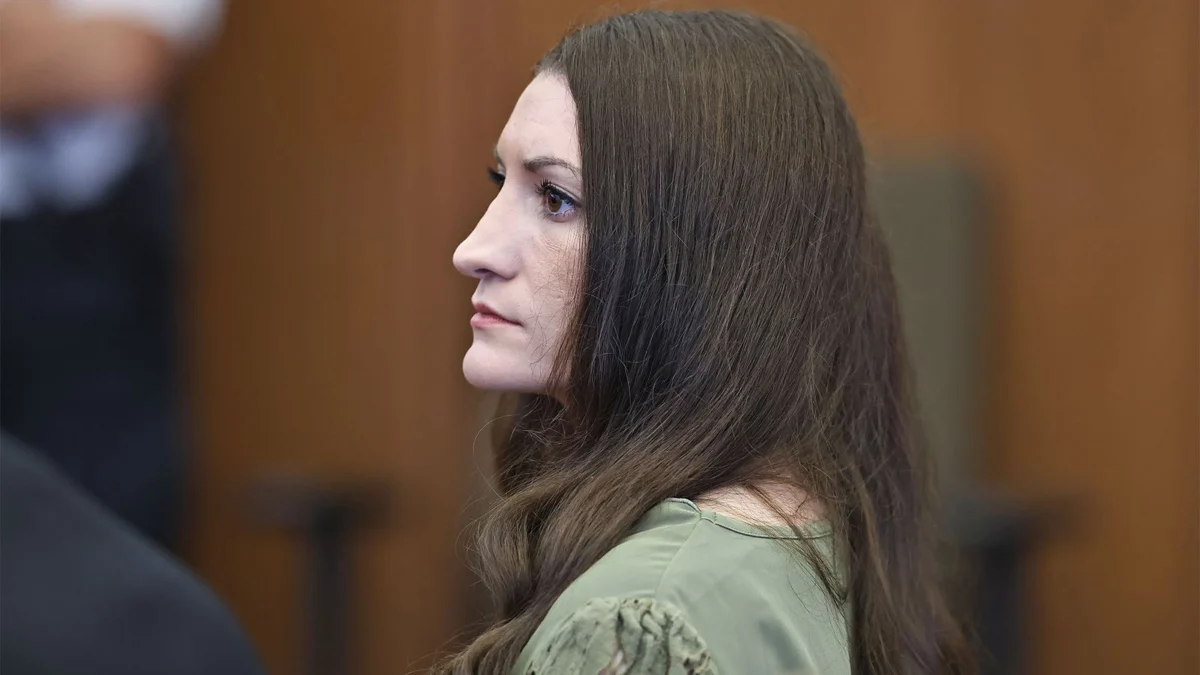
The legal saga surrounding Lindsay Clancy, the 36-year-old former labor and delivery nurse accused of strangling her three young children, reached an impasse on Friday. After seven grueling days of deliberation, a Massachusetts judge declared a mistrial, acknowledging that the jury could not reach a unanimous verdict on whether Clancy was criminally responsible for the deaths of 5-year-old Cora, 3-year-old Dawson, and 8-month-old Callan.
The declaration of a mistrial leaves a community, a grieving family, and a nation grappling with maternal mental health in a state of suspended animation. Prosecutors now face the difficult decision of whether to subject the public to a second trial, pursue a plea deal, or drop the charges entirely. For now, the case remains one of the most polarizing and heart-wrenching legal proceedings in recent American history.
The Chronology of a Tragedy
The events that led to the Duxbury, Massachusetts, courtroom began on the evening of January 24, 2023. According to prosecutors, Clancy orchestrated a window of opportunity to carry out the killings. She allegedly sent her husband, Patrick Clancy, on a series of errands—picking up medication for one of the children and dinner for the family—effectively clearing the house.
During that brief window, Clancy used exercise bands to strangle her children. Following the act, she attempted to take her own life by jumping from a second-story window of the family home. The fall left her paralyzed from the waist down, adding a layer of permanent, physical consequence to the emotional devastation of the event.
The trial, which spanned 21 days of harrowing testimony, traced the months leading up to the tragedy. The jury heard how the once-vibrant mother’s mental health had plummeted following the birth of her youngest child, Callan. Testimony highlighted her struggle with debilitating anxiety, severe sleep deprivation, and a "disturbing brain fog" that left her feeling untethered from reality. Despite seeking help from specialists in post-pregnancy mood disorders and being prescribed a cocktail of psychiatric medications, her condition appeared to deteriorate.
In early January 2023, less than three weeks before the killings, Clancy had checked herself into a psychiatric facility for intensive treatment. Her discharge, which occurred just 19 days before the tragedy, became a focal point of scrutiny regarding the adequacy of the mental health system in addressing postpartum psychosis.
A Battle of Experts: The Insanity Defense
The core of the trial rested on the legal definition of criminal responsibility. Defense attorney Kevin Reddington did not dispute that Clancy killed her children; instead, he argued that she was suffering from postpartum psychosis—a rare, severe medical condition linked to the profound hormonal shifts and exhaustion of the postpartum period.
The defense’s case relied heavily on the testimony of forensic psychiatrist Phillip Resnick, MD. Resnick, who interviewed Clancy extensively following the incident, argued that she was "clearly psychotic" at the time of the killings. "It was almost like she was a puppet and someone else was pulling the strings," Resnick told the court, suggesting that Clancy was also suffering from undiagnosed bipolar disorder, rendering her unable to appreciate the wrongfulness of her actions.
In contrast, the prosecution presented a starkly different narrative. They acknowledged that Clancy was experiencing mental health struggles but argued that she remained in control of her faculties. Forensic psychologist Kirk Heilbrun, PhD, testifying for the state, dismissed the defense’s claims. Heilbrun suggested that Clancy’s assertion of hearing a "male voice" commanding her to kill was a fabrication, noting that she had never disclosed hearing voices to any of her medical providers prior to the incident. Instead, the prosecution posited that Clancy killed the children out of a misguided belief that she was sparing them from "suffering" after her own planned suicide.
The Human Element: Grief and Forgiveness
Perhaps the most poignant aspect of the trial was the involvement of Patrick Clancy. At the beginning of the proceedings, jurors listened to a harrowing 7-minute 911 call capturing the moment he discovered his children’s bodies in the basement.
Despite the unimaginable horror, Patrick Clancy has publicly stated that he has forgiven his wife. In interviews and public statements, he has consistently maintained that her actions were the product of a severe mental health crisis rather than malice. This stance of forgiveness added a layer of complexity to the jury’s task, as the public—and potentially the jurors themselves—grappled with the distinction between legal culpability and moral tragedy.
Testimony from extended family members reinforced this perspective. Susan Clancy, Lindsay’s former mother-in-law, described her as a "very nurturing, very loving mother" who had been "begging for help" in the weeks leading up to the tragedy. These accounts painted a portrait of a woman who was not a predator, but a victim of a medical catastrophe that spiraled out of control.
Official Responses and Judicial Maneuvering
The closing days of the trial were marked by procedural volatility. Late in the week, the judge indicated his intent to declare a mistrial, only to pivot suddenly and offer the defense an opportunity to appeal to the Massachusetts Supreme Judicial Court. The goal of such an appeal would have been to halt the mistrial process, though the state’s top court ultimately denied the emergency request.
This judicial uncertainty underscores the rarity and difficulty of cases involving postpartum psychosis. The legal system is inherently designed to judge actions based on intent and awareness—elements that are notoriously difficult to quantify when the perpetrator’s mind is purportedly fractured by acute psychiatric illness.
Implications for Maternal Mental Health
The Lindsay Clancy case has ignited a national conversation regarding the support systems available to new mothers. Maternal mental health advocates have long argued that the transition into parenthood is fraught with physiological and psychological risks that are often minimized by the healthcare system.
The case highlights several systemic failures:
- The Gap in Psychiatric Care: Despite Clancy’s proactive attempts to seek help and her brief hospitalization, the support provided was insufficient to prevent the ultimate tragedy.
- The Stigma of Psychosis: Many mothers fear that disclosing the severity of their intrusive thoughts or auditory hallucinations will lead to the removal of their children, potentially preventing them from seeking the very help that could save lives.
- Legal vs. Medical Standards: The trial has exposed the disconnect between medical diagnoses of psychosis and the rigid, often outdated legal definitions of "criminal responsibility."
As the state of Massachusetts weighs its next move, the case serves as a somber reminder of the fragility of the human mind and the high stakes of failing to address mental health crises before they culminate in violence.
Moving Forward
The mistrial has left the families of the victims in a state of continued limbo, unable to find the closure that a final verdict might have provided. For the legal system, the path forward is fraught with ethical and strategic dilemmas. Prosecutors must weigh the interests of justice against the reality of a defendant who is paralyzed, allegedly mentally ill, and whose own family has expressed forgiveness.
Whether the state chooses to retry the case or seeks an alternative resolution, the legacy of Lindsay Clancy’s trial will likely endure as a benchmark for how society understands, judges, and fails to protect those experiencing the darkest extremes of the postpartum experience. The courtroom doors have closed for now, but the questions raised by the death of Cora, Dawson, and Callan Clancy remain wide open, challenging our medical, legal, and social frameworks to do better for mothers in crisis.