By Medical News Desk
September 15, 2026
Pennsylvania is currently grappling with its most severe public health crisis in over three decades. As of mid-September, state officials have confirmed a fourth measles-associated death, marking a grim milestone in an outbreak that has already claimed the lives of two infants and a middle-aged woman. The rapid escalation of the virus across 38 counties serves as a harrowing microcosm of a national trend: the systematic collapse of the herd immunity that once rendered measles a disease of the past.
The Latest Tragedy: A Warning Sign for Adults
The most recent victim, an 18-year-old resident of Mifflin County, succumbed to acute disseminated encephalomyelitis (ADEM), a rare but catastrophic neurological complication of the measles virus. The Mifflin County coroner’s office confirmed the cause of death this week, highlighting that measles is not merely a "childhood rash" but a systemic threat capable of inducing lethal inflammatory responses in the brain and spinal cord.
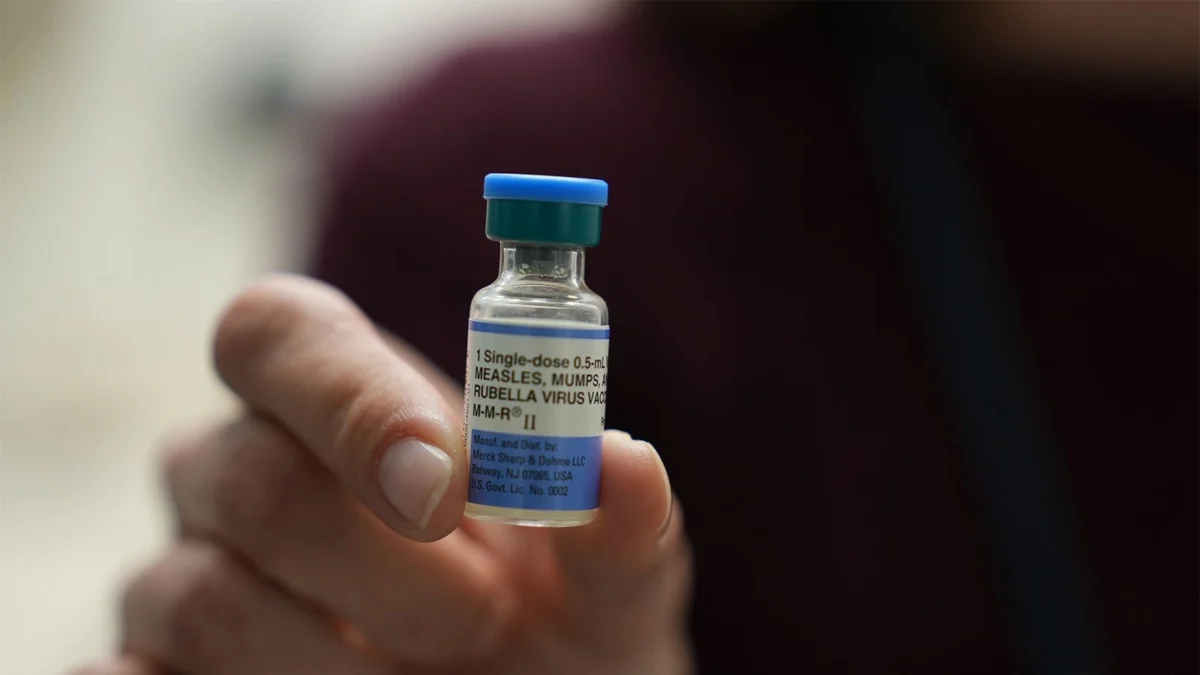
This tragedy follows the death of a 40-year-old woman from Jefferson County, a rural western Pennsylvania region, just days prior. These two adult deaths, coming on the heels of the loss of two infants in Lancaster County last month, have sent shockwaves through the state’s healthcare infrastructure. According to the Pennsylvania Department of Health, none of the four individuals had received the MMR (measles, mumps, and rubella) vaccine. While the infants were too young to be immunized under current guidelines—relying entirely on community-wide immunity for protection—the deaths of the two adults underscore the increasing vulnerability of older populations as the virus circulates unchecked in undervaccinated pockets.
A Chilling Chronology of the Outbreak
The current crisis did not emerge overnight. It is the culmination of years of declining vaccination rates and the erosion of public trust in established medical science.
- August 2026: Two infants in Lancaster County, southeastern Pennsylvania, lose their lives to measles complications. This marks the state’s first measles-related mortality in 35 years.
- Early September 2026: The outbreak expands significantly, with infection rates accelerating across rural and suburban counties.
- September 12, 2026: A 40-year-old Jefferson County woman dies, prompting urgent calls for increased vaccination awareness.
- September 15, 2026: The Mifflin County coroner confirms the fourth death—an 18-year-old—citing acute disseminated encephalomyelitis.
With nearly 700 laboratory-confirmed cases reported so far this year, the state is averaging approximately 100 new infections every seven days. Public health experts warn that if this trajectory continues, the healthcare system—already strained by the influx of symptomatic patients—could face a total capacity crisis by the winter months.
The Data: Why Measles is Returning with a Vengeance
The U.S. is currently enduring its most virulent year for measles since 1991. The data is sobering: in the last two years alone, the nation has seen seven measles-associated deaths. To put this in perspective, that number exceeds the combined total of reported deaths over the previous three decades.
The epidemiological benchmark for preventing measles outbreaks is 95% population immunity. When coverage falls below this threshold, the virus—which boasts an R-naught value (reproduction number) of 12 to 18—spreads with explosive efficiency. In recent years, vaccination rates across the United States have steadily drifted below this critical 95% mark.
The consequences are now manifest. What was once a disease "eliminated" in the U.S. in 2000 is now circulating freely. The international community is watching closely; in November, global health officials are scheduled to meet to determine whether the United States and Mexico have officially lost their "measles-free" status—a status that took decades of rigorous public health effort to achieve.
Official Responses: The Struggle to Stem the Tide
State Health Secretary Debra Bogen, MD, issued a formal statement on Tuesday, reflecting the gravity of the situation. "My thoughts are with the two families who lost loved ones to this highly contagious virus," Dr. Bogen stated. "We remain committed to working with our partners across Pennsylvania to stem this outbreak and prevent more deaths. That means ensuring people have the facts about measles and access to the MMR vaccine, which kept measles outbreaks at bay for decades."
Despite these calls to action, local health departments are struggling to overcome a potent combination of obstacles. The barrier to entry for vaccination is no longer just logistical; it is ideological. Parental waivers for school-age children have increased in frequency, and the healthcare landscape is increasingly cluttered with disinformation that targets the efficacy and safety of routine childhood immunizations.
The Socio-Political Landscape: Disinformation and Policy
Public health analysts are increasingly pointing to a shift in federal rhetoric as a primary driver of the current crisis. For years, the efficacy of the MMR vaccine has been supported by a vast body of peer-reviewed, longitudinal research. However, recent years have seen this consensus challenged at the highest levels of government.
Under the current administration, high-ranking health officials—including Health Secretary Robert F. Kennedy Jr.—have consistently questioned the safety of established vaccines. This skepticism, disseminated through official government channels, has provided a "stamp of legitimacy" to anti-vaccination movements that were previously relegated to the fringes of the internet.
Furthermore, the administration’s policy of defunding local immunization outreach programs has left county health departments without the necessary resources to conduct mobile vaccination clinics, contact tracing, or community education campaigns. By stripping away the infrastructure of public health, the government has essentially removed the "brakes" from a speeding train.
Implications: What Comes Next?
The implications of the Pennsylvania outbreak are far-reaching. If the state cannot stabilize its vaccination rates, it risks becoming a permanent reservoir for the virus. Furthermore, the death of an 18-year-old suggests that the virus is moving beyond the primary school demographic, infecting teenagers and adults who may have waning immunity or who were never vaccinated in their youth.
Healthcare providers are now being urged to screen all adult patients for vaccination status, particularly those living in the 38 counties identified as hotspots. But as the medical community prepares for a long winter of outbreaks, they are doing so with fewer tools at their disposal than ever before.
The tragedy in Pennsylvania is not merely a failure of biology; it is a failure of policy. As the nation approaches a potential loss of its measles-free status, the path forward remains narrow. It requires a fundamental recommitment to the scientific consensus that vaccines are the cornerstone of modern medicine. Without a coordinated, aggressive, and evidence-based push to restore public trust and access, the loss of these four lives may only be the beginning of a much larger, more preventable catastrophe.
The message from the medical community is clear: the virus is here, it is lethal, and it thrives on the silence of the vaccinated and the doubts of the misinformed. In the coming weeks, the focus will remain on containing the spread, but the broader question remains: how does a nation that once eradicated a disease allow it to return with such devastating force? The answer lies in the intersection of public policy, social media, and the delicate trust between the citizen and the state—a bond that is currently in critical condition.