











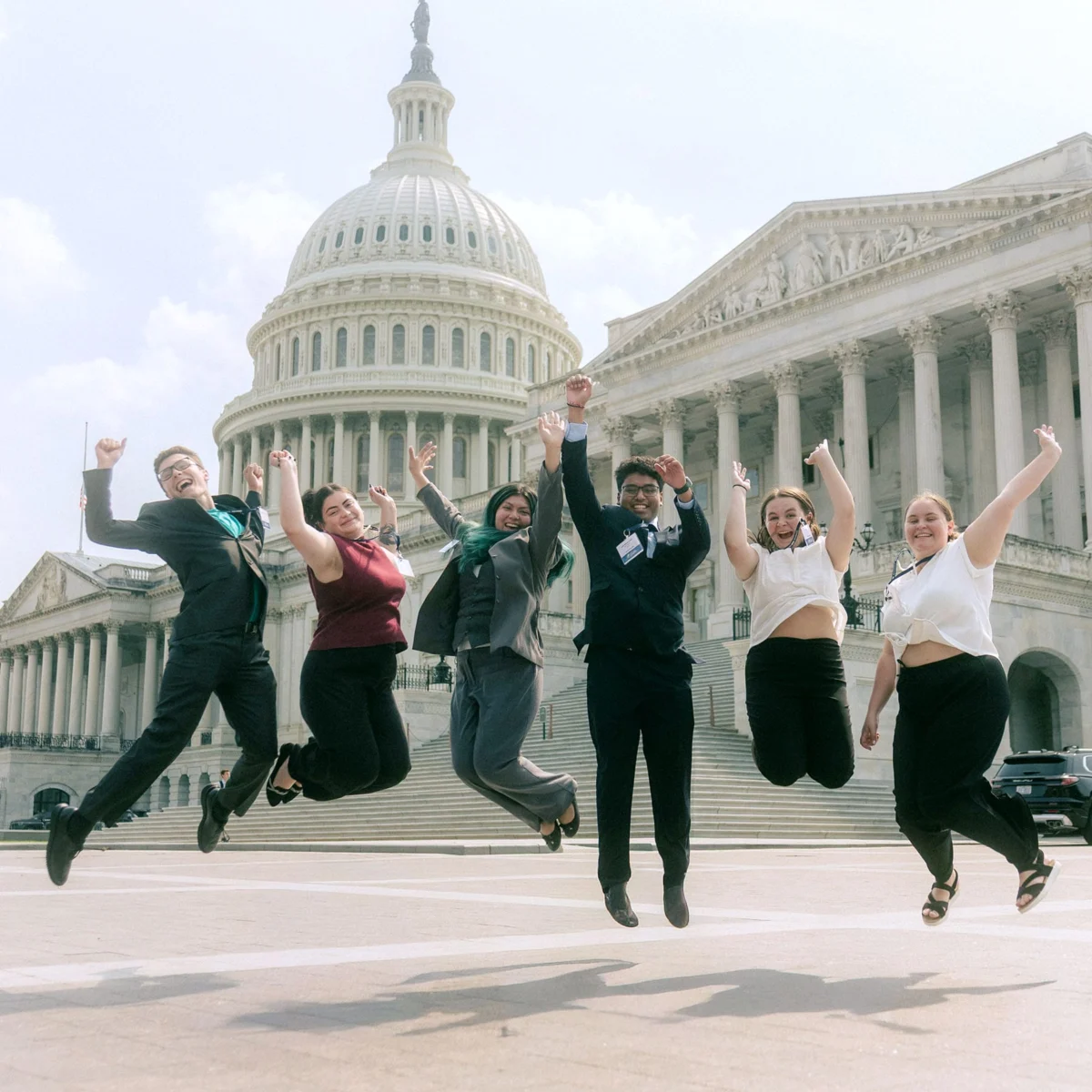
WASHINGTON, D.C. — In a historic mobilization that signaled a paradigm shift in American healthcare advocacy, hundreds of young leaders descended upon the nation’s capital on Thursday, July 16th. Organized by Active Minds, the country’s premier nonprofit dedicated to youth mental health, the inaugural Active Minds Hill Day + Mental Health Conference marked the first time a mass contingent of Gen Z and young adult advocates formally petitioned Congress to prioritize mental health as a core legislative pillar.
The day-long event was not merely a symbolic gathering; it was a strategic legislative push. Representing diverse communities from across the United States, these advocates engaged in 132 high-level meetings with congressional offices. Their mission was clear: to bridge the gap between abstract policy and the "lived experience" of a generation currently navigating an unprecedented mental health crisis. By bringing firsthand narratives into the halls of power, the participants aimed to ensure that future federal mandates are rooted in the actual needs of students and young professionals.
Chronology of a Milestone: From the Halls of Congress to the National Stage
The events of July 16th were structured to maximize both legislative impact and community building. The day began early on Capitol Hill, where advocates—many of whom were visiting Washington for the first time—were briefed on the nuances of federal policy before heading to the Longworth, Rayburn, and Russell buildings.
Morning: The Legislative Blitz
Starting at 9:00 AM, the youth advocates, identifiable by their passion and unified messaging, fanned out across the Hill. The 132 meetings were targeted at both sides of the aisle, reflecting the organization’s stance that mental health is a "human issue, not a political one." In these sessions, students did not just present data; they shared personal stories of loss, recovery, and the systemic barriers they face when seeking care on campus.
Afternoon: The Intersection of Policy and Anniversary
The timing of Hill Day was deeply symbolic, coinciding with the anniversary of the launch of the 988 Suicide & Crisis Lifeline. This timing allowed advocates to use the 988 rollout as a case study for what is possible when federal investment meets public need, while simultaneously highlighting the gaps that still remain in public awareness and accessibility.
Evening: The Mental Health Conference
As the legislative meetings concluded, the focus shifted to the Active Minds Mental Health Conference. This gathering served as a debrief and a development hub, equipping attendees with the tools to take their advocacy back to their local chapters. The evening featured a roster of influential voices, including Sadie Sutton, host of the She Persisted podcast, and Hailey Hardcastle, a renowned TED speaker and mental health advocate known for her work in passing laws that allow students to take mental health days.
The day reached its crescendo with a high-energy performance by Be Steadwell, an artist whose work intersects music and social justice. The performance was designed to celebrate the resilience of the youth movement and to recharge the advocates for the long-term work ahead.
Supporting Data: The Legislative "Asks" and the Crisis at Hand
The advocacy on Hill Day was centered around two specific, actionable policy goals. These "asks" were backed by data suggesting that early intervention and immediate access to crisis resources are the most effective ways to reduce youth suicide rates.
1. Visibility of the 988 Suicide & Crisis Lifeline
Active Minds urged lawmakers to support legislation that would require the 988 Lifeline number to be printed on student identification cards for both K-12 and higher education institutions.
- The Rationale: Research indicates that in moments of acute crisis, the "friction" of searching for a phone number can be a fatal barrier. By placing the number on an item every student carries, the intervention becomes instantaneous.
- The Data: Since the transition to the easy-to-remember 988 number in 2022, call volumes have surged, yet awareness among the 18–24 demographic remains lower than in older populations. Physical placement on ID cards serves as a constant, passive reminder that help is available.
2. Strengthening the Garrett Lee Smith (GLS) Campus Suicide Prevention Grant Program
Advocates called for increased funding and an expansion of the GLS Grant Program. Named after the son of former Senator Gordon Smith, who died by suicide, this program is the only federal initiative specifically dedicated to campus suicide prevention.
- The Rationale: Current funding levels often limit the reach of these grants to a small fraction of the nation’s thousands of colleges. Active Minds argued for an expansion that would prioritize student-led outreach and peer-to-peer intervention models.
- The Data: According to the American College Health Association (ACHA), nearly 75% of students report moderate to severe psychological distress. Peer-led models, like those championed by Active Minds, have been shown to increase the likelihood of a student seeking professional help by over 20%.
Official Responses: Voices from the Front Lines
The leadership of Active Minds emphasized that this event was the culmination of over two decades of grassroots organizing.
Alison Malmon, Founder and Executive Director of Active Minds, reflected on the evolution of the movement. "Watching hundreds of young people walk the halls of Congress today reaffirmed what we’ve known for more than two decades: when youth lead, change follows," Malmon stated. "They brought the stories of their communities into the rooms where decisions are made, reminding policymakers that mental health isn’t a political issue—it’s a human one. This inaugural Hill Day is more than a milestone; it’s a testament to the growing movement of young people who are ensuring mental health is valued for every generation to come."
The focus on "lived experience" was echoed by Anika Rahman, Director of Policy at Active Minds. Rahman highlighted the strategic importance of the 132 meetings held during the day.
"It was an honor to host our Mental Health Hill Day on the anniversary of the launch of 988, a milestone that reminds us how far we’ve come, and how much work remains," Rahman said. "Today’s conversations reinforced my belief that young people should be the narrators of their own stories. Their lived experiences, backed by real data and youth-driven solutions, are the most powerful force for shaping the future of mental health policy."
Congressional staffers who met with the advocates noted the professionalism and clarity of the youth-led delegations. While official legislative commitments are often slow to materialize, the sheer volume of meetings in a single day ensured that youth mental health remained at the top of the legislative agenda for the summer session.
Implications: A Shifting Cultural and Political Landscape
The inaugural Active Minds Hill Day represents a significant evolution in how mental health is addressed in the United States. For years, mental health policy was largely driven by clinical professionals and pharmaceutical lobbyists. The events of July 16th signify the rise of the "Consumer-Advocate"—the young person who utilizes the system and knows its flaws intimately.
From Awareness to Action
The transition from "awareness" (ribbon-cutting and social media campaigns) to "policy action" (lobbying for grant funding and ID card mandates) marks the professionalization of the youth mental health movement. Active Minds is no longer just a support network; it has become a formidable political constituency.
The Power of Peer-to-Peer Models
One of the most significant implications of this Hill Day is the federal recognition of peer-led mental health support. By advocating for the Garrett Lee Smith grants to include student-led outreach, Active Minds is pushing for a decentralization of mental health care. This recognizes that students often turn to one another before they ever step foot in a counselor’s office.
Long-term Legislative Outlook
The 132 meetings held on the Hill are expected to influence upcoming budget cycles and education reauthorization acts. As the 2024-2025 legislative sessions approach, the presence of these young advocates has created a "human face" for the statistics. Lawmakers are now forced to consider that every "no" on a funding bill is a "no" to the faces of the students they met on July 16th.
Conclusion: The Beginning of a Movement
The inaugural Active Minds Hill Day concluded not with a sense of finality, but with a sense of momentum. The organization has signaled that this will become an annual fixture in the Washington D.C. calendar, ensuring that the voices of the next generation are permanently embedded in the federal policy-making process.
As youth mental health continues to be a defining challenge of the 21st century, the mobilization of July 16th offers a blueprint for how to turn collective struggle into collective power. With the 988 Lifeline as a foundation and a new generation of advocates as the architects, the landscape of American mental health support is poised for a radical and necessary transformation.
Active Minds continues to provide resources and leadership opportunities for young adults nationwide. For those interested in joining the movement or accessing mental health support, visit activeminds.org. High-resolution photos of the event and additional policy briefs are available for media use via the organization’s digital press kit.