










By Ian Ingram, Managing Editor, MedPage Today
September 14, 2026
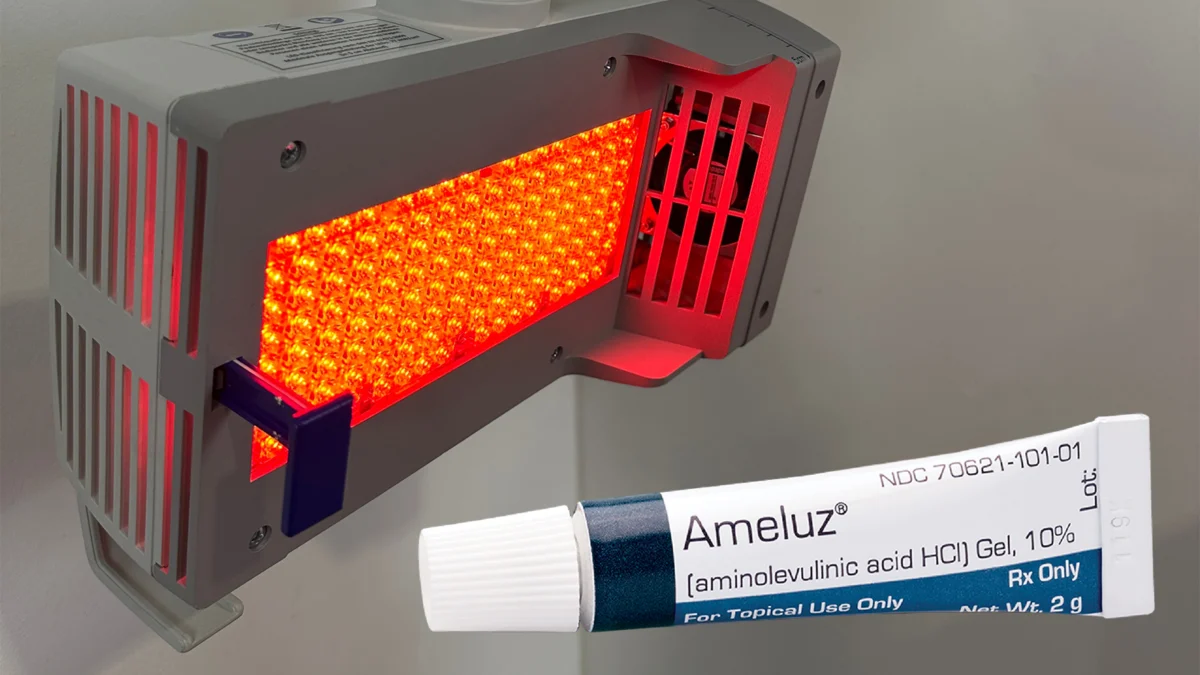
In a significant development for dermatological oncology, the U.S. Food and Drug Administration (FDA) has officially approved the use of aminolevulinic acid hydrochloride 10% (Ameluz) in combination with photodynamic therapy (PDT) for the treatment of adults diagnosed with superficial basal cell carcinoma (sBCC). The announcement, made by manufacturer Biofrontera on Monday, marks a pivotal shift in how clinicians manage the most common form of malignancy in the United States, offering a robust non-surgical alternative for patients whose lesions are located in cosmetically sensitive areas or who are otherwise poor candidates for traditional surgical excision.
The Landscape of Basal Cell Carcinoma
Basal cell carcinoma (BCC) remains the most prevalent skin cancer in the United States, with more than 3.5 million cases diagnosed annually. While these cancers are generally slow-growing and rarely metastasize, they are locally invasive and can cause significant tissue destruction if left untreated. Among these, superficial basal cell carcinoma (sBCC) accounts for approximately 15% to 20% of cases.
Unlike the nodular subtype, which often presents as a single, firm bump, sBCC frequently manifests as multiple, flat, scaly, or crusted lesions, often found on the trunk and extremities. Because these lesions are superficial—confined to the upper layers of the skin—they are prime candidates for non-surgical interventions. However, until this week’s approval, the clinical toolkit for dermatologists was somewhat restricted. While surgical excision remains the "gold standard" for removing cancerous tissue, it is not without drawbacks. Surgery can result in permanent scarring, prolonged healing times, and potential nerve damage, particularly when lesions appear on the face, neck, or chest.
Chronology of Development and Regulatory Milestones
The path to this approval has been a multi-year effort centered on refining the delivery and efficacy of photodynamic therapy.
- Initial Approval: Biofrontera’s Ameluz gel, paired with the company’s proprietary BF-RhodoLED lamp, previously earned FDA approval for the treatment of actinic keratoses—precancerous lesions on the face and scalp.
- The Phase III Trial: The efficacy of the combination for sBCC was put to the test in a vehicle-controlled Phase III trial involving 187 adult patients. Each participant presented with histologically confirmed superficial basal cell carcinoma.
- Study Execution: Researchers tracked patients through a structured treatment cycle, assessing clinical and histological clearance at the 12-week mark following the final session.
- Regulatory Submission: Based on the compelling data from this trial, Biofrontera submitted a supplemental New Drug Application (sNDA) to the FDA, demonstrating that the combination therapy not only cleared the cancer cells but did so with a safety profile consistent with existing topical PDT regimens.
- The Final Decision: On September 14, 2026, the FDA granted the new indication, formally expanding the use of Ameluz and the BF-RhodoLED system into the sBCC market.
Supporting Data: Examining the Phase III Findings
The scientific rigor behind the approval rests on the strength of the composite outcome measured in the pivotal clinical trial. The primary endpoint required a "complete response"—defined as the total clinical disappearance of the lesion accompanied by histological confirmation that no cancerous cells remained in the tissue.
The results were statistically significant: 66% of patients treated with the Ameluz/PDT combination achieved this composite complete response, compared to only 5% of patients in the vehicle-control group. This stark disparity underscores the efficacy of the photosensitizing gel when activated by the specific wavelengths of red light emitted by the BF-RhodoLED lamp.
Furthermore, both components of the primary endpoint—clinical clearance (the lesion visibly disappearing) and histological clearance (microscopic verification of tumor eradication)—significantly favored the active treatment group. This dual-layer validation provides clinicians with the confidence that the treatment is not merely masking the disease, but actively eliminating it.
Official Perspectives: The Clinician’s View
The medical community has greeted the approval with cautious optimism, particularly those specializing in skin cancer surgery and medical dermatology.
"For many patients with superficial basal cell carcinoma—those with multiple lesions, lesions in cosmetically sensitive locations, or for whom surgery would not be preferred—treatment options have been limited," noted M. Shane Chapman, MD, MBA, of the Dartmouth Geisel School of Medicine.
Dr. Chapman, who served as an investigator in the development process, emphasized that the shift toward non-surgical options represents a patient-centric evolution. "This FDA approval for Ameluz and the RhodoLED gives us a rigorously studied, non-surgical option that we can deliver in our office," he added. "As someone who has worked with photodynamic therapy for many years, I see this as a meaningful expansion in the use of this treatment. It’s about more than just cure rates; it’s about the quality of life for the patient post-treatment."
Implications for Clinical Practice and Patient Care
The approval of this therapy signifies a broader trend in dermatology toward "precision oncology" at the office level. By providing a standardized, FDA-cleared protocol for sBCC, the medical community can now move away from "off-label" or inconsistent PDT methods.
The Mechanism of Action
Photodynamic therapy works by applying a photosensitizing agent (in this case, 5-aminolevulinic acid) to the lesion. The cancerous cells preferentially absorb this substance, converting it into a chemical that makes them highly sensitive to light. When the BF-RhodoLED lamp is applied, the red light reacts with the accumulated photosensitizer, triggering the production of reactive oxygen species that selectively destroy the malignant cells while leaving the surrounding healthy tissue largely intact.
Safety and Tolerability
As with any medical intervention, there are inherent risks. The FDA-approved labeling for the Ameluz-PDT combination notes that patients may experience a variety of localized adverse events, including:
- Application site erythema (redness)
- Significant pain or burning sensations during light exposure
- Irritation, edema (swelling), and pruritus (itching)
- Formation of scabs, crusts, or vesicles
- Transient paresthesia (tingling or numbness)
The label also carries specific warnings regarding photosensitivity. Patients are cautioned to avoid sun exposure for a specified period following treatment. Furthermore, the use of protective eyewear is mandatory for both the patient and the clinician to prevent eye injury from the high-intensity red light. Ophthalmic precautions are also highlighted, as contact with the gel can cause severe irritation to the eyes.
Conclusion: A New Standard?
While surgery will remain the most efficient way to remove deep or aggressive basal cell carcinomas, the expansion of Ameluz into the sBCC space provides a powerful, evidence-based alternative for the "superficial" category of skin cancer.
For the millions of Americans diagnosed with sBCC, the ability to choose a treatment that avoids the scalpel—without sacrificing the high probability of a cure—is a significant medical advancement. As the integration of this therapy begins in clinics nationwide, the focus will now shift to long-term follow-up data to determine if the complete response rates observed at 12 weeks translate into durable, long-term remission. For now, however, dermatologists have a new, validated tool in their kit, offering a path to healing that prioritizes both oncological safety and cosmetic integrity.