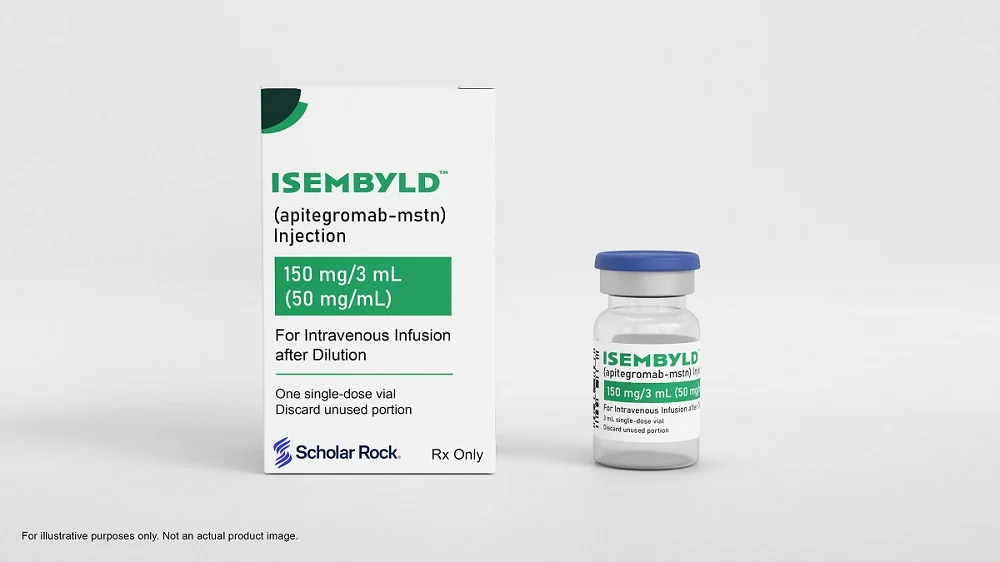
In a landmark shift for the treatment of Spinal Muscular Atrophy (SMA), the U.S. Food and Drug Administration (FDA) has granted approval to Isembyld (apitegromab), the first-ever therapy designed to directly target muscle tissue in patients living with this devastating neuromuscular disorder. While the medical community has made significant strides over the past decade in addressing the genetic root causes of SMA, Scholar Rock’s new monoclonal antibody offers a critical "second pillar" of care that addresses the physical manifestation of the disease—muscle wasting—rather than just the genetic deficit.
Main Facts: A Paradigm Shift in SMA Care
Spinal Muscular Atrophy is a rare, progressive, and often fatal genetic disorder characterized by mutations in the SMN1 gene. These mutations result in a critical shortage of the Survival Motor Neuron (SMN) protein, which is essential for the health and survival of motor neurons. Without adequate protein, patients experience rapid, progressive muscle weakness, affecting basic functions such as movement, walking, and respiration.
For years, the therapeutic focus has been exclusively on replacing or increasing the production of this protein. However, Scholar Rock’s Isembyld operates on a different biological principle: the inhibition of myostatin. Myostatin is a protein that acts as a natural "brake" on skeletal muscle growth. By blocking this activation, Isembyld allows for the preservation and potential strengthening of muscle tissue.
The FDA’s approval covers adults and children aged two and older who are already receiving existing chronic therapies for SMA. As an intravenously infused therapy, Isembyld is administered once every four weeks. With a wholesale cost of $11,659 per vial and an estimated annual net cost of approximately $310,000 per patient, the drug is positioned to become a standard of care for the estimated 6,600 eligible SMA patients in the United States.
The Chronology: A Path Through Regulatory Hurdles
The journey to market for Isembyld was not without its challenges. The path was punctuated by scientific breakthroughs and regulatory setbacks that tested the resilience of the Cambridge, Massachusetts-based biotech firm.
- Pre-clinical and Early Development: Scholar Rock focused on the potential of apitegromab as a selective myostatin inhibitor, aiming to address the high unmet need in patients who, despite receiving genetic-targeted therapies, continued to suffer from persistent muscle weakness.
- The 2024–2025 Regulatory Stumble: Nearly a year ago, the FDA issued a Complete Response Letter (CRL) regarding the drug’s application. The refusal was not linked to the drug’s efficacy or safety, but rather to third-party manufacturing issues at a facility owned by Novo Nordisk.
- Operational Pivot: Demonstrating agility, Scholar Rock immediately removed the problematic site from its application and secured an alternative supply chain arrangement, ensuring that commercial-scale production could proceed.
- The Final Milestone: On the Friday following market close, the FDA officially greenlit Isembyld. Scholar Rock executives confirmed that the first vials of the company’s inaugural commercial product would be available for distribution within days.
Supporting Data: Clinical Efficacy and Safety
The clinical validation for Isembyld rests on a robust Phase 3 trial, the results of which were published in The Lancet Neurology. The study was designed to measure whether the addition of apitegromab to existing SMN-targeted therapies (such as Biogen’s Spinraza or Roche’s Evrysdi) would yield superior motor function outcomes compared to standard-of-care monotherapy.
Evidence of Improvement
The trial results were compelling: patients receiving the combination of Isembyld and an SMN-targeted therapy demonstrated "clinically meaningful improvements" on standardized motor function scales after one year. In stark contrast, the control group—those receiving only the SMN-targeted therapy—continued to experience a loss of motor function, highlighting the progressive nature of the disease that genetic therapies alone cannot fully halt.
Safety Profile
Regarding safety, the therapy was generally well-tolerated. The most frequently reported adverse events included upper respiratory tract infections, vomiting, and cough. A notable, albeit manageable, warning on the drug’s label concerns the risk of serious fractures. However, Scholar Rock’s President of R&D, Akshay Vaishnaw, emphasized that the incidence rates of fractures were within the expected range for the SMA population. Furthermore, all patients who experienced fractures remained on the study drug, and their injuries healed successfully without treatment discontinuation.
Official Responses and Strategic Vision
The leadership team at Scholar Rock has framed this approval as a vital victory for the patient community. During a Monday morning conference call, CEO David Hallal articulated the company’s vision: "I think there’s greater appreciation that the body’s natural negative regulator for muscle growth is probably not something that is particularly helpful for patients with SMA. We’re excited that patients can now benefit from both increased SMN protein production as well as safe and effective inhibition of myostatin."
The company is now looking toward the future, with several clinical initiatives underway:
- Pediatric Expansion: A Phase 2 trial is currently evaluating the drug’s safety and efficacy in infants and toddlers under the age of two.
- Broader Indications: The company is testing the efficacy of the antibody in treating facioscapulohumeral muscular dystrophy (FSHD).
- Delivery Innovation: R&D efforts are focused on developing a subcutaneously injected version of the drug, which would offer patients a more convenient alternative to the current monthly intravenous infusions.
Implications for the Healthcare Market
The approval of Isembyld carries significant weight for both the biotech sector and the broader pharmaceutical landscape.
The Obesity Market Potential
Beyond SMA, Isembyld has piqued the interest of the metabolic health industry. Obesity treatments, such as GLP-1 receptor agonists (e.g., Eli Lilly’s Zepbound), are highly effective at inducing weight loss, but they often result in the undesirable side effect of lean muscle mass loss. Scholar Rock’s Phase 2 trial data suggests that apitegromab could mitigate this loss. While the company is currently seeking a strategic partner to explore this application, the potential market for muscle-preserving adjuncts to weight-loss drugs is massive.
Financial Outlook and Strategic Assets
Scholar Rock is currently well-capitalized, reporting a cash position of $492 million as of the end of June. The FDA’s approval also granted the company a "Rare Pediatric Disease Priority Review Voucher." While the company could use this to expedite a future drug application, Chief Financial Officer Vikas Sinha confirmed that the company intends to sell the voucher. Given that similar vouchers have recently traded for nearly $200 million, this sale would provide a significant non-dilutive capital infusion.
Competitive Landscape
The SMA market has long been dominated by blockbuster therapies like Novartis’s Zolgensma (a one-time gene therapy for children under two) and the aforementioned Biogen and Roche drugs. Analysts at Leerink Partners have modeled peak U.S. sales for Isembyld at $1.4 billion by 2040. Because Isembyld is a complementary therapy rather than a replacement for existing treatments, its integration into the current clinical workflow is expected to be seamless.
Conclusion
The approval of Isembyld represents more than just a new product launch for Scholar Rock; it validates the "myostatin-inhibition" approach as a viable strategy for treating muscle-wasting diseases. By shifting the focus from the genetic source of SMA to the physiological symptoms of the muscles themselves, Scholar Rock has opened a new front in the battle against progressive neurological decline. For patients who have spent years watching their motor function slowly erode, the arrival of Isembyld offers not just hope, but a scientifically validated method to preserve the strength they have and, in many cases, reclaim a degree of functional independence.