







The landscape of preventive oncology has shifted dramatically this week as UnitedHealth Group, the nation’s largest private health insurer, announced it would provide coverage for Guardant Health’s Shield blood test. This decision represents a watershed moment in the medical industry, marking the first time a major commercial insurer has agreed to reimburse a blood-based screening test for colorectal cancer (CRC).
For millions of Americans, this move signals a transition away from traditional, often invasive screening methods toward a more accessible, liquid biopsy-based future. As colorectal cancer rates climb among younger populations, the ability to screen via a routine blood draw could be the difference between early intervention and late-stage diagnosis.
The Main Facts: What is Shield?
Shield is a pioneering diagnostic tool that has achieved a historic milestone as the first blood-based screening test approved by the U.S. Food and Drug Administration (FDA) for the detection of colorectal cancer in average-risk adults aged 45 and older.
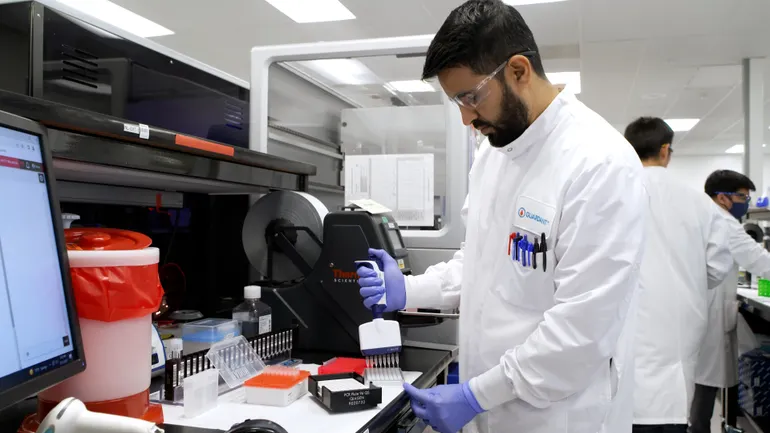
The test utilizes advanced "methylation partitioning cell-free DNA" (cfDNA) technology. By analyzing the blood for specific DNA alterations shed by cancerous or precancerous cells, Shield can identify the presence of colorectal malignancy without the need for the invasive preparation or physical discomfort associated with a colonoscopy or the inconvenience of stool-based collection kits.
It is vital to note that Shield is not a replacement for the "gold standard" of diagnostics: the colonoscopy. It is explicitly designed for average-risk individuals who are asymptomatic. Patients who receive a positive result from a Shield test are immediately referred for a diagnostic colonoscopy to confirm the presence of cancer or polyps and to initiate appropriate treatment protocols.
A Chronology of Progress: From Lab Bench to Insurance Payer
The path to widespread adoption of liquid biopsy for cancer screening has been long and fraught with regulatory hurdles.
- 2020-2022: The Clinical Validation Phase: Guardant Health conducted extensive clinical trials, most notably the ECLIPSE study, which provided the robust data necessary to prove the test’s sensitivity and specificity in detecting colorectal cancer in a real-world setting.
- July 2024: FDA Approval: The FDA granted approval for the Shield test, validating its use as a primary screening option for those 45 and older. This decision was based on clinical data demonstrating that the test could identify colorectal cancer with a high degree of accuracy.
- Late 2024: The Commercial Milestone: Following the FDA’s endorsement, the medical community looked toward private payers. UnitedHealth’s recent decision to cover the test serves as the "domino effect" that many industry analysts, including those at Canaccord Genuity, predicted would follow the FDA’s green light.
- The Future Horizon: The next major hurdle for Guardant Health is securing inclusion in the U.S. Preventive Services Task Force (USPSTF) guidelines. Inclusion would effectively mandate insurance coverage across all major healthcare plans in the United States, cementing liquid biopsy as a standard of care.
Supporting Data: The Case for Liquid Biopsy
The necessity for new screening modalities is driven by hard data. Colorectal cancer is the second leading cause of cancer death in the United States, yet it is highly preventable if detected early. However, nearly one in three eligible adults remains unscreened, citing factors such as the "yuck factor" of stool tests or the logistical and physical burden of bowel preparation for a colonoscopy.
Performance Metrics
In clinical evaluations, the Shield test has shown a commendable ability to detect colorectal cancer in its early, treatable stages. While colonoscopy remains the most effective tool for both detection and removal of precancerous polyps, the blood test bridges a critical gap for "non-compliant" patients—those who would otherwise refuse any form of screening.
Demographic Trends
Data from the American Cancer Society and other health organizations indicate a disturbing rise in colorectal cancer diagnoses among adults under the age of 50. By making screening as simple as a standard lipid panel or A1C blood test, healthcare providers can capture a younger, broader demographic that is currently falling through the cracks of the traditional system.
Official Responses and Industry Sentiment
The decision by UnitedHealth has been met with broad acclaim from industry experts and stakeholders who view it as a validation of the liquid biopsy field.
Guardant Health’s co-CEO, AmirAli Talasaz, noted in a statement that this coverage represents a critical milestone in the company’s mission to make cancer screening more accessible. "By removing the barriers to screening, we are empowering patients to take control of their health at a time when colorectal cancer rates are rising in younger populations," Talasaz stated.
Financial analysts have been equally bullish. Canaccord Genuity analyst Dan Mikson characterized the decision as a bellwether for the industry. "This is the first coverage from a major commercial insurer for a blood-based cancer screening test, which we believe suggests increasing support for liquid biopsy testing," Mikson wrote.
He further highlighted the significance of the coverage occurring prior to the inclusion of the test in official USPSTF guidelines. Typically, insurers wait for these federal recommendations before expanding coverage. By moving ahead of the curve, UnitedHealth is acknowledging a "critical unmet need" in the market, suggesting that the clinical value of the test is already self-evident to the insurer’s actuaries and medical directors.
Implications: The Future of Preventive Medicine
The inclusion of the Shield test in commercial insurance plans has profound implications for the future of oncology and healthcare economics.
1. Improving Screening Compliance
The most significant barrier to colorectal cancer prevention is adherence. If a patient is unwilling to perform a stool test or undergo a colonoscopy, they are effectively unscreened. By offering a blood draw, physicians can dramatically increase the percentage of the population that completes their screening requirements. High adherence rates directly correlate to lower mortality rates from CRC.
2. The Normalization of Liquid Biopsy
Beyond colorectal cancer, the success of the Shield test paves the way for a new generation of "multi-cancer early detection" (MCED) tests. As insurers become comfortable with the reimbursement models and diagnostic efficacy of liquid biopsies for one type of cancer, the path to covering tests that detect multiple malignancies simultaneously becomes clearer.
3. Economic and Clinical Outcomes
While the initial cost of the Shield test must be weighed against the cost of a colonoscopy, the long-term economic argument is clear: the cost of treating a patient for stage IV colorectal cancer is astronomically higher than the cost of early detection and surgical intervention. By shifting the focus toward early screening, insurers are not only improving patient outcomes but also mitigating the long-term financial burden on the healthcare system.
4. A Shift in Patient-Provider Dynamics
The availability of blood-based screening shifts the conversation in the doctor’s office. Instead of a difficult discussion about the risks and inconveniences of traditional screening, physicians can offer a simple blood draw. This removes the "friction" from the patient-provider interaction, allowing for more productive health management.
Conclusion: A Turning Point
The move by UnitedHealth to cover the Guardant Shield test is more than a administrative policy change; it is a signal of a fundamental shift in how we approach cancer prevention. We are moving toward a future where oncology is defined less by reactive, late-stage treatment and more by proactive, routine, and highly accessible screening.
While the colonoscopy will remain a vital tool for diagnostic confirmation and polyp removal, the Shield test provides a necessary, high-tech safety net for those who have historically avoided screening. As the medical community continues to integrate liquid biopsy into standard practice, the potential to reduce the incidence and mortality of colorectal cancer has never been higher.
The industry will now watch closely to see if other major insurers follow suit. If the dominoes continue to fall as they have with UnitedHealth, the Shield test may soon become a cornerstone of preventive health, transforming the way we combat one of the world’s deadliest—and most preventable—diseases.