











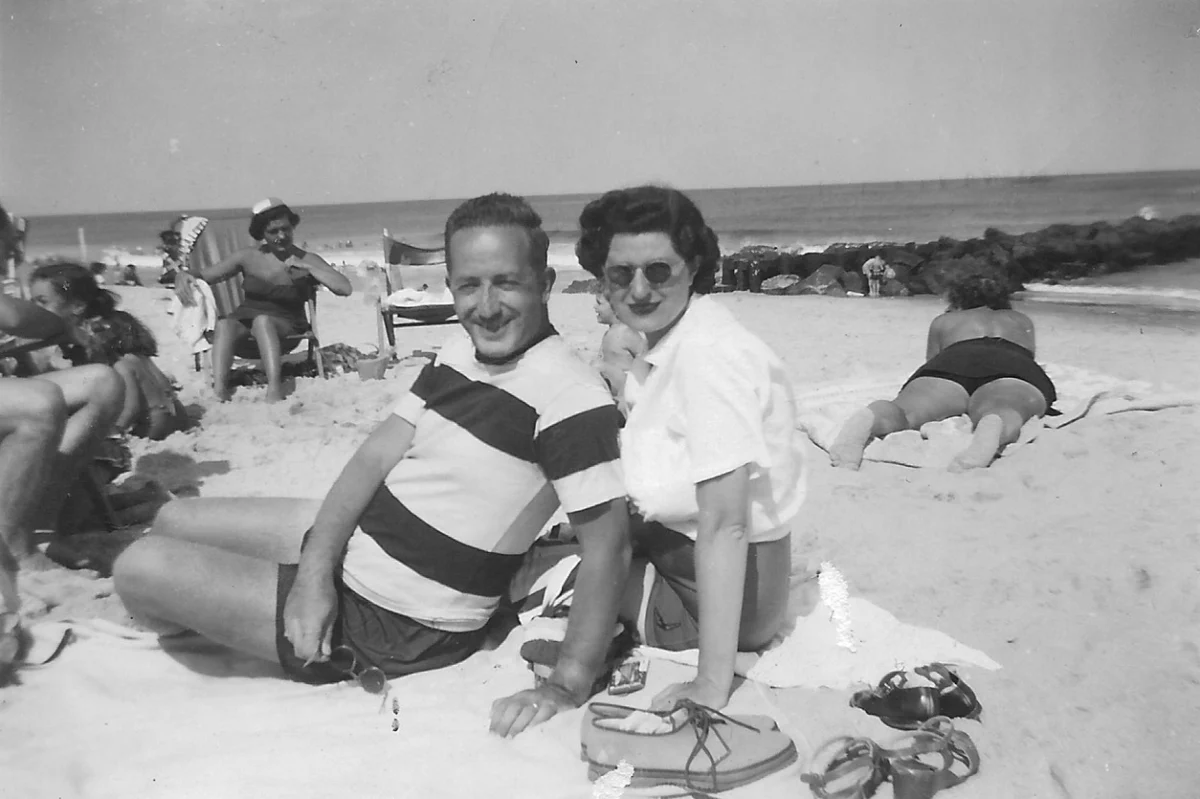
For many children of the mid-twentieth century, the "state of the art" in mental health care was not a matter of clinical theory, but a lived reality of absence, silence, and the cold walls of state institutions. Arthur Rosenthal’s memoir of his father, Morton Rosenthal, provides a poignant lens through which to view the evolution of American psychiatry, the stigma of schizophrenia, and the devastating impact of the "custodial care" model that dominated the United States’ mental health landscape for decades.
Main Facts: The Life and Erasure of Morton Rosenthal
Morton Rosenthal was born in New York in August 1910, the son of Russian Jewish immigrants Philip and Rose Rosenthal. To his son Arthur, Morton was a shadowy figure defined by "nervous breakdowns" and eventual incarceration. However, through genealogical research and family artifacts, a more complex narrative emerges—one of a man caught between the aspirations of the American Dream and the onset of a debilitating pathology that the medical establishment of the time was ill-equipped to treat.
Morton spent the final twenty years of his life within the walls of the Essex County Hospital Center, commonly known as Cedar Grove, in New Jersey. His journey from a "snappy dresser" working on airplane electrical systems during World War II to a man who failed to recognize his own son in a state hospital ward mirrors the broader trajectory of thousands of Americans during the era of mass institutionalization. His story is characterized by a transition from private, resource-heavy intervention to the "snake pit" of state-run custodial care, ending in a lonely death in 1969.
Chronology: From the Newark Airport to Cedar Grove
The Early Years and Hidden Trauma (1910–1940)
Morton was the youngest of what were long believed to be four brothers. However, census records later revealed a deeper layer of family grief: two older siblings, Irving and Moishe, had died in childhood. This "silent grieving" of the grandmother, Rose, likely colored Morton’s upbringing. He was described as a withdrawn and shy youth, deeply attached to his mother, whose early death from diabetes complications reportedly shattered his emotional stability.
The War Years and Brief Stability (1941–1947)
During World War II, Morton appeared to be thriving. He worked at Newark Airport on critical electrical systems for the war effort. It was here he met Roslyn. To the outside world, Morton was a handsome, impeccably dressed man. They married, though it was later revealed that Morton’s brothers had hidden a history of "nervous breakdowns" from Roslyn—a common practice in an era where mental illness was a source of profound family shame.

The Descent and the "Cyclical" Illness (1948–1956)
As Arthur was born and grew into a toddler, Morton’s mental health began to fluctuate. He worked in his father’s haberdashery in Newark, maintaining a facade of professional normalcy in silk ties and suits. Yet, at home, the symptoms of what would be diagnosed as schizophrenia became undeniable. Arthur recalls a father who was kind but increasingly "dissociated," unable to catch a ball or maintain focus, his hands often waving in front of his eyes as if batting away visual hallucinations.
Institutionalization and the Final Years (1957–1969)
The financial burden of private care at facilities like Fair Oaks eventually exhausted the family’s resources. When Arthur was approximately seven years old, Morton was committed to the state hospital at Cedar Grove. He would never live in the outside world again. Over the next decade, the man who once prided himself on his appearance devolved into a paranoid patient, terrified of the hospital’s basement morgue. He passed away at age 59, officially from head trauma following a fall from his hospital bed.
Supporting Data: The "State of the Art" in Mid-Century Psychiatry
To understand Morton Rosenthal’s experience, one must look at the prevailing medical practices of the 1950s and 60s. During this period, the American mental health system was undergoing a tumultuous transition.
The Rise and Risks of Electroconvulsive Therapy (ECT)
In the memoir, Arthur notes that his father was subjected to repeated electroshock sessions, both in private practice and within the state hospital. In one harrowing instance, Morton’s heart stopped during a session, leading doctors to finally declare the treatment "contraindicated." During this era, ECT was often administered without the muscle relaxants or anesthesia used today, and it was frequently utilized as a tool for behavioral management in overcrowded wards rather than a targeted therapeutic intervention. The "disorientation and short-term memory loss" Arthur witnessed in his father after a bus ride from the psychiatrist’s office was a common, often disregarded side effect.
The Shift to Pharmacological "Custodial Care"
By the mid-1950s, the introduction of Thorazine (chlorpromazine) revolutionized psychiatry, allowing many patients to be "stabilized." However, in state institutions like Cedar Grove, this often translated to "chemical straitjacketing." Arthur’s description of his father’s "blank stare" and inability to coordinate physical movements suggests the heavy toll of early antipsychotics, which carried significant extrapyramidal side effects.

The "Six-Month Rule"
A critical piece of supporting data in the Rosenthal narrative is the policy described by the hospital psychiatrists: if a patient did not show clear improvement within six months, psychotherapy was abandoned in favor of purely custodial care. This highlights the "warehousing" philosophy of the era, where state hospitals functioned less as places of healing and more as terminal repositories for the "incurable."
Official Responses and the Institutional Environment
The state’s response to the crisis of serious mental illness in the mid-twentieth century was largely one of segregation. Institutions like Cedar Grove were designed to remove the "afflicted" from the sight of the burgeoning post-war suburbs.
The Failure of the State Hospital System
While private hospitals offered a semblance of therapeutic engagement, the state system was often underfunded and overpopulated. Arthur’s memories of the "polished linoleum floors," "orderlies dressed in white," and "patients in various states of undress" evoke the classic imagery of the "snake pit" era. The lack of individualized care meant that Morton’s specific fears—such as the terror of being taken "downstairs" to the morgue—were met with indifference or, worse, used as threats by staff.
Family Abandonment as a Survival Mechanism
The "official response" of the family was often dictated by the limitations of the system. Morton’s brothers, successful insurance agents who moved to the suburbs, eventually hit a financial and emotional wall. The decision to move Morton to a state facility was a pivot point that fractured the family. Roslyn’s decision to stop visiting and to cut off contact with the paternal side of the family reflects a common psychological defense: when the system offers no hope for recovery, the family "buries" the living to protect the sanity of the survivors.
Implications: The Legacy of Institutional Trauma
The story of Morton Rosenthal carries profound implications for our understanding of intergenerational trauma and the evolution of patient rights.

The Human Cost of Stigma
The fact that Morton’s first-born siblings were never mentioned, and that his own illness was hidden from his wife, underscores how stigma prevents early intervention. The silence surrounding "nervous breakdowns" in the 1940s allowed the pathology to entrench itself before the family could develop a coherent support strategy.
The Loss of the Father-Son Narrative
The most tragic implication is the erasure of the individual. By the time Arthur was 18, the "state of the art" system had stripped his father of his identity. Morton’s inability to recognize his son, followed by his petty critique of Arthur’s "long hair," illustrates a man frozen in the social mores of 1940, unable to process the world of 1965. The "adolescent rebellion" Arthur felt was directed at a ghost—a man who had been chemically and institutionally removed from the flow of time.
The Necessity of Reform
Morton Rosenthal’s death in 1969 occurred just as the deindustrialization and deinstitutionalization movements were beginning to gain steam. While the closing of state hospitals brought its own set of challenges (including homelessness and the "transinstitutionalization" of patients into prisons), Morton’s life stands as a testament to why the old system had to fall. A system that provides only "custodial care, drugs, and electroshock" is a system that fails the basic tenets of human dignity.
Conclusion
Arthur Rosenthal’s effort to construct a coherent narrative of his father is more than a personal memoir; it is a reclamation of a life that the mid-century mental health system attempted to erase. Morton Rosenthal was not merely a "schizophrenic" or a "patient at Cedar Grove." He was a man who loved silk ties, who tried to protect his son from a mother’s discipline, and who, despite his crumbling mind, tried to buy his child a toy every day on his way home from work. In documenting this, Arthur ensures that while the state hospital may have taken his father’s life, it will not have the final word on his legacy.