




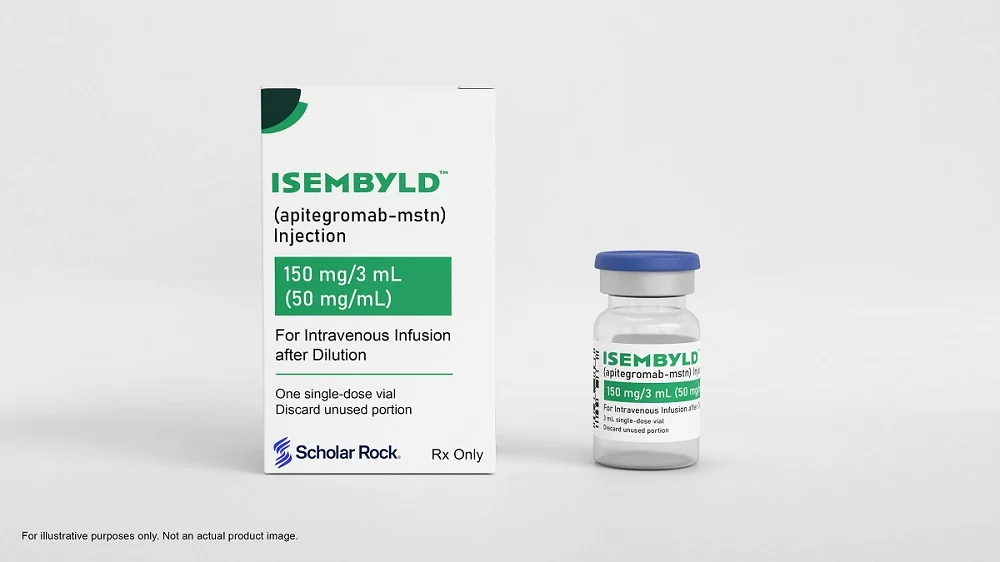
In a landmark shift for the treatment of Spinal Muscular Atrophy (SMA), the U.S. Food and Drug Administration (FDA) has granted approval to Isembyld (apitegromab), a pioneering therapy that represents the first muscle-targeted treatment for the rare, often fatal, neurodegenerative disease. While previous breakthroughs in the SMA space have focused exclusively on correcting genetic deficits within motor neurons, Isembyld addresses the physical degradation of muscle tissue directly, offering a vital "second pillar" of care for patients who remain symptomatic despite standard-of-care treatments.
The Paradigm Shift: Moving Beyond Genetics
For the past decade, the SMA therapeutic landscape has been defined by its focus on the "root cause": mutations in the SMN1 gene. These mutations prevent the production of the Survival Motor Neuron (SMN) protein, leading to the atrophy of motor neurons and, subsequently, the severe, progressive muscle weakness that characterizes the disease.
Current standards of care—Biogen’s Spinraza, Roche’s Evrysdi, and Novartis’s Zolgensma—all function by modulating the SMN2 "backup gene" or replacing the faulty SMN1 gene to boost SMN protein production. While these therapies have transformed SMA from a universally fatal pediatric condition into a manageable chronic disease, they are not a panacea. Many patients, particularly those with advanced disease, continue to struggle with significant muscle loss and functional decline.
Isembyld, developed by the Cambridge, Massachusetts-based biotech Scholar Rock, represents a fundamental shift in strategy. Rather than attempting to fix the genetic machinery of the neurons, it targets the body’s natural mechanism for inhibiting muscle growth: myostatin. By acting as a monoclonal antibody that blocks the activation of myostatin—which essentially acts as a "brake" on skeletal muscle—Isembyld allows for muscle mass preservation and potential growth, regardless of the status of the patient’s motor neurons.
Chronology of a Regulatory Journey
The path to market for Isembyld has been characterized by both clinical success and logistical hurdles.
- Clinical Validation (2024): Following robust Phase 3 trial results published in The Lancet Neurology, which demonstrated clinically meaningful motor function improvements in patients already receiving SMN-targeted therapies, Scholar Rock moved toward an accelerated regulatory filing.
- The Regulatory Setback (Late 2024/Early 2025): Scholar Rock encountered a significant obstacle when the FDA issued a Complete Response Letter (CRL) regarding the company’s Biologics License Application (BLA). The rejection was not linked to the drug’s efficacy or safety, but rather to quality control observations at a third-party fill-finish facility owned by Novo Nordisk.
- Operational Pivot (2025-2026): In response, Scholar Rock moved with agility, striking the troubled facility from its application and transitioning its commercial supply chain to a new, validated partner.
- Final Approval (2026): After a rigorous review of the updated BLA, the FDA officially approved Isembyld for use in adults and children aged 2 and older who are already undergoing chronic SMA therapy.
Supporting Data: Evidence of Muscle Preservation
The efficacy of Isembyld was established through a series of clinical trials, most notably the Phase 3 study comparing patients on "standard-of-care plus apitegromab" versus "standard-of-care alone."
The data provided clear differentiation: patients receiving the combination therapy showed a stabilization or improvement in motor function scales, whereas those on monotherapy continued to experience the expected trajectory of decline. This suggests that even when SMN protein levels are restored to a degree, the muscle itself requires a distinct intervention to recover its mass and strength.
Regarding safety, the clinical profile of the drug remained well-tolerated throughout the testing phase. The most frequently reported adverse events included upper respiratory tract infections, vomiting, and cough. A notable label warning concerns the risk of serious fractures; however, Scholar Rock’s R&D leadership, including President Akshay Vaishnaw, has noted that the incidence of these fractures was consistent with the known risk profile of the SMA patient population. Importantly, no patients in the trials discontinued the therapy due to these events, and all related injuries were resolved under continued treatment.
Official Responses and Strategic Vision
During a conference call following the approval, Scholar Rock CEO David Hallal articulated the importance of the dual-approach model. "Now we have the first and only muscle-targeted therapy ever approved by the FDA for patients with SMA," Hallal stated. "We are excited that patients can now benefit from both increased SMN protein production as well as safe and effective inhibition of myostatin."
From a commercial perspective, the company is positioning Isembyld not as a replacement for current therapies, but as a mandatory adjunct. With roughly 6,600 SMA patients in the United States eligible under the current label, the company has set a wholesale price of $11,659 per vial, with an estimated annual net cost of approximately $310,000 after accounting for rebates and discounts.
The financial implications for Scholar Rock are significant. With a cash position of $492 million reported at the end of June 2026, the company is well-capitalized to manage the launch. Additionally, the FDA granted the company a Rare Pediatric Disease Priority Review Voucher (PRV). While these vouchers can be used to expedite future drug applications, CFO Vikas Sinha indicated that the company intends to sell the asset. Given recent market trends, such a sale could inject nearly $200 million back into the firm’s treasury, fueling further R&D.
Implications for Future Medicine
The approval of Isembyld opens several new doors, both for SMA patients and for broader applications in medicine.
1. Expanding the SMA Pipeline
Scholar Rock is currently conducting a Phase 2 study to evaluate Isembyld in infants and toddlers younger than 2 years old, potentially expanding the patient pool. Furthermore, the company is developing a subcutaneous (injected under the skin) version of the drug, which would offer a significantly more convenient administration profile than the current intravenous infusion every four weeks.
2. Potential in Obesity and Muscle-Wasting
Perhaps the most intriguing implication of Isembyld’s approval is its potential application in the obesity sector. As GLP-1 agonists like Eli Lilly’s Zepbound (tirzepatide) become ubiquitous, one of the primary medical concerns is the associated loss of lean muscle mass alongside fat.
In preliminary Phase 2 trials, Scholar Rock demonstrated that Isembyld could significantly preserve lean muscle mass during weight loss induced by tirzepatide. While the company is actively seeking a partner to explore this further, industry analysts—such as those at Leerink Partners—remain cautiously optimistic, noting that while the proof-of-concept is strong, the long-term commercial viability of myostatin inhibition in the highly competitive obesity market remains to be proven.
3. A New Standard of Care
Ultimately, Isembyld changes the "standard of care" definition. By proving that the muscle itself is a valid, druggable target, Scholar Rock has paved the way for a new generation of neuromuscular treatments. The success of this drug suggests that future clinical strategies for degenerative diseases may rely on a "synergistic" approach: addressing the nervous system’s signaling deficiencies while simultaneously reinforcing the peripheral tissues that those signals are meant to command.
As the first vials reach hospitals and clinics in the coming days, the medical community will be watching closely. For families living with SMA, the arrival of Isembyld offers something that was previously absent: a genuine hope for functional improvement that transcends genetic stabilization, marking a historic step forward in the treatment of one of the most challenging neuromuscular diseases in existence.