




In the ongoing quest to decode the complex relationship between diet and long-term health, researchers at the University of Waterloo have unveiled a compelling new perspective on a nutritional powerhouse: Vitamin C. A groundbreaking study published in the Journal of Theoretical Biology suggests that this essential nutrient may play a far more active role in human physiology than previously understood, potentially serving as a biological safeguard against the formation of carcinogenic compounds within the digestive tract.
By employing sophisticated mathematical modeling, the research team has provided a "mechanistic roadmap" for understanding how Vitamin C influences the chemical transformations of nitrates and nitrites—compounds ubiquitous in the modern North American diet. While clinical trials remain the final hurdle for verification, this study offers a compelling theoretical framework that may reshape our understanding of how meal timing and dietary composition dictate cancer risk.
The Chemical Context: The Double-Edged Sword of Nitrates
To understand the significance of this research, one must first examine the nature of nitrates and nitrites. Over the past several decades, consumption of these compounds has steadily increased in North America. They are found in high concentrations in processed and cured meats—such as bacon, salami, and ham—but they are also naturally occurring in a vast array of vegetables, including spinach, kale, and beets, where they often enter the food chain through nitrogen-rich fertilizers or water sources affected by agricultural runoff.
Biologically, these compounds are not inherently "bad." In the brain and cardiovascular system, they play vital roles in vasodilation and blood pressure regulation. However, the problem arises within the acidic environment of the human stomach. Once ingested, nitrates and nitrites undergo a process known as nitrosation. During this chemical reaction, these compounds can convert into N-nitroso compounds, a group of substances that have long been suspected of contributing to the development of various cancers.
For decades, the scientific community has grappled with an apparent paradox: why do cured meats, which are processed with nitrates, carry a high cancer risk, while leafy greens, which are also nitrate-rich, are consistently associated with health benefits? This "nitrate paradox" has been a significant point of contention in nutritional science, often leading to conflicting study results.
Chronology of the Research: From Discrepancies to Mathematical Modeling
The pursuit of this answer has been a decades-long journey. Since the 1990s, epidemiologists have attempted to pin down the exact risk factors associated with nitrosation, yet the results have remained frustratingly inconsistent.
Dr. Gordon McNicol, a post-doctoral researcher in applied mathematics and the lead author of the study, noted that these historical inconsistencies are precisely what the Waterloo team sought to resolve. "Our work suggests that the presence of dietary Vitamin C may help explain these inconsistencies," McNicol stated.
The researchers opted for a mathematical approach because the human digestive system is too complex to isolate individual chemical reactions in real-time without interfering with the process itself. By creating a multi-compartment model, the team simulated the journey of nitrates and nitrites through the salivary glands, the stomach, the small intestine, and the plasma.
By integrating these interconnected systems, the model allowed the researchers to observe the "ebb and flow" of chemical concentrations in response to different dietary variables. The simulations revealed that when Vitamin C is present alongside nitrates, it acts as a chemical inhibitor, disrupting the pathway that leads to the formation of harmful nitrosation products. This provides a compelling explanation for the "nitrate paradox": the Vitamin C naturally found in vegetables like spinach effectively neutralizes the potential danger of the nitrates present in the same bite.
Supporting Data: The Power of Timing and Concentration
The mathematical model did more than confirm the protective nature of Vitamin C; it also yielded insights into the optimal timing of consumption.
The Supplement Strategy
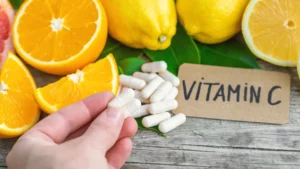
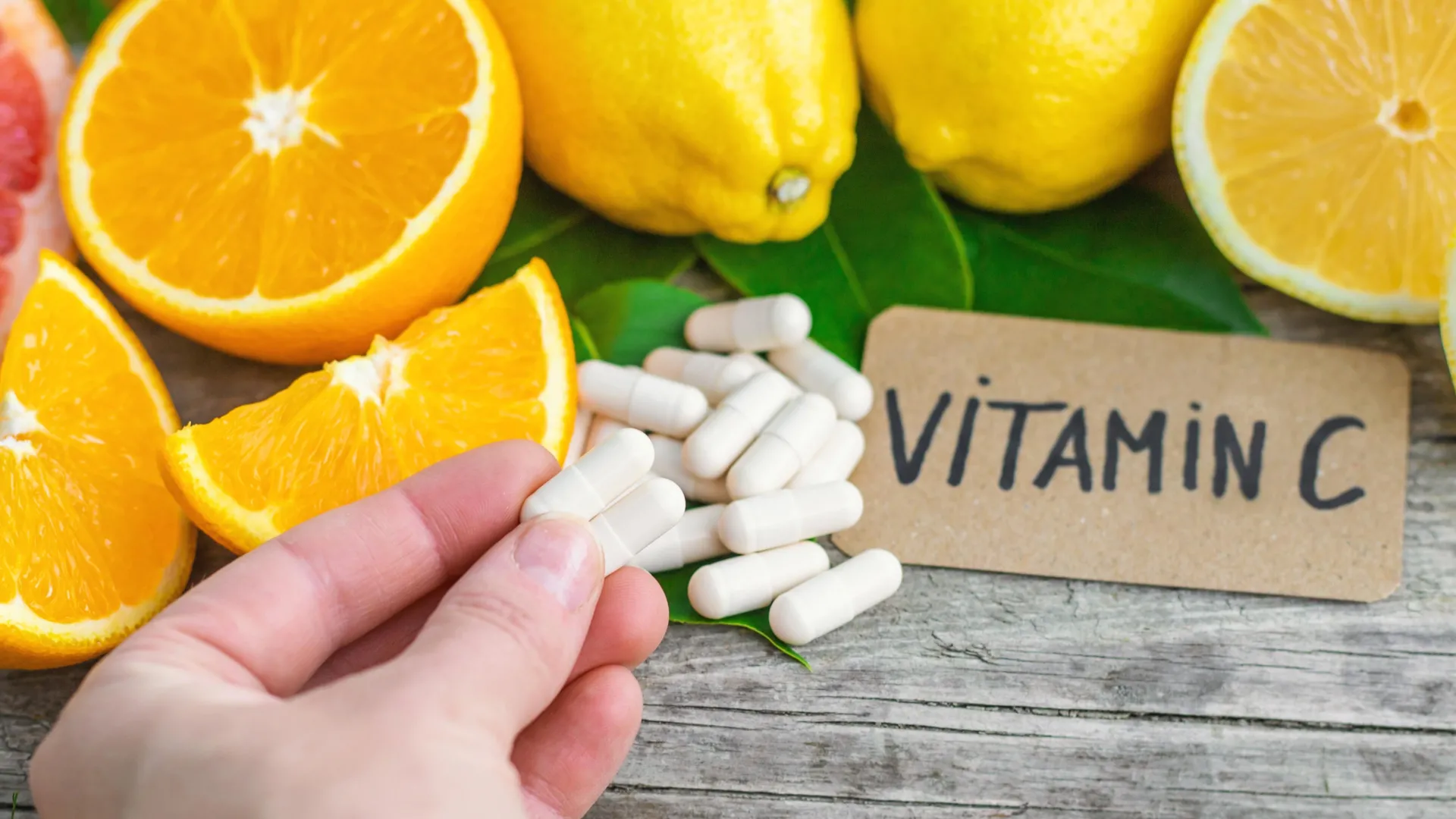
One of the most intriguing aspects of the study is the exploration of supplemental Vitamin C. The researchers simulated the effect of taking a Vitamin C supplement after a meal. The data indicated that post-meal supplementation could moderately reduce the formation of nitrosation products. This finding is particularly relevant for individuals who consume diets high in processed meats, where the ratio of nitrates to antioxidants is heavily skewed toward the former.
Interconnected Variables
The strength of the model lies in its ability to account for multiple variables simultaneously. The simulations factored in:
- Gastric Conditions: The varying pH levels of the stomach, which significantly influence the speed and severity of chemical reactions.
- Oral Microbiome Activity: The role of mouth bacteria in converting nitrates into nitrites, which serves as the first step in the digestive chemical chain.
- Antioxidant Intake: The concentration and timing of Vitamin C, which acts as a "scavenger" for the reactive nitrogen species that lead to nitrosation.
These simulations suggest that the "cancer risk equation" is not simply about what you eat, but how and when you eat it. The model indicates that the presence of antioxidants at the exact moment of chemical conversion is critical to preventing the formation of harmful compounds.
Official Responses: A New Roadmap for Future Research
The implications of this study are far-reaching, providing a foundation for future laboratory and clinical research. Dr. Anita Layton, a professor of applied mathematics and a Canada 150 Research Chair, emphasized that this research is not an end-point, but rather a starting point for more precise, targeted investigations.
"This work provides a mechanistic roadmap for future clinical and laboratory studies by identifying the key interacting drivers of these potentially harmful chemical reactions," Dr. Layton explained. According to Dr. Layton, the model acts as a guide for researchers to design more nuanced experiments, moving away from broad, population-level surveys and toward specific interventions.
By identifying the "who, when, and how" of nitrosation, scientists can now focus on high-risk populations—such as those with high processed-meat intake or specific gastrointestinal profiles—to determine if targeted Vitamin C interventions can produce a measurable, clinical reduction in cancer risk.
Implications: The Future of Dietary Cancer Prevention
While the study offers an optimistic view of Vitamin C’s potential, the researchers remain cautious. Mathematical models are designed to simulate reality, not to replace the complexity of human clinical trials. The model successfully predicts that Vitamin C reduces the production of chemicals linked to cancer, but it cannot yet prove that this reduction directly translates to a lower incidence of cancer in humans.
However, the implications for future public health strategies are significant:
- Personalized Nutrition: If validated by clinical trials, this research could lead to personalized dietary recommendations. For example, individuals who frequently consume processed meats might be advised on the exact amount of Vitamin C required to mitigate the chemical risks of those specific foods.
- Food Processing Innovation: The food industry may look toward adding antioxidants to cured products to naturally inhibit the formation of harmful nitrosation products, potentially making processed foods safer for long-term consumption.
- Refined Dietary Guidelines: Current dietary guidelines emphasize eating fruits and vegetables, but this research provides a deeper, chemical-based explanation for why specific combinations of foods are protective. It reinforces the importance of a balanced meal where antioxidants and potential pro-oxidants are consumed together.
The Path Forward
The study, titled "Vitamin C as a nitrosation inhibitor: A modelling study across dietary patterns and water quality," serves as a bridge between abstract mathematics and tangible nutritional science. As the scientific community continues to move toward precision medicine, models like the one developed at the University of Waterloo will be essential in untangling the threads of diet and chronic disease.
For now, the research serves as a robust reminder of the elegance of human biochemistry. The simple act of pairing a vitamin-rich food with a processed one may be more than just a culinary choice—it may be a sophisticated biological defense mechanism, a tiny, internal battle against the formation of toxins. As researchers prepare for the next phase of clinical verification, the message remains clear: the chemistry of our food matters just as much as the calories it provides. By understanding these invisible reactions, we move one step closer to a more refined, science-based approach to cancer prevention.