






BUNIA, Democratic Republic of Congo — The Democratic Republic of Congo is currently grappling with a public health emergency of staggering proportions as it struggles to contain what is officially recognized as the fastest-growing Ebola outbreak in recorded history. While recent data suggests glimmers of stabilization in certain regions, the World Health Organization (WHO) has issued a sobering warning: the nation’s health infrastructure is buckling under the weight of a severe human resources deficit, leaving treatment centers inadequately staffed and the contagion largely unchecked.
As of late September 2026, the outbreak has spread across seven provinces, infecting 7,773 individuals and claiming 3,759 lives. With the virus demonstrating a stubborn ability to mutate its transmission patterns across volatile geographic zones, the path toward eradication remains fraught with instability, insecurity, and systemic administrative failures.
The Current Landscape: A Tale of Two Realities
The epidemiological map of the Democratic Republic of Congo presents a complex, often contradictory narrative. According to Dr. Marie Roseline Belizaire, the WHO’s regional emergency director for Africa, the period between August 31 and September 20 marked a 26% decline in cases within Ituri—long considered the epicenter of the current crisis—and a 15% drop in Haut-Uele.
However, these regional improvements are sharply offset by a catastrophic surge in the eastern province of North Kivu. Over the past three weeks, North Kivu has witnessed a 73% increase in confirmed infections. This localized spike highlights the volatility of the outbreak; as the virus is suppressed in one district, it frequently finds new footing in neighboring areas, fueled by mass displacement, porous borders, and the constant movement of a population fleeing regional insecurity.
"While cases and deaths are declining in some provinces, they continue to rise in others," Dr. Belizaire noted during a press briefing on Wednesday. "The outbreak is still not under control and remains spread across a wide geographic area."
Chronology of the Crisis: A Trajectory Toward Infamy
To understand the scale of the current emergency, one must look at its trajectory against the backdrop of historical precedents. The 2014-2016 West Africa Ebola outbreak, which devastated Guinea, Liberia, and Sierra Leone, remains the deadliest on record, having claimed more than 11,000 lives. Health experts at the WHO have signaled that the current Congolese outbreak is tracking toward that grim milestone, potentially surpassing it if intervention strategies are not immediately scaled.
- Early 2026: Initial clusters of cases are identified, but early containment efforts are hampered by regional conflicts and limited access to rural health outposts.
- Mid-2026: The virus gains a foothold in densely populated urban centers, leading to exponential growth.
- July 2026: Health Minister Roger Kamba announces a government audit of payroll systems following allegations of widespread corruption, as frontline workers strike over months of unpaid wages.
- August–September 2026: Despite the arrival of international aid and the initiation of vaccination programs for healthcare staff, the logistical challenges of managing a multi-province outbreak prove overwhelming.
- September 24, 2026: The WHO confirms that while treatment capacity is physically expanding through new bed construction, the inability to recruit, pay, and retain qualified medical staff has effectively neutralized these gains.
The Human Resources Deficit: A Structural Failure
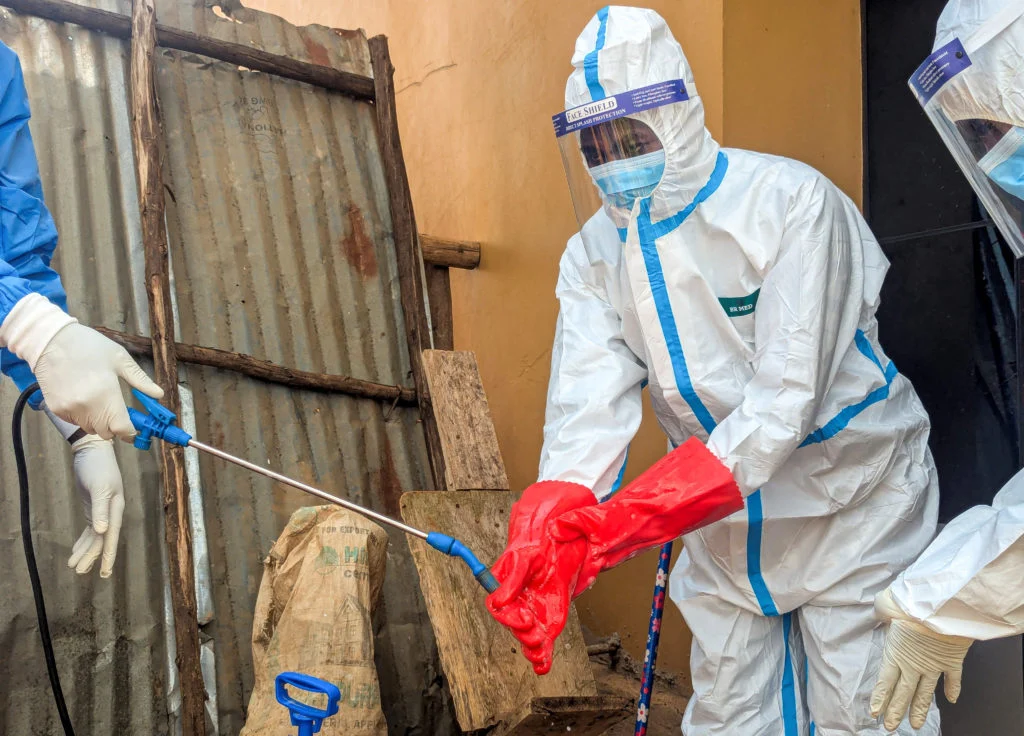
The most pressing impediment to the response effort is not a lack of physical infrastructure, but a profound shortage of human capital. Catherine Smallwood, the WHO’s Ebola incident manager, emphasized that while treatment centers are being added to the landscape daily, they remain "hollow shells" without the necessary personnel to operate them.
"The human resources gap is one of the biggest gaps," Smallwood stated.
A single, fully operational Ebola treatment center (ETC) requires approximately 300 specialized professionals, including nurses, hygienists, anesthetists, and general practitioners. Anne Ancia, the WHO representative in Congo, highlighted the administrative bottleneck that continues to alienate the workforce. "We are building Ebola treatment centers but do not always have the human resources needed to operate them," Ancia said. "Those health workers must be paid."
The issue of compensation has become a flashpoint for the response. In July, the government’s attempt to sanitize payrolls—which had been bloated by "ghost workers" not involved in the actual medical response—resulted in many legitimate frontline workers being left without pay. Promises of arrears have been met with skepticism; many workers report that they have received only partial payments, or in some cases, nothing at all, forcing many to abandon their posts to ensure their own survival.
Vulnerability Among the Youth: A Silent Tragedy
Perhaps the most harrowing statistic in the current outbreak is the disproportionate impact on the youngest members of society. Data released by the WHO confirms that children under the age of five suffer from a case fatality rate exceeding 60%, compared to roughly 40% for adults.
This disparity is compounded by diagnostic challenges. Smallwood explained that clinical detection in toddlers is notoriously difficult. Because young children cannot articulate their symptoms, and because the virus often manifests in non-specific ways in pediatric patients, healthcare workers often miss the early signs of infection. By the time a diagnosis is confirmed, the window for effective therapeutic intervention has often already closed.
The emotional and social toll of this mortality rate cannot be overstated. With safe burial protocols and isolation measures preventing traditional caregiving, the psychological trauma inflicted on families—who must watch their children be treated in sterile, guarded environments—is immense.
Official Responses and the Path Forward
The Congolese government, in conjunction with international partners, is currently navigating a precarious path. Health Minister Roger Kamba has maintained that the payroll audit is a necessary step toward long-term sustainability, arguing that the system cannot support an influx of resources if they are diverted by fraud. However, critics argue that the timing of the audit, in the midst of a lethal epidemic, has proven disastrous for morale and operational continuity.
International organizations are now calling for an urgent infusion of funds dedicated specifically to human resource management. This includes not only the rapid disbursement of back pay but also the implementation of hazard pay and psychological support services for those working in the "red zones."
Furthermore, there is a renewed push to integrate community-led surveillance into the response. By training local leaders to recognize the early symptoms of Ebola, particularly in pediatric cases, health officials hope to circumvent the reliance on centralized hospitals that are already overwhelmed.
Implications for Global Health Security
The current crisis in Congo serves as a stark reminder of the fragile state of global health security. The intersection of geopolitical instability and infectious disease creates a "perfect storm" that transcends national borders. If the virus continues to circulate unchecked in the eastern provinces, the risk of cross-border transmission to neighboring nations becomes a significant threat, potentially destabilizing a region already struggling with socioeconomic instability.
The lessons from the 2014 West Africa outbreak were supposed to lead to more resilient, rapid-response frameworks. Yet, the 2026 Congo outbreak suggests that when administrative dysfunction meets a virulent pathogen, the best-laid plans for containment can falter.
As of late September 2026, the international community faces a choice: continue to provide piecemeal support or commit to a comprehensive, sustained investment in the Congolese healthcare system that prioritizes the welfare of the frontline workers who stand as the only barrier between the virus and the broader population. The lives of thousands, particularly the youngest among them, depend on the ability of the government and the WHO to bridge the gap between policy and practice.
For now, the people of North Kivu and Ituri remain caught in the crosshairs of an epidemic that refuses to retreat, waiting for the logistical and financial support that will finally allow the responders to turn the tide.