In the sprawling, lush enclosures of the Smithsonian’s National Zoo in Washington, D.C., a 848-pound calf named Linh Mai is capturing the hearts of thousands. As the first Asian elephant born at the institution in over two decades, she is, by all accounts, a local celebrity. But behind the playful splashes in her pool and her endearing attempts to mimic the behavior of her “aunties,” Linh Mai occupies the front lines of a high-stakes scientific experiment. She is currently the focal point of a pioneering effort to combat Elephant Endotheliotropic Herpesvirus (EEHV), a devastating, often lethal disease that has become the single greatest threat to the survival of young Asian elephants worldwide.
The Invisible Threat: Understanding EEHV
Elephant Endotheliotropic Herpesvirus is an insidious, unpredictable pathogen that haunts the global conservation community. For decades, it has been the primary cause of mortality in juvenile Asian elephants, striking with a swiftness that leaves veterinarians and researchers scrambling.
The nature of the virus is particularly cruel. It is ubiquitous; experts believe that nearly all Asian elephants will be exposed to the virus at some point in their lives. In many adult elephants, the virus remains latent, held in check by a robust immune system. However, for calves who have moved past the period of maternal immunity—typically between the ages of one and eight—the virus can turn fatal with terrifying speed.
Roughly 60 percent of young elephants that develop active EEHV infections succumb to the disease. The clinical progression is often frantic; a calf can transition from showing the first subtle, easily missed signs of lethargy to critical organ failure within a single day. Because the virus can strike without warning, the mortality rate has historically remained stubbornly high, making it one of the most significant hurdles to maintaining a sustainable population of endangered Asian elephants in human care.
A Chronology of a High-Stakes Start
Linh Mai’s life has been defined by resilience since her birth in February. Her arrival was meant to be a joyous milestone for the zoo’s long-term breeding program, which aims to ensure the survival of the endangered species. However, the initial days of her life were marked by a severe complication: her mother rejected her, displaying aggressive behavior that threatened the calf’s safety.
The Emergency Intervention
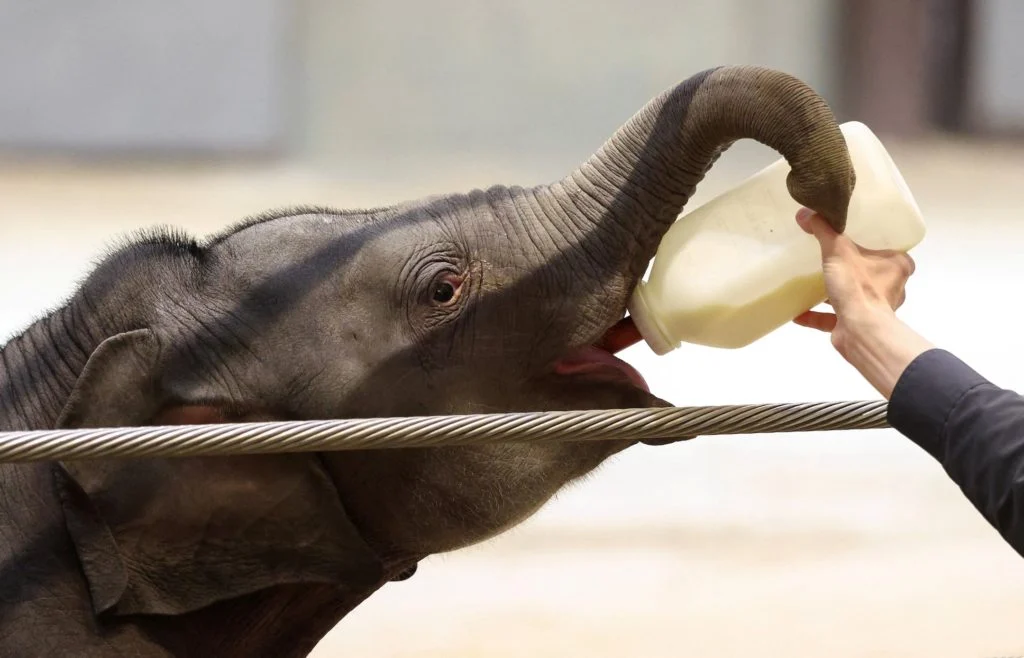
The situation necessitated an immediate, round-the-clock intervention by the National Zoo’s animal care team. For weeks, the staff worked in shifts, abandoning their regular routines to stabilize the calf. They formulated a specialized diet, monitoring her caloric intake and health markers every few hours, even through the night. This period of intense, hands-on care forged a deep bond between the keepers and the calf. Through the successful implementation of this custom formula, Linh Mai thrived, eventually reaching her current weight of 848 pounds and integrating successfully with the herd’s "aunties," who have provided the essential social structure necessary for her development.
The Scientific Pivot
Once Linh Mai was physically stable, the focus shifted toward the long-term, existential threat of EEHV. Recognizing that the status quo of reactive treatment—waiting for symptoms to appear before intervening—was insufficient, the zoo’s veterinary team, led by Dr. James Steeil and Director of Animal Care Tony Barthel, opted for a proactive, experimental strategy: controlled, early-life exposure.
Supporting Data and Methodology: The "Tool Chest" Strategy
The strategy currently being tested at the National Zoo is rooted in the principles of immunology. The team aims to expose Linh Mai to the virus in a highly controlled manner while she still retains high levels of maternal antibodies, which were passed to her from her mother during the nursing phase.
The Diagnostic Process
The methodology is as meticulous as it is gentle. Keepers use positive reinforcement to train Linh Mai to participate in her own medical care. The process involves:
- Sample Collection: Staff squirts a saline solution into the elephant’s trunk.
- The "Blow": Linh Mai is trained to lower her trunk and blow the resulting mucus-filled fluid into a collection bag.
- Lab Analysis: The sample is immediately sent to the zoo’s onsite EEHV laboratory, where veterinarians test for viral shedding.
By identifying the virus early, veterinarians can monitor the calf’s viral load. By intentionally introducing small, controlled amounts of the virus via syringe, the team hopes to trigger an immune response that allows Linh Mai to fight off the infection under medical supervision, thereby building lifelong immunity. Dr. James Steeil refers to this as developing a new "tool in the tool chest"—a shift from defensive, reactive medicine to proactive, immunizing care.
Official Perspectives: The Experts Speak
The stakes of this project are not lost on the leadership at the Smithsonian. For Tony Barthel, the endeavor is both a scientific imperative and a moral responsibility.
"That’s an insidious disease that really has a significant impact on this species," Barthel noted during a recent briefing. He describes the disease as a "nut" that the conservation community has been trying to crack for years. Regarding the current trial, he emphasizes the unpredictability of the pathogen: "After that [maternal] immunity is dissipated, they can have a real crisis. It can be dramatic. And so cracking that nut is a massive focus of ours here."
Dr. James Steeil echoed this sentiment, highlighting the hope that this approach could fundamentally alter how zoos globally manage the virus. "If we can take hold of the narrative in some ways where we can help expose Linh Mai at times when she is most apt to fight the infection off, it gives us the best ability for her to survive the infection and also then develop lifelong immunity to it."
Global Implications: Beyond the National Zoo
The implications of the work being done with Linh Mai extend far beyond the borders of Washington, D.C. If this trial proves successful, it could provide a blueprint for zoos and conservation centers worldwide to manage EEHV.
Conservation and Public Engagement
Beyond the medical research, Linh Mai serves as an ambassador for her species. The National Zoo utilizes her presence to bridge the gap between scientific research and public awareness. By bringing guests into the story of her growth—from her rocky start to her current development—the zoo fosters a deeper connection between the public and the broader mission of elephant conservation.
"It gives us a chance to connect with our guests and bring them into these stories, and tell them about elephants and why they are so incredible," Barthel explained. "And that’s the side effect benefit for us to have this little star in our group."
Future Outlook
As Linh Mai continues to grow, her "aunties" provide the social scaffolding that is vital for her long-term well-being. The goal, according to Barthel, is simple yet profound: "My hope for Linh Mai moving forward is that she grows up to be an integral member of an elephant herd and a contributing member of our overall elephant population. I hope that she has a vibrant social life here."
The path forward is not without risks. The nature of EEHV remains elusive, and there is no guarantee that a single strategy will work across all populations of Asian elephants. However, the willingness of the Smithsonian team to innovate, to act early, and to treat the animal as a partner in her own medical care represents a significant leap forward in zoological medicine.
In the quiet of the Elephant Community Center, while the sounds of other primates echo in the distance, the team continues to feed, monitor, and train the calf who may eventually hold the key to saving her kind. For Linh Mai, every day is an adventure—but for the scientists watching her, every day is a chance to change the future of a species.