










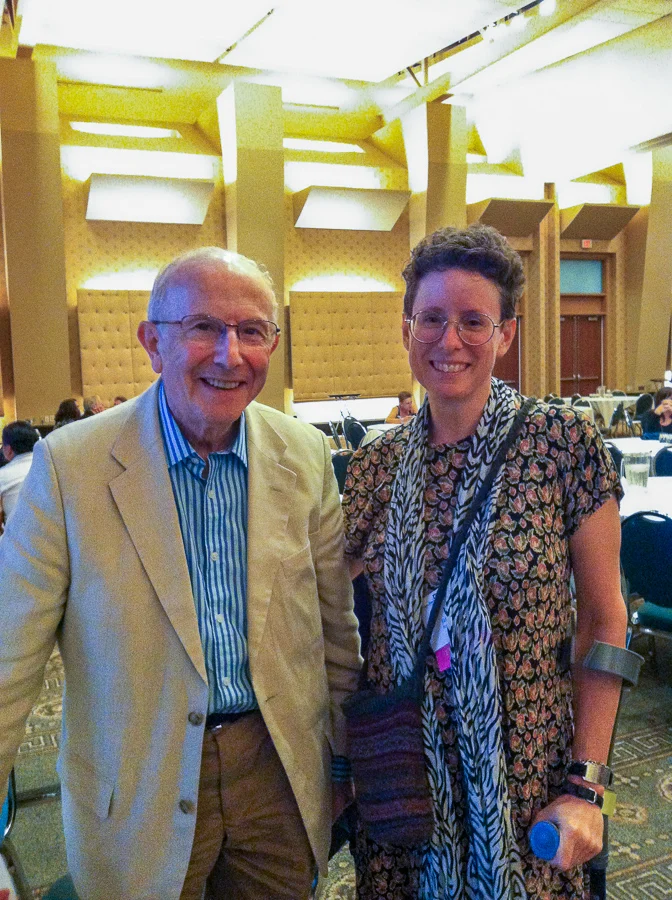
On March 29, 2026, the global medical community and the millions living with Ehlers-Danlos Syndromes (EDS) and Hypermobility Spectrum Disorders (HSD) suffered a profound loss. Professor Rodney Grahame, a pioneering UK rheumatologist and a tireless champion for patients with connective tissue disorders, passed away, leaving behind a legacy that transformed the landscape of modern rheumatology. For over five decades, Dr. Grahame served as a beacon of hope for a patient population that was, for much of the 20th century, largely ignored by the medical establishment.
His career was defined not only by his clinical excellence but by his unwavering empathy. At a time when the medical world dismissed hypermobility as a benign trait—or worse, a psychosomatic symptom—Dr. Grahame stood as a vocal advocate, validating the chronic pain, multisystemic dysfunction, and daily struggles of those with EDS.
The Architect of Awareness: A Chronology of Impact
To understand the magnitude of Dr. Grahame’s contribution, one must look at the medical environment he inherited. When he began his career, the nuances of collagen-related disorders were poorly understood, and patients were frequently shuffled between specialists, labeled as "difficult," or told their pain was "all in their head."
The Early Foundations (1970s–1980s)
Dr. Grahame’s research interests were piqued early. By the early 1970s, he was already publishing papers on the complexities of joint hypermobility. In 1983, he co-authored the seminal text Hypermobility of Joints alongside Drs. Peter Beighton and Howard Bird. This book became the "gold standard" for clinicians worldwide, providing a structured framework for diagnosing conditions that had previously been shrouded in diagnostic confusion.
Bridging the Gap (1990s–2000s)
In 1998, his dedication to the disabled community was formally recognized when he was appointed a Commander of the Order of the British Empire (CBE). During this decade, Dr. Grahame transitioned from a purely clinical researcher to a public advocate. He became a fixture at international conferences, using his platform to bridge the gap between abstract genetic research and the lived reality of patients.
The Modern Era of Recognition (2008–2026)
In 2008, Dr. Grahame was a key collaborator in the landmark study confirming the genetic basis of hypermobility syndromes. This research was pivotal, moving the conversation away from anecdotal observation toward rigorous molecular science. His work served as the essential precursor to the 2017 international classification system, which formalized the distinction between Hypermobility Spectrum Disorders (HSD) and hypermobile Ehlers-Danlos Syndrome (hEDS).
Scientific Contributions and Clinical Advocacy
Dr. Grahame’s influence was rooted in his ability to see the "whole patient." He recognized early on that joint hypermobility was rarely an isolated event. He was among the first to document the strong correlation between joint laxity and systemic issues such as fibromyalgia, chronic fatigue, and autonomic dysfunction.
Challenging Medical Neglect
Perhaps his most famous contribution to the public discourse occurred at the 2014 Ehlers-Danlos National Foundation (EDNF) Conference. When he remarked that "no other condition in the history of modern medicine has been neglected in such a way as Ehlers-Danlos syndrome," he wasn’t just making a statement—he was issuing a challenge to the medical profession.
This sentiment resonated deeply with patients who had spent years—sometimes decades—seeking a diagnosis. For many, hearing a world-renowned rheumatologist acknowledge the systemic failure of the medical system to recognize their condition was the first step toward reclaiming their health and dignity.
Notable Publications
His body of work serves as a foundational library for any clinician treating connective tissue disorders:
- 1971: Early clinical observations on joint mobility published in the Proceedings of the Royal Society of Medicine.
- 1983 (Updated 2012): Hypermobility of Joints – The definitive clinical guide for generations of rheumatologists.
- 2010: Hypermobility, Fibromyalgia and Chronic Pain – A critical text that helped clinicians understand the intersection of pain processing and connective tissue laxity.
- 2008: Contributions to the genetic understanding of hypermobility syndromes, published in the journal Rheumatology.
Personal Reflections: A Clinician Who Listened
The impact of a physician is often measured in journals and accolades, but Dr. Grahame’s true legacy is found in the individual stories of his patients. Jan Groh, a prominent advocate and author of OhTWIST, recalls the profound shift in perspective that occurred after reading Dr. Grahame’s work.
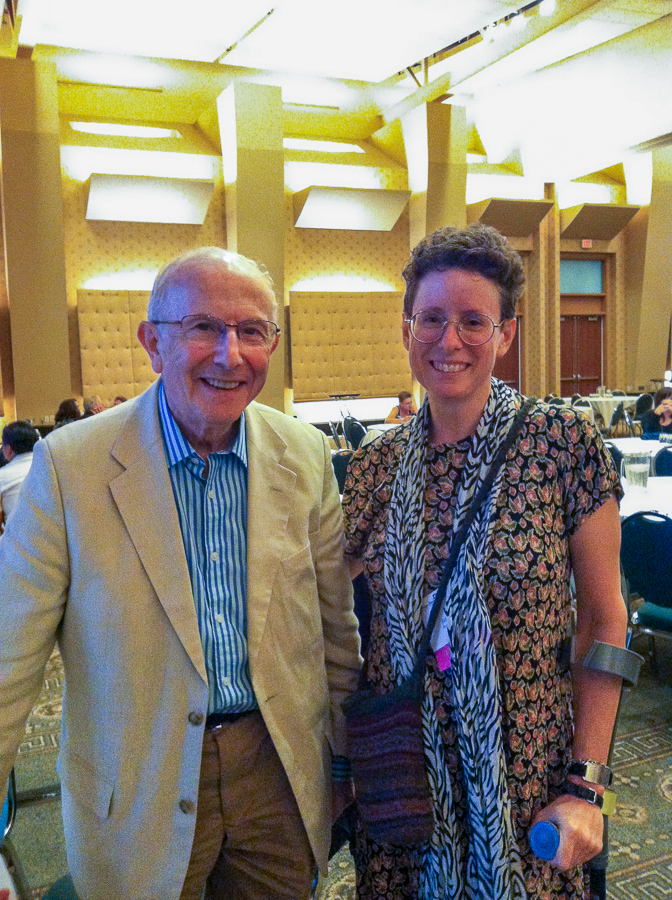
"I was first tipped off to the world of hypermobility at age 40 by my massage therapist… Upon Googling the word hypermobility, I stumbled on an article by Dr. Grahame. This introduced me to the possibility that I wasn’t ‘just bendy’," Groh notes.
This personal testimony highlights a critical aspect of Dr. Grahame’s career: he provided the language that patients needed to advocate for themselves. By legitimizing their experiences, he empowered a generation of patients to seek the care they deserved. Whether he was speaking to a crowded hall at a conference or consulting one-on-one with a patient, he maintained a level of humility and intellectual curiosity that is rare in high-level medicine.
The Global Response and Legacy
The passing of Professor Grahame has triggered an outpouring of tributes from the international medical community and patient advocacy groups alike.
Institutional Recognition
The Ehlers-Danlos Society and the Hypermobility Syndromes Association (HMSA) have both expressed their deep gratitude for his decades of service. In 2018, the Ehlers-Danlos Society produced a tribute video to commemorate his 50th anniversary as a doctor in the National Health Service (NHS), a career that remained committed to public health and patient equity until its final days.
Implications for Future Care
What does the future of EDS care look like without Dr. Grahame? His work has established a roadmap for the next generation of rheumatologists. By moving the field toward a multidisciplinary approach—involving genetics, physiotherapy, pain management, and neurology—he ensured that the "Grahame method" of comprehensive care would survive him.
His legacy is now firmly embedded in the tools used by modern practitioners. From the EDS GP Toolkit to the latest international diagnostic criteria, the echoes of his research and his insistence on patient validation are present in every successful diagnosis.
A Lasting Impact
Professor Rodney Grahame’s life was a testament to the power of one individual to change the trajectory of an entire field of medicine. He took a condition that was treated with skepticism and transformed it into a recognized area of clinical study.
He leaves behind an outsized legacy. He was a man who listened when the rest of the world turned away. For those who spent years feeling invisible, Dr. Grahame was the witness who proved their pain was real. His advocacy for the disabled, his commitment to the NHS, and his brilliance as a researcher will be remembered for as long as there are patients who need a voice.
As we look toward the future of medical care for connective tissue disorders, we do so on the foundation that Dr. Grahame spent his life building. He taught us that medicine is not just about the biological mechanics of a body; it is about the humanity of the person inhabiting it.
Rest in peace, Professor Grahame. You have left the world, and the field of medicine, far better than you found it.