









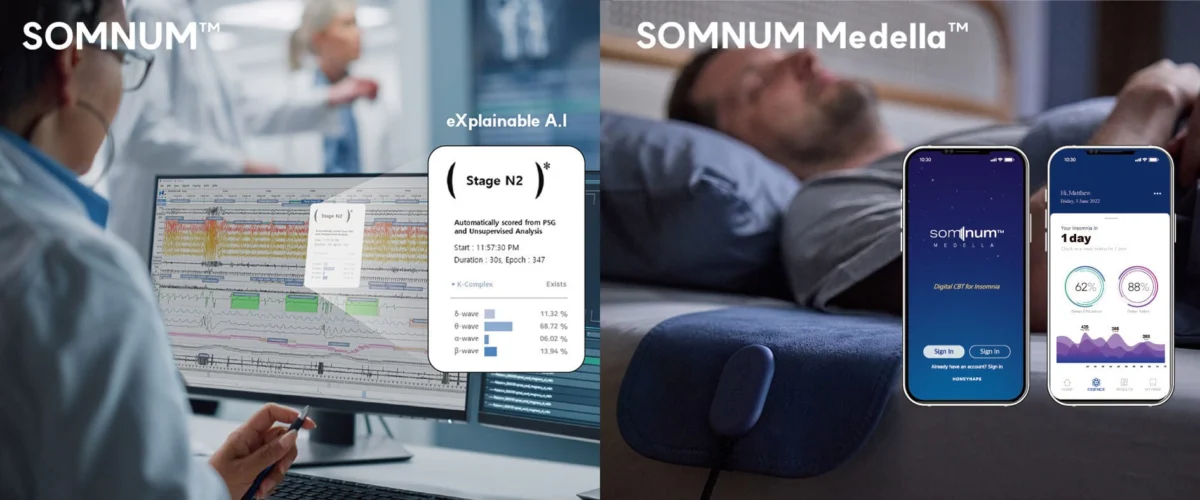
In a significant milestone for sleep medicine and diagnostic technology, HoneyNaps has officially secured 510(k) clearance from the U.S. Food and Drug Administration (FDA) for its latest iteration of the SOMNUM software. SOMNUM V3.0 represents a leap forward in clinical decision support, moving beyond basic sleep staging to provide automated, high-precision detection and differentiation of sleep-disordered breathing events. By leveraging sophisticated artificial intelligence (AI) to categorize apnea subtypes, the software promises to streamline the diagnostic workflow for clinicians and improve the granularity of data available for personalized patient treatment plans.
The Evolution of SOMNUM: A Chronology of Innovation
The journey of SOMNUM from a novel diagnostic tool to a comprehensive clinical assistant has been marked by iterative development and a commitment to regulatory rigor.
The initial iteration of the software, SOMNUM V1.1.2, set the stage by providing automated sleep staging and fundamental respiratory event detection. This early version was a proof-of-concept for the industry, demonstrating that AI-driven analysis could reliably match or exceed the speed of manual scoring performed by sleep technicians. With the recent FDA approval of SOMNUM V3.0, HoneyNaps has significantly expanded the platform’s scope.
This progression reflects a broader trend within the medical device industry: the transition from "automation for efficiency" to "automation for precision." While the first version focused on the time-consuming process of scoring sleep stages, the V3.0 release targets the complex, nuanced diagnostic challenge of distinguishing between different physiological drivers of apnea. This development follows a period of rigorous validation studies and collaborative efforts with clinical sleep centers, ensuring that the software meets the stringent demands of modern hospital environments.
Deep Dive: How SOMNUM V3.0 Transforms PSG Analysis
Polysomnography (PSG) remains the "gold standard" for diagnosing sleep disorders, yet it is notoriously data-intensive. A single overnight study generates hundreds of pages of multi-channel biosignals, including electroencephalography (EEG), electrocardiography (ECG), respiratory effort, and oxygen saturation. Traditionally, a sleep technologist must manually review this data—an arduous task that is susceptible to inter-scorer variability.
Automated Detection and Differentiation
The core value proposition of SOMNUM V3.0 lies in its ability to classify respiratory events into three distinct categories: Obstructive Sleep Apnea (OSA), Central Sleep Apnea (CSA), and Mixed Sleep Apnea (MSA).
- Obstructive Sleep Apnea (OSA): Characterized by physical airway collapse. SOMNUM identifies the characteristic respiratory effort patterns that persist despite the lack of airflow.
- Central Sleep Apnea (CSA): Caused by a failure of the brain to signal the muscles to breathe. The software identifies the absence of both airflow and respiratory effort.
- Mixed Sleep Apnea (MSA): A combination of both types, requiring precise timing analysis to differentiate from pure OSA or CSA.
By analyzing these subtle physiological patterns in multi-channel biosignals, SOMNUM V3.0 provides event-level classification. Unlike conventional indices, such as the Apnea-Hypopnea Index (AHI), which provides a "snapshot" of severity, SOMNUM’s event-level granularity allows clinicians to see exactly when and why breathing stops. This distinction is clinically vital, as the treatment pathways for OSA (often CPAP therapy or oral appliances) differ significantly from those for CSA (often adaptive servo-ventilation or managing underlying cardiac/neurological conditions).
Supporting Data: Validation and Clinical Performance
The path to FDA 510(k) clearance is paved with data, and for SOMNUM V3.0, the validation results were a critical pillar of the submission. According to the data submitted to the FDA, the AI algorithms achieved an overall percent agreement of more than 97% across all categories of respiratory events.
This level of accuracy is statistically significant because it minimizes the risk of diagnostic error. In clinical settings, the agreement between manual human scorers can fluctuate based on fatigue, experience, and the ambiguity of the signal. By establishing a consistent, machine-based baseline, SOMNUM V3.0 reduces the variance that can occur in high-volume sleep clinics.
The software acts as a "second set of eyes," identifying patterns that might be overlooked in a manual review of complex, comorbid cases. By providing a consistent analysis, the tool enables physicians to spend less time "scoring" the data and more time interpreting the clinical implications for the patient.
Official Responses: Insights from HoneyNaps Leadership
The FDA clearance is viewed by HoneyNaps not merely as a regulatory win, but as a validation of their overarching strategy in digital health.
"The FDA 510(k) clearance for SOMNUM V3.0 represents regulatory validation of our AI algorithm’s clinical performance in automatically detecting and differentiating OSA, CSA, and MSA," says Sean Ha, president of HoneyNaps USA. "We remain focused on advancing AI-driven sleep diagnostics through continued innovation in automated analysis and next-generation digital biomarkers."
Ha’s statement underscores the company’s intent to remain at the forefront of the sector. For HoneyNaps, this clearance is a platform upon which future diagnostic tools will be built. The leadership team emphasizes that their mission is to reduce the "black box" nature of sleep diagnostics, providing clinicians with clear, data-backed insights that are easily integrated into existing electronic health record (EHR) systems.
Clinical Implications: The Future of Sleep Medicine
The introduction of SOMNUM V3.0 into the clinical ecosystem has profound implications for patient care, operational efficiency, and the future of digital health.
1. Enhanced Precision in Treatment Planning
Not all sleep apnea is created equal. Current protocols often rely on a single, aggregate AHI score to determine the severity of a patient’s condition. With the ability to automatically identify the ratio of obstructive vs. central events, physicians can tailor treatment plans more effectively. For example, a patient with a high percentage of central events might be referred to a cardiologist for an underlying heart condition, whereas a patient with pure OSA may be fast-tracked for a CPAP titration study.
2. Efficiency in Clinical Workflows
Sleep clinics worldwide face a shortage of qualified sleep technologists. The manual scoring of PSG studies is one of the most time-consuming aspects of the business. By automating the bulk of the scoring process with 97% accuracy, clinics can handle a higher volume of patients without compromising the quality of the report. This, in turn, can help reduce the long waiting lists that are common in sleep medicine departments.
3. The Next Frontier: Digital Biomarkers
Looking ahead, the development of SOMNUM V3.0 is a precursor to more advanced diagnostic metrics. HoneyNaps has confirmed that they are actively developing "next-generation" digital biomarkers, including:
- Hypoxic Burden: A measure of the cumulative amount of oxygen deprivation, which is increasingly linked to cardiovascular risk.
- Arousal Burden: Analyzing the frequency and nature of micro-arousals that disrupt sleep architecture.
- Ventilatory Burden: Assessing the instability of breathing patterns during sleep.
These metrics offer a more comprehensive view of "sleep health" than simple event counts. HoneyNaps plans to seek additional FDA clearances for these features, signaling that the current iteration of SOMNUM is just the beginning of a broader, deeper diagnostic suite.
Conclusion: A New Standard for Diagnostics
The clearance of SOMNUM V3.0 marks a maturation point for AI in sleep medicine. No longer a peripheral tool for basic data cleaning, AI is now capable of performing high-level clinical differentiation that directly informs patient care.
For the medical community, the adoption of such technology represents a shift toward "Precision Sleep Medicine." By combining the speed of AI with the interpretive expertise of sleep specialists, the field is moving closer to a future where sleep apnea diagnosis is faster, more accurate, and more deeply integrated into the broader landscape of patient health management. As HoneyNaps continues to refine its digital biomarkers and expand the capabilities of the SOMNUM platform, the impact on patient outcomes—and the efficiency of the healthcare systems that treat them—will likely be profound.