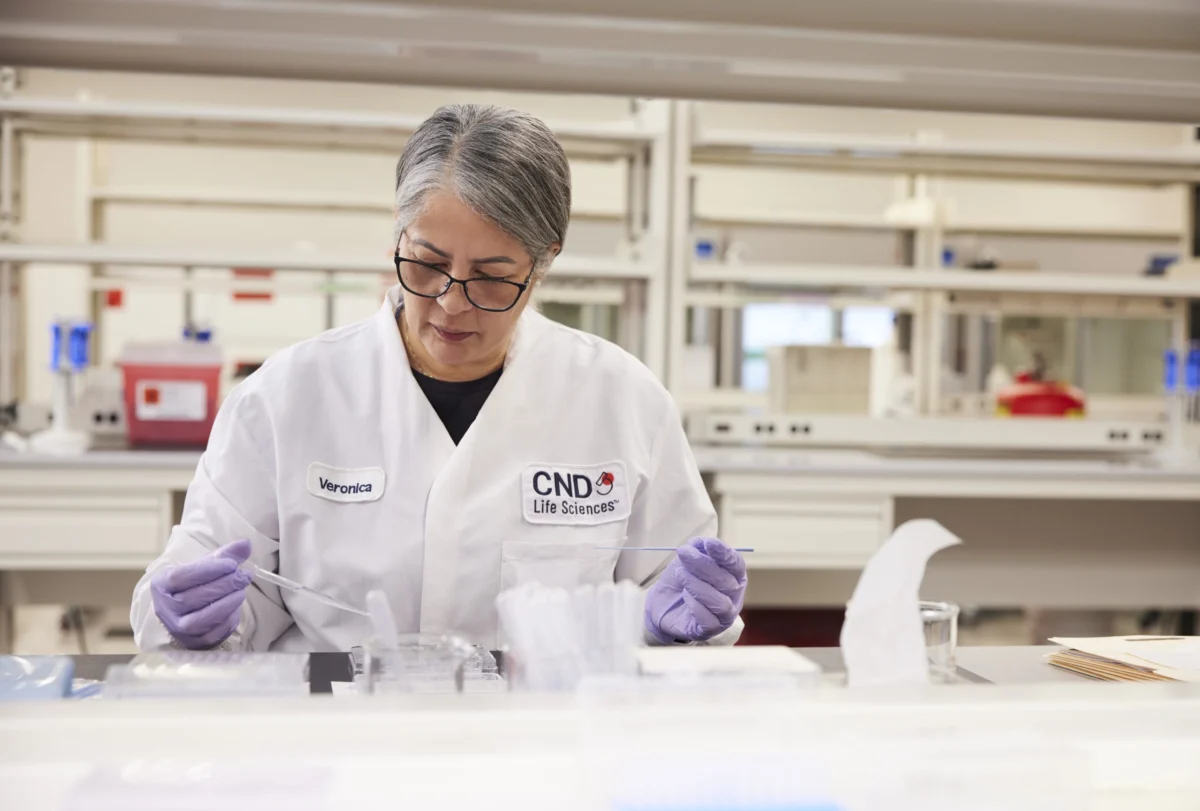
In a significant milestone for the field of neurodiagnostics, CND Life Sciences has successfully closed a new growth financing round aimed at accelerating the commercial expansion and technological evolution of its flagship diagnostic platform. The funding, led by the operator-led healthcare investment firm S-Curve Partners and supported by existing shareholders, signals a growing momentum in the push for objective, biomarker-based testing in the diagnosis of neurodegenerative diseases.
As the global healthcare community shifts toward precision medicine, CND Life Sciences is positioning itself at the forefront of this transition, particularly concerning the detection of synucleinopathies—a group of disorders characterized by the abnormal accumulation of the protein alpha-synuclein.
Main Facts: A New Era for Synucleinopathy Diagnostics
The core of CND Life Sciences’ offering is the Syn-One Test, a proprietary, skin biopsy-based laboratory-developed test. Unlike traditional diagnostic methods for neurodegenerative diseases, which have historically relied heavily on subjective clinical assessments and symptom observation, the Syn-One Test provides objective evidence of disease pathology.
By analyzing skin biopsies for the presence of phosphorylated alpha-synuclein and other pathological markers, the test allows clinicians to gain granular insights into patients suffering from complex neurological conditions. These include:
- REM Sleep Behavior Disorder (RBD): A condition frequently identified as a prodromal marker for later neurodegenerative disease.
- Parkinson’s Disease: The most common movement disorder.
- Dementia with Lewy Bodies: A complex neurocognitive condition.
- Multiple System Atrophy (MSA): A rare but aggressive neurodegenerative disorder.
The recent financing round is intended to serve as a catalyst for three primary objectives: expanding the commercial footprint of the Syn-One platform, fostering internal product innovation, and strengthening strategic partnerships with pharmaceutical companies and research institutions. Furthermore, the company plans to integrate its existing biopsy platform into a broader "multimodal biomarker" capability, aiming to offer a more holistic view of disease progression and characterization.
Chronology: Building a Foundation for Growth
To understand the significance of this funding, it is necessary to examine the trajectory of CND Life Sciences since the introduction of its flagship test.
- 2020: Commercial Launch: The Syn-One Test moved from the research and development phase into clinical practice, marking a pivot point for the company. It provided neurologists with a practical tool to move beyond clinical guesswork.
- 2020–2023: Rapid Adoption: In a span of just three years, the test was utilized by over 4,000 clinicians across the United States. This rapid uptake serves as a testament to the clinical necessity of more accurate diagnostic tools in neurology.
- 2023: Scaling Impact: By late 2023, the total number of patients evaluated using the Syn-One platform surpassed 60,000, creating a robust dataset that validates the utility of cutaneous phosphorylated alpha-synuclein as a biomarker.
- 2024: Strategic Financing: The recent investment round led by S-Curve Partners marks the beginning of the next growth phase, moving the company from a "category-defining product" provider to a multifaceted neurodiagnostics platform.
Supporting Data: Why Objective Biomarkers Matter
The necessity for this financing is rooted in a fundamental problem within modern medicine: neurodegenerative diseases are notoriously difficult to diagnose in their early stages. Misdiagnosis rates for conditions like Parkinson’s or Lewy body dementia remain high, often leading to delayed interventions and inappropriate treatment plans.
The clinical evidence supporting the Syn-One Test has grown alongside its usage. Peer-reviewed studies have consistently demonstrated that skin biopsies can identify the presence of misfolded proteins long before the most severe clinical symptoms emerge. For patients with REM sleep behavior disorder—many of whom will eventually develop a more severe synucleinopathy—this early identification is critical.
As the industry moves toward the development of disease-modifying therapies, the role of an objective biomarker cannot be overstated. If a drug is designed to clear alpha-synuclein, clinicians need a baseline to measure efficacy. The data generated by CND’s 60,000+ patient evaluations provide a scalable foundation for this type of precision tracking.
Official Responses: The Vision for the Future
The leadership at CND Life Sciences and S-Curve Partners have framed this investment as more than just a capital infusion; they view it as a strategic alignment of vision regarding the future of neurology.
Rick Morello, CEO at CND Life Sciences, expressed his gratitude for the continued support of the firm’s investors. "We are pleased to deepen our relationship with S-Curve Partners and grateful for the continued support of existing investors and shareholders," Morello stated. "S-Curve’s confidence in CND’s mission reflects the progress our team has made in expanding clinical adoption and advancing the science behind our scalable neurodiagnostics platform."
Dr. Todd Levine, chief medical officer and co-founder at CND, emphasized the clinical implications from a practitioner’s perspective. "As a neurologist, I am encouraged to see the neuroscience field move toward multimodal biomarkers and earlier intervention," he noted. Dr. Levine highlighted that the flexibility provided by the new financing will allow the company to "invest in innovation, expand access to the Syn-One platform, and strengthen our pharmaceutical and research relationships."
From the investor’s side, Daniel Livschutz, founding partner at S-Curve Partners, underscored the urgent need for innovation in this space. "Neurodegenerative diseases remain among the most underdiagnosed and misdiagnosed conditions in medicine," Livschutz said. "As disease-modifying therapies emerge, objective biomarkers will only become more essential. We believe CND has built one of the most differentiated platforms in neurodiagnostics, and this financing is intended to accelerate its evolution."
Implications: A Shifting Landscape in Neurology
The implications of this funding for the medical community, the pharmaceutical industry, and, most importantly, patients, are profound.
1. The Shift to Precision Medicine
For decades, neurology has lagged behind oncology in the adoption of precision diagnostics. While cancer treatment has been revolutionized by biopsy-based molecular profiling, neurodegeneration has remained largely reliant on clinical observation. CND’s expansion represents a shift toward a "biopsy-first" approach, where biological proof replaces diagnostic ambiguity.
2. Supporting Emerging Therapies
Pharmaceutical companies are currently pouring billions of dollars into therapies aimed at treating neurodegenerative diseases at the molecular level. However, these trials often face hurdles related to patient selection. By utilizing CND’s biomarker platform, researchers can more accurately enroll patients who possess the specific pathological profile (i.e., abnormal alpha-synuclein) that a trial drug is designed to target, thereby increasing the likelihood of successful outcomes.
3. Impact on Patient Care
For the patient, the ability to obtain an objective diagnosis provides clarity that is often missing in the current diagnostic odyssey. Receiving an accurate, biomarker-confirmed diagnosis can alleviate the anxiety associated with undiagnosed symptoms, allow for more accurate prognosis, and empower families to plan for the future with greater certainty.
4. Future Integration
Looking forward, the mention of "multimodal biomarker capabilities" suggests that CND is looking to combine its skin biopsy data with other diagnostic inputs, such as imaging or fluid-based biomarkers. This holistic approach could define the next decade of neurological care, where a patient’s "molecular fingerprint" determines their therapeutic pathway.
Conclusion
The successful financing round for CND Life Sciences is a clear indicator that the market for objective, actionable neurodiagnostics is maturing. By providing clinicians with a robust, evidence-backed tool to identify synucleinopathies, the company is bridging the gap between historical diagnostic limitations and the promising future of precision neurology. As the company uses these funds to innovate and scale, it will likely play an instrumental role in how we diagnose, treat, and ultimately, manage the most challenging neurodegenerative diseases of our time.