










When the NHS launched its ambitious 10-year health plan last summer, the reaction from the sector was mixed. While the vision for a digitally enabled health service was broadly welcomed, the document faced immediate scrutiny for its perceived lack of a granular "delivery chapter." Critics argued that without a roadmap, the lofty goals risked becoming mere aspirations.
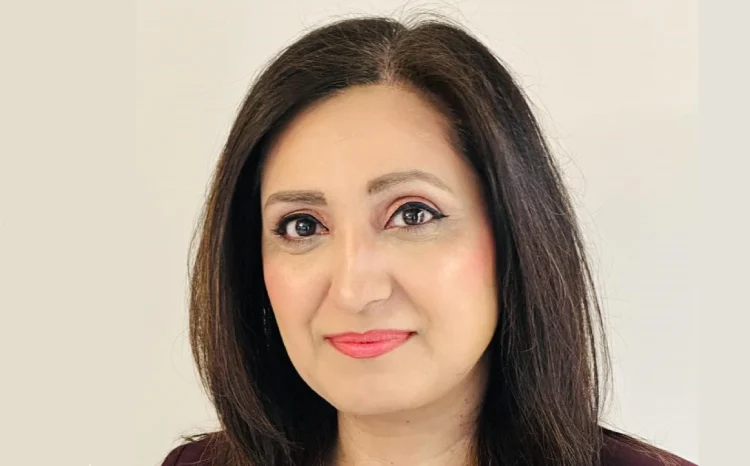
For Salma Yasmeen, Chief Executive of the Sheffield Health Partnership University NHS Foundation Trust, that missing chapter was never a hurdle. Instead, it served as a catalyst for local empowerment. Ahead of her keynote appearance at the upcoming Digital Health Summer Schools 2026 in Nottingham, Yasmeen sits down to discuss how her trust has bypassed the need for central hand-holding to drive a genuine, digital-first transformation.
The Strategic Pivot: Turning Ambition into Action
When Yasmeen joined the Sheffield Health Partnership in 2023, she inherited an organisation at a crossroads. Once a pioneer in healthcare innovation, the trust had seen its digital maturity stagnate over two decades as financial pressures and the rapid pace of technological change took their toll.
"The 10-year plan landed at a brilliant time for us," Yasmeen explains. "It enabled us to consider our level of ambition. We have ensured that digital is a ‘golden thread’ through our five-year strategy, supporting our wider goal of delivering care closer to home and aligned with the lived realities of our communities."
For Yasmeen, the 10-year plan has served its most critical purpose: elevating digital discussions from the IT department to the boardroom. By framing digital transformation not as an infrastructure project—a simple matter of installing an Electronic Patient Record (EPR) system—but as a strategic necessity for clinical quality and sustainability, she has successfully shifted the culture of the trust.
Chronology of Transformation: A Case Study in ADHD Services
The practical application of this strategy is best exemplified by the trust’s response to the surging demand for adult ADHD services. Rather than falling back on the traditional, unsustainable model of demanding increased staff output, the trust utilized the digital mandate to overhaul the entire patient pathway.
- 2023: Upon Yasmeen’s arrival, the trust identified critical gaps in service capacity and digital readiness.
- 2024: Integration of digital transformation into the trust’s long-term strategy. The board moves from viewing digital as a "siloed technical project" to a "core operational pillar."
- 2025: Implementation of ambient voice technology to alleviate administrative burdens on clinicians.
- 2026: Full redesign of the workforce model. By leveraging technology to automate documentation, the trust has allowed clinicians to operate at the "top of their license," significantly improving both workflow efficiency and staff morale.
"The reality is that resources across the system remain constrained," Yasmeen notes. "Our opportunity lies in thinking differently about how we deliver care. We are using the plan to drive reform, with digital solutions helping us optimise services and tackle complex challenges."
Addressing the "Delivery Gap" Criticism
One of the most persistent criticisms of the national 10-year plan has been the lack of a top-down delivery framework. However, Yasmeen views this not as a flaw, but as a design choice that respects the autonomy of local health systems.
"It wouldn’t have made sense for the centre to dictate exactly what every trust needs to do," she argues. "We hadn’t yet solidified our own foundations and infrastructure. Instead of waiting for central instructions, we got on with the work of translating that vision into what it means for the people of Sheffield and South Yorkshire."
The Multi-Tiered Delivery Approach:
- System-Wide Collaboration: The trust is working closely with local partners to create granular, internal delivery plans that account for the unique needs of mental health and learning disability patient populations.
- Infrastructure First: Recognizing that digital maturity is uneven across the NHS, the trust prioritized fundamental improvements before attempting to roll out high-end AI or predictive analytics.
- The "Neighborhood Model": By aligning with the national focus on neighborhood-level care, the trust is ensuring that digital tools serve to connect, rather than fragment, patient pathways.
The CEO’s Role: Cultivating the Conditions for Innovation
When asked about the role of a leader in a digital age, Yasmeen is refreshingly candid. "I don’t believe the chief executive needs to be the digital expert. That’s not me. But I absolutely must be the person who creates the conditions for change."
She emphasizes that the board’s role is to foster an environment where "innovation is encouraged and where people feel safe to test, learn, adapt, and improve." By integrating digital into the trust’s quality priorities and financial planning, Yasmeen ensures that technology is never treated as a "separate workstream" for the tech teams to handle in isolation.
The Equity Imperative: Avoiding the Digital Divide
As the NHS moves rapidly from analogue to digital, a significant ethical challenge looms: the risk of widening health inequalities. Yasmeen is acutely aware of the danger that digital-first might become "digital-only" for the most vulnerable.
"If we’re not careful, digital innovation could unintentionally widen existing inequalities," she warns. Her philosophy is centered on "Design-in Equity."
- Community Involvement: Digital solutions must be shaped by the people they serve. This involves understanding how different groups experience access to care.
- Human-Centric Design: In mental health, the human connection is paramount. Technology must be designed to enhance, not replace, these vital relationships.
- The Litmus Test: The ultimate measure of success for Yasmeen is simple: "Does the person who traditionally struggles most to access care find it easier after we’ve introduced a digital solution? If they don’t, we’ve still got work to do."
Implications for the Future of NHS Digital Health
Looking ahead to the Digital Health Summer Schools 2026, Yasmeen expects the conversation to be dominated by the buzz surrounding Artificial Intelligence. While she acknowledges the potential of AI, she remains focused on the "unglamorous" work that yields the most significant results: adoption, culture, and benefits realization.
Key Focus Areas for the Coming Year:
- Beyond the Hype: Moving from the "AI conversation" to the "implementation conversation."
- Digital Inclusion: Ensuring that the "neighborhood health" model does not rely solely on digital literacy.
- Sustainability: Proving that digital transformation leads to reduced waiting times and a more sustainable workforce.
As the NHS continues to navigate the complexities of the 10-year plan, leaders like Salma Yasmeen are demonstrating that the true power of the plan lies in its flexibility. By shifting the focus from national mandates to local implementation, the Sheffield Health Partnership is proving that digital transformation is less about the software and more about the human systems that support it.
"If people spend less time waiting, less time repeating their story, and more time getting the care they need," Yasmeen concludes, "then we’ve got it right. That is how we will know that the vision of the 10-year plan has truly become a reality."
Salma Yasmeen will be appearing at Digital Health Summer Schools 2026, the premier learning and networking event for digital health leaders, 16-17 July at the University of Nottingham.
The event is supported by Digital Health Networks sponsors Altera, AWS, CereCore, Dell Technologies, AMD, Imprivata, InterSystems, Microsoft, and Salesforce.