In the quest to decipher the biological mysteries of Alzheimer’s disease, modern medicine is undergoing a paradigm shift. For decades, the focus of neurodegenerative research has been almost exclusively confined to the cranium, investigating the accumulation of amyloid plaques and tau tangles within the brain’s architecture. However, a groundbreaking study led by researchers at Houston Methodist suggests that the roots of Alzheimer’s may stretch far deeper into the body’s metabolic framework than previously imagined.
New findings published in Molecular Neurodegeneration indicate that metabolic health—specifically obesity—serves as a potent catalyst for the pathological processes that accelerate cognitive decline. By identifying a specific class of fat molecules that act as messengers of systemic damage, the research team has opened a new frontier in the prevention and treatment of a disease that currently affects over 6.5 million Americans.
The Metabolic Connection: A Paradigm Shift in Neuroscience
For years, epidemiological data have shown a correlation between obesity and an increased risk of Alzheimer’s disease, yet the mechanistic "why" remained elusive. Was it merely a byproduct of systemic inflammation, or was there a more direct, molecular conduit between adipose tissue and the brain?
The study, co-led by Stephen Wong, Ph.D., the John S. Dunn Presidential Distinguished Chair in Biomedical Engineering, and Li Yang, Ph.D., a research associate in the Chao Center for BRAIN at Houston Methodist, provides a compelling answer. Their research posits that obesity-associated metabolic shifts do not merely exist in parallel with Alzheimer’s; they actively contribute to the biochemical environment that allows the disease to flourish.
The Role of Phosphatidylethanolamines (PEs)
At the heart of this discovery are phosphatidylethanolamines (PEs), a class of lipid molecules found in cell membranes throughout the human body. Under normal conditions, these lipids are essential for healthy cellular function. However, the study reveals that in the presence of obesity, the body’s lipid landscape undergoes a dangerous transformation.
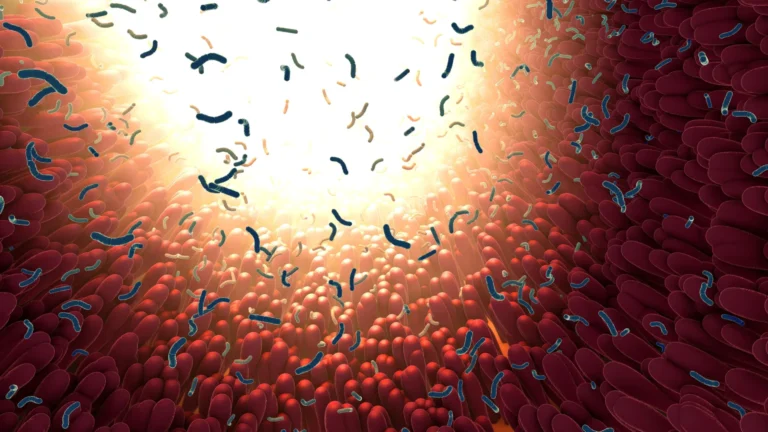
Obesity triggers an elevation in PE levels within body tissues. These surplus lipids are then packaged into tiny extracellular vesicles—microscopic particles that function like biological courier ships. These vesicles travel through the circulatory system, crossing the blood-brain barrier to deliver their cargo directly into the neural environment. Once inside, these lipid-heavy particles wreak havoc: they disrupt communication between neurons, impair the brain’s innate immune system, and—most crucially—catalyze the aggregation of amyloid proteins, the hallmark lesions of Alzheimer’s disease.
Chronology of the Discovery: From Hypothesis to Validation
The road to this discovery involved an intricate mapping of metabolic pathways and their downstream effects on neural tissue.
- Initial Observation: The research team first identified that subjects with high body mass indices (BMI) exhibited distinct lipid profiles compared to lean subjects. Specifically, the abundance of PEs stood out as a potential biomarker for metabolic dysfunction.
- Tracking the Signal: Using advanced biomedical engineering techniques, the team tracked how these lipids moved from peripheral tissues into the brain. They discovered that the delivery mechanism—the tiny particles mentioned above—was more efficient in obese models, effectively "hijacking" the brain’s protective barriers.
- Pathological Interference: Once the researchers established that these PEs were entering the brain, they observed the subsequent collapse of synaptic health. They noted a marked increase in the density of amyloid plaques in areas of the brain associated with memory and cognitive function.
- The Intervention: The final phase of the study involved an attempt to restore balance. By manipulating the lipid profile to reduce the excess PEs, the researchers observed a corresponding reduction in brain inflammation and a stabilization of cognitive performance in experimental models.
Supporting Data and Scientific Significance
The data presented by the Houston Methodist team is striking. By comparing the cognitive performance of models with and without lipid-corrected treatments, the researchers provided a proof-of-concept that the obesity-Alzheimer’s link is not an irreversible trajectory.
The study indicates that when the "lipid balance" is restored, the brain’s immune cells (microglia) return to a more homeostatic state. This, in turn, facilitates the clearance of toxic proteins rather than their accumulation. The implication is profound: if we can manage the metabolic output of adipose tissue, we may be able to alter the trajectory of neurodegeneration long before clinical symptoms—such as memory loss or confusion—ever manifest.
The scope of this research is backed by a robust team of collaborators, including experts from the University of Texas, San Antonio, Boston University, and Ohio State University, underscoring the interdisciplinary nature of the findings. The work was made possible through grants from the Cure Alzheimer’s Fund, the T.T. and W.F. Chao Foundation, and the John S. Dunn Research Foundation.
Official Responses and Expert Perspective
Dr. Stephen Wong emphasizes that this discovery shifts the narrative of Alzheimer’s from a purely neurological "death sentence" to a manageable systemic condition.
"Obesity can change how signals travel to the brain," Dr. Wong stated. "The good news is that this may be something we can treat. Instead of looking at Alzheimer’s risk tied to obesity as just a metabolic problem, this research suggests we may be able to target the process that connects those changes to the brain."
Dr. Li Yang, while optimistic, maintains a tempered, scientific outlook regarding the transition from benchtop to bedside. "More research will be required before treatments aimed at PEs can be tested as prevention or therapy in people," Yang noted. "However, these findings introduce a possible strategy for intervening earlier in individuals whose metabolic health may place them at greater risk of Alzheimer’s disease."
The scientific community has received the findings with significant interest, noting that the focus on lipid transport mechanisms provides a highly specific, druggable target for pharmaceutical intervention, which has been a major hurdle in Alzheimer’s drug development.
Implications for Public Health
The urgency of this research cannot be overstated. According to the Centers for Disease Control and Prevention (CDC), the Alzheimer’s epidemic is on a trajectory to impact nearly 14 million Americans by the year 2060. As the population ages, the intersection of the obesity epidemic and the Alzheimer’s crisis creates a "double burden" on the healthcare system.
A New Strategy for Prevention
The implications for public health are twofold:
- Early Screening: If PEs are indeed a primary driver, screening for lipid imbalances could eventually become part of a routine metabolic panel for middle-aged adults, allowing for "pre-symptomatic" intervention.
- Lifestyle as Medicine: While pharmaceutical interventions are being developed, these findings reaffirm the critical importance of metabolic health. Managing obesity through diet, exercise, and pharmacological means may be one of the most effective ways to preserve long-term cognitive integrity.
Future Therapeutic Pathways
The researchers are already looking toward the next phase of development. If the pathway that carries these lipids to the brain can be blocked, or if the lipids themselves can be neutralized or sequestered, it could lead to a novel class of neuroprotective drugs. Unlike current amyloid-clearing therapies that target the end-stage damage, a treatment based on the Houston Methodist findings would address the source of the signaling, potentially stopping the disease at its inception.
Conclusion: Bridging the Gap
The study conducted at Houston Methodist represents a vital step toward a holistic understanding of human biology. For too long, the brain has been treated as an isolated organ, disconnected from the systemic fluctuations of the body. By identifying the lipid-based "bridge" between obesity and Alzheimer’s, researchers have moved closer to a comprehensive solution.
While clinical trials are the necessary next step to confirm these findings in humans, the path forward is clearer than ever. By addressing the metabolic "damaging signals" before they reach the brain, the medical community may finally be able to turn the tide against a disease that has devastated families for generations. The research serves as a poignant reminder that when it comes to the health of our minds, the body—and everything we put into it—matters.