For the millions living with Ehlers-Danlos syndrome (EDS), the journey to a diagnosis is often paved with inconclusive medical imaging. A patient presents with debilitating neurological symptoms, chronic pain, or intermittent weakness, only to be met with a standard MRI report that describes their spine as “unremarkable.”
This diagnostic mismatch—where clinical reality clashes with radiological findings—has long been a source of frustration. However, a growing movement within the medical community is challenging the reliance on traditional supine (lying down) MRI. By exploring the potential of upright, weight-bearing MRI, clinicians and researchers are beginning to ask whether the issue lies not with the patient’s health, but with the perspective from which we view the spine.
Main Facts: The Physics of the EDS Spine
Ehlers-Danlos syndrome is a group of hereditary connective tissue disorders characterized by joint hypermobility, tissue fragility, and skin hyperextensibility. Because connective tissue serves as the structural "glue" of the human body, its dysfunction can lead to widespread instability throughout the spinal column.
In a healthy individual, ligaments and tendons provide a stable scaffold that allows the spine to support the body’s weight while protecting the delicate spinal cord and nerve roots. In patients with EDS, this scaffold is often lax. The problem is inherently mechanical and dynamic: the spine may maintain structural integrity while a patient is lying flat on a hospital gurney, but under the gravitational stress of sitting or standing, that same spine may collapse, shift, or compress.
The Diagnostic Mismatch
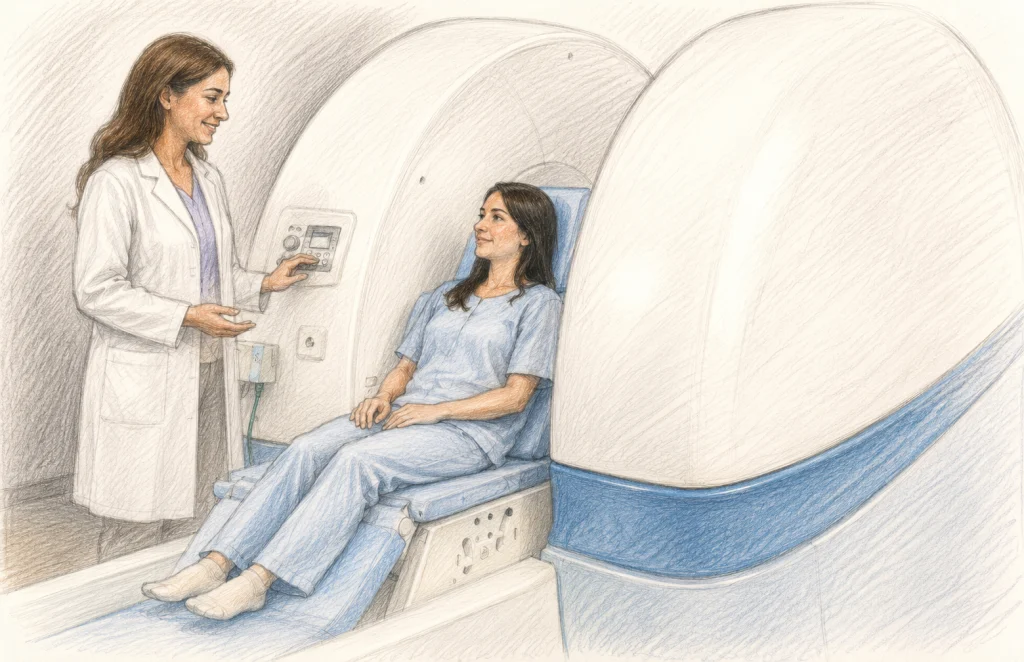
Traditional MRI machines are designed for the supine position. While these scanners offer superior image resolution, they capture the body in its most "decompressed" state. When a patient with EDS is experiencing symptoms primarily while upright, the supine MRI captures a snapshot of the spine at rest—a state that may not reflect the pathology occurring during daily activities. Relying solely on these images can lead to a "normal" result that fails to capture the true nature of a patient’s condition.
Chronology: A Shift in Diagnostic Thinking
The conversation surrounding positional imaging has evolved significantly over the last two decades.
- Early 2000s: Initial reports emerge identifying a correlation between craniocervical instability (CCI) and connective tissue disorders. Clinicians begin noting that symptoms of "cranial settling" often vanish when the patient is supine.
- 2007: A landmark study by Milhorat et al. highlights the syndrome of occipitoatlantoaxial hypermobility, underscoring that traditional diagnostic criteria often miss the nuances of EDS-related spinal complications.
- 2015–2018: Health Quality Ontario and various academic researchers begin formalizing the review of "positional" or "dynamic" MRI. The technology gains visibility as a specialized tool rather than a standard of care.
- 2022–2025: Systematic reviews, including those published in the Global Spine Journal and European Journal of Radiology Open, start to map the clinical utility of upright imaging. The focus shifts toward evidence-based applications, particularly for complex spinal alignment issues.
- 2026: Emerging protocols, such as the Manjila Chiari Protocol 2.0 (MaChiP 2.0), begin incorporating AI and dynamic imaging to better evaluate head and neck symptoms, marking a new era in precision diagnostics for EDS patients.
Supporting Data: Why Gravity Matters
The scientific argument for upright MRI rests on the physiological impact of gravity on the spinal canal.
Detecting Weight-Bearing Abnormalities
Research consistently demonstrates that upright MRI can reveal abnormalities that disappear in the supine position. These include:
- Alterations in Spinal Alignment: The "S" curves of the spine are altered under load, potentially pinching nerves that appear free in a lying position.
- Spinal Canal Narrowing: Stenosis or narrowing of the canal often becomes more pronounced when the weight of the torso is added to the spinal column.
- CSF Flow Dynamics: Subtle blockages in the flow of cerebrospinal fluid, which can cause headaches and neurological deficits, are often more visible when the neck is under the stress of head-weight and gravity.
- Ligamentous Laxity: Imaging in different positions (flexion/extension) can capture the "sliding" of vertebrae that would otherwise be missed.
A 2025 systematic review identified nine distinct studies confirming that dynamic/upright MRI captures weight-bearing abnormalities that traditional imaging routinely misses. While the field strength of upright machines is often lower (0.6T–1.0T) compared to the standard 1.5T or 3T hospital scanners, the "functional" data provided is frequently considered superior for surgical planning in unstable spines.
Official Responses and Clinical Perspectives
Medical organizations have begun to acknowledge the necessity of these tools. The CCI Foundation now explicitly recommends upright MRI as part of the evaluation process for craniocervical instability.
However, the medical community remains cautious. The primary critique is that "demonstrating posture-dependent changes is not the same as proving clinical significance." Simply finding a shift in the spine does not automatically dictate surgery. Experts warn that because the spine is inherently flexible, finding an abnormality on an upright MRI requires careful correlation with the patient’s physical symptoms. If an imaging finding doesn’t match the clinical presentation, it may be an incidental finding rather than the cause of pain.
Implications: The Challenges of Implementation
Despite the technological potential, the path to obtaining an upright MRI remains fraught with systemic barriers.
1. Access and Availability
Upright MRI facilities are sparse. Unlike standard MRI scanners, which are found in virtually every community hospital, upright units require specialized infrastructure. This often forces patients to travel across state or country lines, creating a barrier for those with mobility issues or financial constraints.
2. Insurance and Coverage
Because upright MRI is often categorized as an "advanced" or "niche" diagnostic tool, many insurance providers are hesitant to cover the cost. Patients frequently face long, arduous pre-authorization processes or are forced to pay out-of-pocket, which exacerbates health inequities within the EDS community.
3. The Future of Diagnostic Protocols
The ultimate goal is not to replace the standard MRI, but to integrate upright imaging into a broader, more comprehensive diagnostic algorithm. As AI-assisted imaging (like the MaChiP 2.0 protocol) matures, it may help radiologists interpret the lower-field-strength images of upright machines with higher accuracy, potentially bridging the gap between "good enough" and "crystal clear."
When Might Upright MRI Be Relevant for You?
If you are living with EDS or a related connective tissue disorder, it may be time to discuss positional imaging with your specialist if you experience the following:
- Postural dependence: Your pain or neurological symptoms (dizziness, visual changes, numbness) improve significantly when you lie down and worsen shortly after standing or sitting.
- The "Unremarkable" Report: You have clear, debilitating physical symptoms, yet multiple supine MRIs have returned normal results.
- Mechanical Symptoms: You feel "clunking" or "shifting" in your neck or back when you move your head or change positions.
- Suspected CCI or Chiari: Your medical team is investigating issues at the craniocervical junction where the brain meets the spine.
Conclusion: A Clearer Picture
The spine is not a statue; it is a dynamic, load-bearing structure that functions in constant motion. For patients with Ehlers-Danlos syndrome, the standard "at-rest" view of the body is often insufficient to capture the mechanical instability driving their symptoms.
While upright MRI is not a panacea, it represents a critical evolution in our diagnostic toolkit. By allowing us to see the spine under the pressure of gravity, we move closer to a reality where "unremarkable" test results are replaced by clear, actionable answers. The technology is already here; the next frontier is ensuring that patients—regardless of their geography or insurance status—have the access necessary to finally see the full picture of their health.
Key Takeaways
- Supine vs. Upright: Standard MRI imaging often misses structural instability because it captures the spine in its least symptomatic, decompressed state.
- Functional Imaging: Upright MRI provides a "functional" view, revealing how the spine behaves under the weight-bearing demands of daily life.
- Clinical Utility: This tool is particularly vital for evaluating craniocervical instability, spinal stenosis, and abnormal CSF flow in EDS patients.
- The Access Gap: High-quality upright MRI is not yet a standard, widely available procedure, and patients often face significant insurance and travel barriers.
- Evidence-Based Use: Upright MRI should be used as a supplementary tool to guide clinical decision-making, especially when symptoms contradict standard radiological findings.