










By Kari McBride
Main Facts: The Misconception of Stamina
For many, the concept of "pacing" is relegated to the world of athletics—a strategic tool used by marathon runners and sprinters to conserve energy for the final stretch. However, for the millions living with chronic illness or persistent pain, pacing is not a sports strategy; it is a vital survival mechanism.
The fundamental conflict arises when the human heart, driven by passion, obligation, and the desire for normalcy, outpaces the physical reality of a body operating under the constraints of chronic fatigue or autoimmune dysfunction. When the brain—the analytical seat of caution—is overruled by the heart’s enthusiasm, the result is often a "crash." This phenomenon, frequently observed in conditions like Myalgic Encephalomyelitis/Chronic Fatigue Syndrome (ME/CFS), fibromyalgia, and long-term inflammatory disorders, represents a systemic failure to respect biological limits.
Chronology: From Oregon Streets to Domestic Realities
To understand the necessity of this shift in perspective, one must look at the origin of the struggle. Decades ago, on the gloomy, rain-slicked streets of Oregon, the Presidential Fitness Test served as a formative, albeit traumatic, lesson in physical endurance.
The High School Crucible:
During freshman year, the mile-long loop on Kruse Way became a personal arena of defeat. The instructions were simple: "Just pace yourself." Yet, the psychological pressure to perform, coupled with the immediate physical demand, led to a predictable cycle: a burst of unsustainable speed followed by a total collapse in stamina. By the time the turn onto Carman Drive arrived, the "run" had devolved into a sluggish, energy-depleted walk. The recovery process was non-existent; instead, there was only the immediate transition to the next period—Human Biology—an ironic setting for a young student whose own biological limits were being pushed beyond the breaking point.
The Modern Collision:
Fast-forward twenty years, and the context has changed, but the pattern persists. Recently, a single week presented a "perfect storm" of responsibilities: Teacher Appreciation Week, a school choir concert, and a daughter’s birthday. The heart, ignoring the history of physical limitation, committed to all three.
The trajectory of this "crash" was textbook:
- The Phase of Denial: Fueled by caffeine and the adrenaline of accomplishment, the subject managed to hang decorations, curate gifts, and rehearse songs.
- The Warning Signs: The body began to signal distress—a persistent tickle in the throat dismissed as allergies, followed by deep-seated muscular aches.
- The Total Collapse: A wave of cognitive and physical exhaustion hit, rendering the individual incapable of basic function.
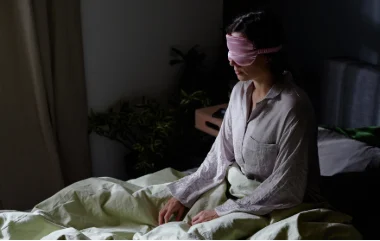
- The Aftermath: The following 76 hours were spent in a state of enforced recovery. Household chores—laundry, dishes, and cleaning—were abandoned as the body prioritized baseline survival over domestic productivity.
Supporting Data: The Science of the "Crash"
The experience described is not a failure of character; it is a physiological reality known in clinical circles as Post-Exertional Malaise (PEM).
According to medical research regarding chronic illness, PEM is the worsening of symptoms following even minor physical or mental exertion. Unlike healthy individuals who recover from exercise through a process of supercompensation (getting stronger after a workout), those with chronic conditions experience a depletion of ATP (adenosine triphosphate), the energy currency of the cells.
When an individual pushes through the pain—much like the high school student pushing through the mile run—they are not "getting in shape." They are instead triggering a systemic inflammatory response. Data suggests that for those with energy-limiting illnesses, the "envelope" of available energy is significantly smaller. When that envelope is breached, the body enters a recovery deficit that can last for days or weeks. The "76-hour recoup" period is a classic manifestation of the body attempting to recalibrate its internal systems after an expenditure of energy it could not afford.
Official Responses: Perspectives from Health Professionals
While the anecdotal evidence is powerful, the medical community has shifted its stance on how to advise patients managing chronic pain and fatigue. Dr. Eleanor Vance, a consultant in internal medicine, notes, "The most difficult hurdle for patients is the ‘boom-and-bust’ cycle. They feel a rare day of energy and immediately spend it all, only to suffer a week-long crash. Effective pacing requires the patient to stop before they feel tired, rather than stopping when they are forced to."
Occupational therapists often use a technique called "The Spoon Theory," a metaphor popularized by Christine Miserandino, to help patients visualize their energy limits. Each task—getting out of bed, showering, cooking, or socializing—costs a certain number of "spoons." Once the spoons are gone, the day is over. The challenge, as highlighted in the Oregon experience, is that the heart often wants to "borrow" spoons from tomorrow to pay for today’s excitement. The medical consensus is clear: the interest rate on that loan is physically ruinous.
Implications: Learning the Language of Limits
The implications of this realization are profound. It requires a radical restructuring of how one views productivity and self-worth. In a culture that equates "busy-ness" with value, choosing to pace oneself is a radical act of self-preservation.
1. The Redefinition of "Success":
Success is no longer measured by how much one has accomplished in a single week. Instead, it is measured by stability and the avoidance of the "crash." If the birthday decorations are hung but the cost is 76 hours of total exhaustion, the "success" of the task is negated by the cost of the recovery.
2. Cognitive Re-framing:
There is a necessary disconnect that must be established between the "heart" (the desires and emotional drives) and the "brain" (the logical monitor of physical capacity). The brain must serve as the gatekeeper, constantly assessing the "energy budget" before the heart makes commitments.
3. The Acceptance of "Good Enough":
For the high school runner on Kruse Way, "good enough" was finishing. For the adult managing chronic illness, "good enough" might mean buying gifts instead of making them, or keeping the house slightly untidy to preserve the energy needed for a daughter’s birthday. It involves letting go of the perfectionist impulse that often drives the "boom-and-bust" cycle.
Conclusion: A Note to the Self
The lesson learned in those gloomy Oregon mornings has finally been internalized, not as a mandate for athletics, but as a mandate for living. The note written to oneself—"Just pace yourself"—is not a suggestion for a race; it is a survival guide for a life lived with limitations.
Living with chronic illness necessitates a constant, vigilant negotiation with one’s own body. It requires the courage to say "no" to the heart’s immediate desires in order to say "yes" to long-term health and stability. While the dishes may sit in the sink and the laundry may remain unfolded for days, the true victory lies in the ability to wake up the following week with a stable, albeit limited, amount of energy—rather than spending those days trapped in the dark, silent rooms of physical recovery.
In the end, pacing is not about how fast one can reach the finish line. It is about realizing that for some of us, the race never actually ends, and the only way to reach the end of the day—and the next, and the next—is to walk at a speed that respects the delicate, complex, and finite biology of the human frame.