For the millions of individuals navigating the labyrinth of chronic pain, the most difficult aspect of their condition is often not the physical sensation itself, but the profound inability to articulate it. Chronic pain is an invisible adversary, a constant companion that does not manifest in bruises or broken bones, leaving those who suffer from it in a state of linguistic isolation. How do you describe a storm that never ends to those who have never seen the clouds?
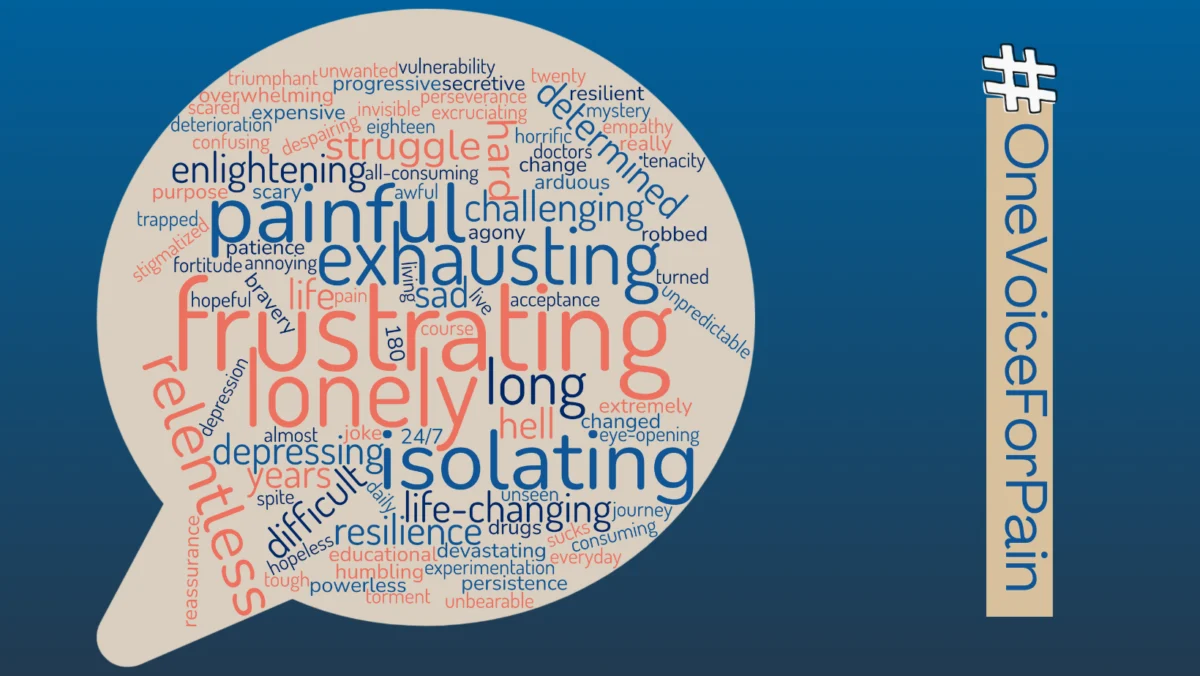
This September, in observance of Pain Awareness Month, a collaborative effort sought to bridge this gap. By asking patients to distill their complex, life-altering journeys into just three words, organizers created a tapestry of human experience—a word cloud that serves as both a mirror for the sufferer and a window for the outside world. The results are raw, harrowing, and ultimately, a testament to the human spirit.
The Anatomy of a Struggle: Core Themes in Patient Narratives
The data collected during this initiative reveals a stark consensus. When asked to summarize their reality, the most frequent descriptors were not medical, but existential: Isolating, Frustrating, Exhausting, Lonely, Painful.
These words represent the "silent symptoms" of chronic pain—the secondary impacts that are often ignored in clinical settings. The frustration is not merely physical; it is systemic. Patients frequently report that the struggle to be believed by medical professionals, employers, and family members is as debilitating as the pain itself. The frequency of words like "Lonely" and "Isolating" underscores a systemic failure in our social and healthcare infrastructure, where the burden of validation is placed entirely on the patient.
However, the survey also unearthed a duality. While "Relentless," "Devastating," and "Unbearable" dominated the entries, a subset of participants chose words like "Enlightening," "Resilience," and "Purpose." This suggests that for many, the journey through pain is not merely a path of deterioration, but a radical, forced transformation of the self.
Chronology of the Movement: From Silence to #OneVoiceForPain
The movement to destigmatize chronic pain has been a decades-long effort, transitioning from isolated patient support groups to a global advocacy network.
- The Early 2000s: Advocacy was largely fragmented, with patients finding solace in nascent online forums. The narrative was defined by a search for diagnosis, often involving a "medical odyssey" that lasted years.
- The 2010s: The focus shifted toward policy and the opioid crisis. Unfortunately, this period also saw a "chilling effect," where legitimate pain management became stigmatized, often leaving patients caught in the crossfire of restrictive prescribing policies.
- The Present Day: The current movement, exemplified by the #OneVoiceForPain initiative, represents a maturation of the advocacy landscape. It is no longer just about seeking a cure; it is about reclaiming the narrative. By utilizing social media and digital engagement tools, the movement has successfully shifted the focus from clinical metrics to lived experience.
The recent initiative during Pain Awareness Month serves as a culmination of these efforts, transforming the individual "three-word" summaries into a collective roar.
Supporting Data: The Scope of the Crisis
Chronic pain is not a niche issue; it is a global public health emergency. According to data from the Centers for Disease Control and Prevention (CDC) and various global health institutes, the prevalence of chronic pain is staggering.
- Prevalence: It is estimated that one in five adults globally lives with chronic pain. In the United States alone, that figure translates to over 50 million people.
- Economic Impact: The economic toll is measured in hundreds of billions of dollars annually, accounting for direct medical costs and, more significantly, the loss of productivity. When a person lives in "24/7" agony, their ability to participate in the workforce is fundamentally altered.
- The Gender Gap: Data consistently shows that women are more likely to suffer from chronic pain conditions, such as fibromyalgia and autoimmune disorders, yet their pain is statistically more likely to be dismissed or misdiagnosed as "psychosomatic" by clinical providers.
The "three-word" responses provide the human narrative that these statistics lack. While the data tells us how many are suffering, the word cloud tells us how they are suffering. Words like "Expensive" and "Stigmatized" point to the systemic barriers—the high cost of specialized care and the societal bias against those who cannot "perform" wellness.
Official Responses and Clinical Perspectives
The medical community is increasingly recognizing that the "biopsychosocial" model is the only way to treat chronic pain effectively. Dr. Elena Vance, a specialist in pain management, notes: "For years, medicine treated pain as a mechanical problem—a wire that needed fixing. We are finally learning that pain is an experience. If a patient says their life has ‘turned 180,’ that is not just a complaint; it is a clinical marker of the impact of the condition on their nervous system and their quality of life."
Advocacy groups are leveraging these narratives to push for policy changes, including better access to interdisciplinary care (which includes physical therapy, psychological support, and nutritional counseling) rather than relying solely on pharmacological interventions. The #OneVoiceForPain initiative has been praised by patient advocacy boards for its ability to humanize data. By stripping away the medical jargon, the campaign forces policymakers to see the person behind the patient ID number.
Implications: The Long Road to Validation
What does it mean for society when millions of people describe their existence as "Living in hell" or "Life turned 180"? The implications are profound.
1. Reforming Medical Education
The current medical curriculum often fails to equip doctors with the empathy or the tools to handle chronic, non-terminal pain. The "three-word" experiment highlights a desperate need for communication training. Doctors need to understand that the patient’s struggle is not a sign of failure to cure, but a reality of managing a chronic condition.
2. Social Policy and Employment
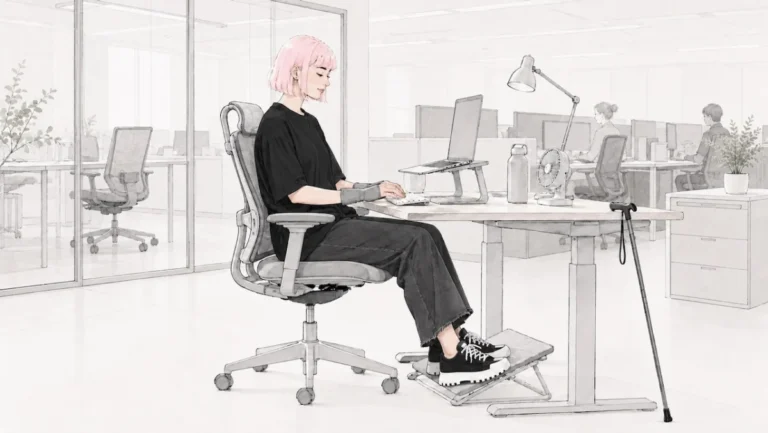
Chronic pain is the invisible disability. Modern workplaces are designed for the healthy, linear worker. Accommodating the "resilience" and "struggle" of those with chronic pain requires a shift toward radical flexibility. When someone says, "Live in spite," it indicates they are fighting to remain productive. Society must provide the infrastructure—flexible hours, ergonomic environments, and disability protections—that allows them to do so without further damaging their health.
3. Cultural Destigmatization
The word "Stigmatized" appearing in the survey is a wake-up call. We live in a culture that rewards "hustle" and "health." Chronic pain challenges this meritocratic myth. By bringing these stories into the light, the #OneVoiceForPain movement is attempting to normalize the existence of those who do not fit the mold of the "perfectly healthy citizen."
A Call to Action: Moving Forward
The #OneVoiceForPain campaign is more than a digital art project; it is a movement toward empathy. Three words cannot summarize a life, but they can initiate a conversation.
If we look at the word cloud, we see a spectrum. On one end, we see the absolute devastation of a life interrupted—the "lost years" and the "agony." On the other, we see "Acceptance" and "Purpose." This range is the reality of chronic pain. It is not a monolith. It is a diverse, complex, and deeply human experience that demands our attention.
As we move past Pain Awareness Month, the challenge remains: How do we keep these voices at the center of the conversation? The goal is to transition from a society that views chronic pain as a nuisance to be managed to one that views it as a human experience to be supported.
Every story shared in this campaign is a piece of a larger puzzle. By acknowledging the "exhausting," the "relentless," and the "life-changing" nature of this burden, we move one step closer to a healthcare system that treats the whole person, and a society that values the humanity of those who live in spite of pain.
The silence is broken. The pain is no longer invisible. It is now, collectively, a voice that demands to be heard, understood, and ultimately, addressed with the gravity it deserves.