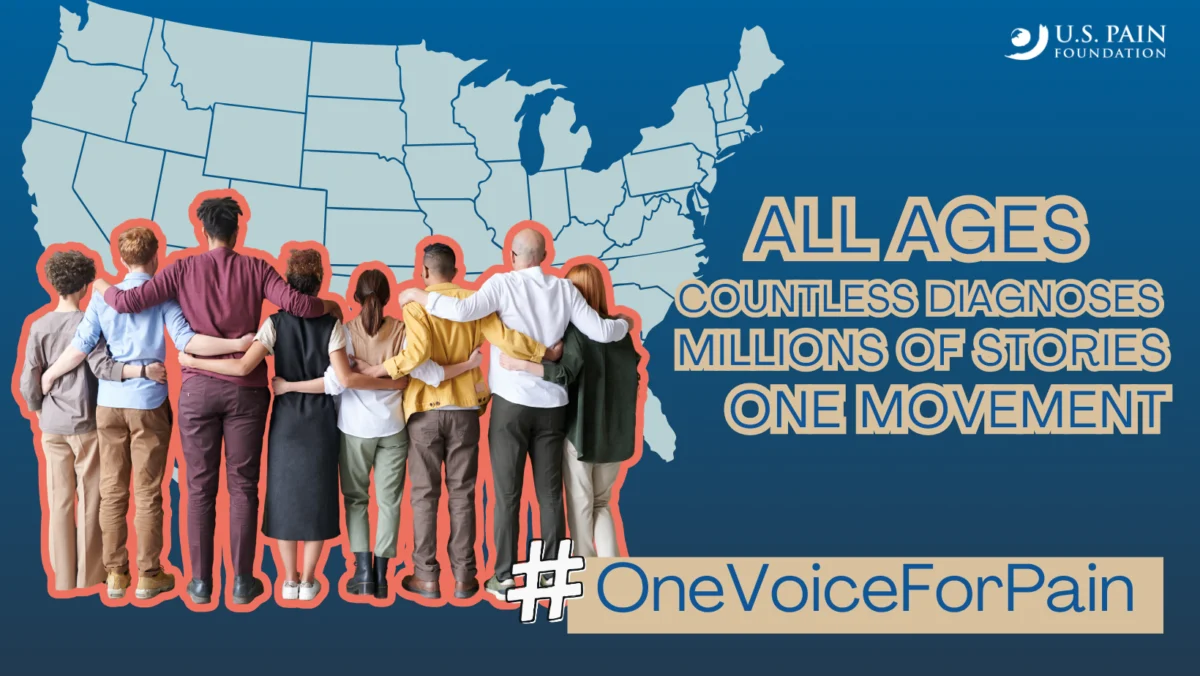
All Ages. Countless Diagnoses. Millions of Stories. One Movement.
In the United States, an invisible crisis is unfolding behind closed doors, in doctor’s waiting rooms, and within the quiet struggles of daily life. More than 60 million Americans currently live with chronic pain—a condition that does not merely disrupt physical comfort but fundamentally reshapes the trajectory of lives. As we observe Pain Awareness Month in September 2026, the U.S. Pain Foundation is spearheading a transformative initiative: #OneVoiceForPain.
This movement serves as a clarion call to unify the fragmented experiences of millions, moving beyond the isolation that so often accompanies chronic illness. By bridging the gaps between generations, medical specialties, and individual narratives, #OneVoiceForPain aims to shift the national conversation from one of silent endurance to one of collective advocacy and systemic reform.
The Scale of the Crisis: Main Facts and Data
Chronic pain is not a monolith; it is a complex, multifaceted public health emergency. The statistics are staggering, yet they often fail to capture the human toll. With over 60 million adults affected, the economic and social costs—ranging from lost productivity to the profound emotional burden on care partners—are immense.
The core premise of the 2026 campaign is that the current landscape of pain management is fractured. Patients are frequently siloed by their specific diagnoses, age groups, or socioeconomic status. The #OneVoiceForPain initiative asserts that while the biological mechanisms of pain may differ, the fundamental struggle for validation, effective treatment, and systemic understanding is a universal thread.
The Complexity of Diagnosis
Data from recent U.S. Pain Foundation research paints a stark picture of the "diagnostic odyssey" faced by patients. A recent survey revealed that respondents reported an average of 10 distinct medical diagnoses per person, with some individuals managing more than 20 separate conditions. This phenomenon, known as multi-morbidity, complicates treatment pathways and often leads to polypharmacy and fragmented care coordination. Furthermore, a significant subset of the population remains trapped in a state of diagnostic uncertainty, possessing symptoms without a formal label, which further exacerbates the psychological toll of their condition.
A Chronological Roadmap: The Four Weeks of Advocacy
Throughout September 2026, the movement will unfold in four distinct phases, each dedicated to dissecting the barriers to care and building a foundation for long-term change.
Week 1: The Lifecycle of Pain
Chronic pain respects no age boundaries. Research indicates that 11% to 38% of children under the age of 18 live with chronic pain. Despite this, pediatric pain remains severely under-researched and frequently dismissed by medical professionals as "growing pains" or psychosomatic.
Conversely, at the other end of the spectrum, older adults face the dangerous stereotype that pain is an inevitable byproduct of aging. This ageist assumption leads to a clinical complacency that denies seniors access to advanced, effective pain management strategies. Week 1 is dedicated to exploring these generational divides and identifying the commonalities that connect a teenager with chronic migraines to a senior citizen with osteoarthritis.
Week 2: Navigating the Maze of Diagnoses
In the second week, the focus shifts to the complexity of multi-morbidity. When a patient presents with a dozen different conditions, the standard medical model—which typically focuses on single-organ systems—often fails. This week will highlight the stories of those navigating complex care systems and explore how different diagnoses share the same "familiar truths" of medical gaslighting, treatment access barriers, and the daily negotiation of functional limitations.
Week 3: The Power of the Narrative
The third week centers on the human story. There is a distinct, measurable power in lived experience. When individuals share their journeys, they move beyond the role of "patient" and become advocates. This phase of the month is designed to teach participants how to harness their narratives to influence public policy, educate the medical community, and provide a beacon of hope for others who feel they are suffering in a vacuum.
Week 4: The Convergence—#OneVoiceForPain
The final week acts as the culmination of the movement. By synthesizing the data, the stories, and the advocacy efforts of the previous weeks, the focus shifts to systemic change. This week highlights the legislative efforts, such as the bipartisan Advancing Research for Chronic Pain Act, which seeks to modernize national data collection to inform future policy and clinical outcomes.
Official Responses and Policy Implications
The legislative environment for chronic pain is finally showing signs of progress. The introduction of the Advancing Research for Chronic Pain Act is a significant development, representing a shift toward treating chronic pain as a primary national health priority rather than a secondary symptom of other diseases.
"We cannot change the trajectory of this epidemic in isolation," says a representative from the U.S. Pain Foundation. "Real progress requires a collaborative approach involving policymakers, researchers, healthcare providers, and the patients themselves."
The policy implications of this act are profound. By improving the quality of national data, the government can move toward:
- Precision Medicine: Tailoring treatments to the individual rather than a "one-size-fits-all" approach.
- Access Equity: Reducing the disparities in care that currently exist based on geography, race, and insurance status.
- Research Funding: Allocating resources toward high-impact areas that have historically been overlooked by federal research agencies.
Implications for the Future of Healthcare
The #OneVoiceForPain movement is not merely a symbolic gesture; it is a tactical effort to disrupt the status quo. The current healthcare infrastructure is largely reactive, focusing on crisis management rather than sustained, multidisciplinary care.
The Need for Multidisciplinary Care
The "one voice" approach advocates for a biopsychosocial model of care. This model recognizes that pain is not just a physiological event—it is an experience that involves biological, psychological, and social components. Effective treatment, therefore, must integrate physical therapy, psychological support, pharmacological innovation, and, crucially, patient-centered advocacy.
Challenging Medical Stigma
One of the most persistent hurdles identified by the campaign is the "credibility gap." Patients with chronic pain are frequently forced to prove the legitimacy of their suffering to insurance adjusters, employers, and sometimes even their own primary care physicians. By mobilizing millions of voices, the campaign intends to force a cultural shift, moving the medical community toward a default position of empathy and evidence-based validation.
How to Join the Movement
As September progresses, the U.S. Pain Foundation invites every stakeholder in the health ecosystem to engage with the initiative. The Pain Awareness Month landing page serves as the central hub for:
- Educational Resources: In-depth articles on the science and management of chronic pain.
- Community Events: Webinars and virtual forums designed to facilitate dialogue between patients and experts.
- Advocacy Toolkits: Practical guides for contacting representatives and sharing personal stories with local media.
Why Your Voice Matters
The strength of #OneVoiceForPain lies in its scale. A single patient speaking to a legislator may be heard; a million patients speaking in unison constitutes a political and social mandate. Every shared story serves as a data point in a larger, undeniable narrative that the current system of pain management is insufficient.
Conclusion: A Future Built on Understanding
The goal of Pain Awareness Month 2026 is ambitious: to dismantle the stigma, isolation, and fragmentation that define the chronic pain experience today. By acknowledging that pain is a universal human experience that touches people of all ages and backgrounds, we can move toward a future where "living with pain" no longer implies "living without hope."
When the millions of individual stories of struggle are woven into a single, cohesive narrative of demand for change, the result is an unstoppable force. As we look toward the end of September and beyond, the movement remains clear: Every voice matters. Every story matters. Together, we are #OneVoiceForPain.
This September, the invitation is extended to everyone—whether you are a patient, a caregiver, a researcher, or a policymaker—to help redefine the future of chronic pain care. The time for silent endurance has passed; the time for collective action has arrived.