








As we cross the threshold into our 60s, the conversation around physical fitness inevitably shifts. The focus moves away from high-intensity training aimed at aesthetics and toward functional longevity—the ability to move through the world with grace, stability, and confidence. For many, this goal is hindered by a frustrating reality: common exercises, specifically lunges, often feel inaccessible, painful, or inherently unstable.
However, the solution is not to abandon leg training altogether. Rather, it is time to rethink the foundation. By prioritizing movements that stabilize the hips and build force through controlled, ground-based mechanics, individuals over 60 can effectively reverse the tide of muscle atrophy.
The Core Problem: Why Traditional Lunges Fail Many Seniors
Lunges are frequently touted as a "gold standard" for leg development. They target the quads, glutes, and hamstrings while forcing the body to manage its center of gravity. Yet, for many, they represent a significant barrier to entry.
Lunges require a complex synergy of balance, joint mobility, and single-leg strength. When any one of these components is compromised—due to age-related loss of proprioception or joint stiffness—the lunge ceases to be an exercise and becomes a struggle for survival. Attempting to force these movements can lead to knee strain, lower back compensation, and, ultimately, a decline in exercise adherence.
The alternative is not inactivity, but rather "foundational conditioning." By shifting to exercises that utilize both feet for stability, we can load the muscles effectively, stimulate growth, and prepare the body for the more demanding, single-leg variations that define higher-level functional fitness.
Chronology of Muscle Preservation: A Four-Move Protocol
To rebuild strength effectively, one must look at the chain of movement from the ground up. The following four movements form a progressive sequence designed to be performed in the morning, acting as both a wake-up call for the nervous system and a stimulus for muscular hypertrophy.
1. The Glute Bridge: Waking the Posterior Chain
The glute bridge is the cornerstone of posterior strength. As we spend more time in seated positions, the glutes—our primary engine for walking and standing—often become "dormant."
- The Science: When the glutes are underactive, the lower back and hamstrings often take on a disproportionate load, leading to chronic stiffness. The bridge forces an isolated contraction, teaching the hips to fire correctly.
- Execution: Lie on your back with knees bent and feet flat. Engaging your core, drive through your heels to lift your pelvis toward the ceiling. Hold the peak contraction for two seconds, squeezing your glutes, before slowly descending.
- Prescription: 3 sets of 12–15 reps, resting 45 seconds between sets.
2. Air Squats: The Functional Gold Standard
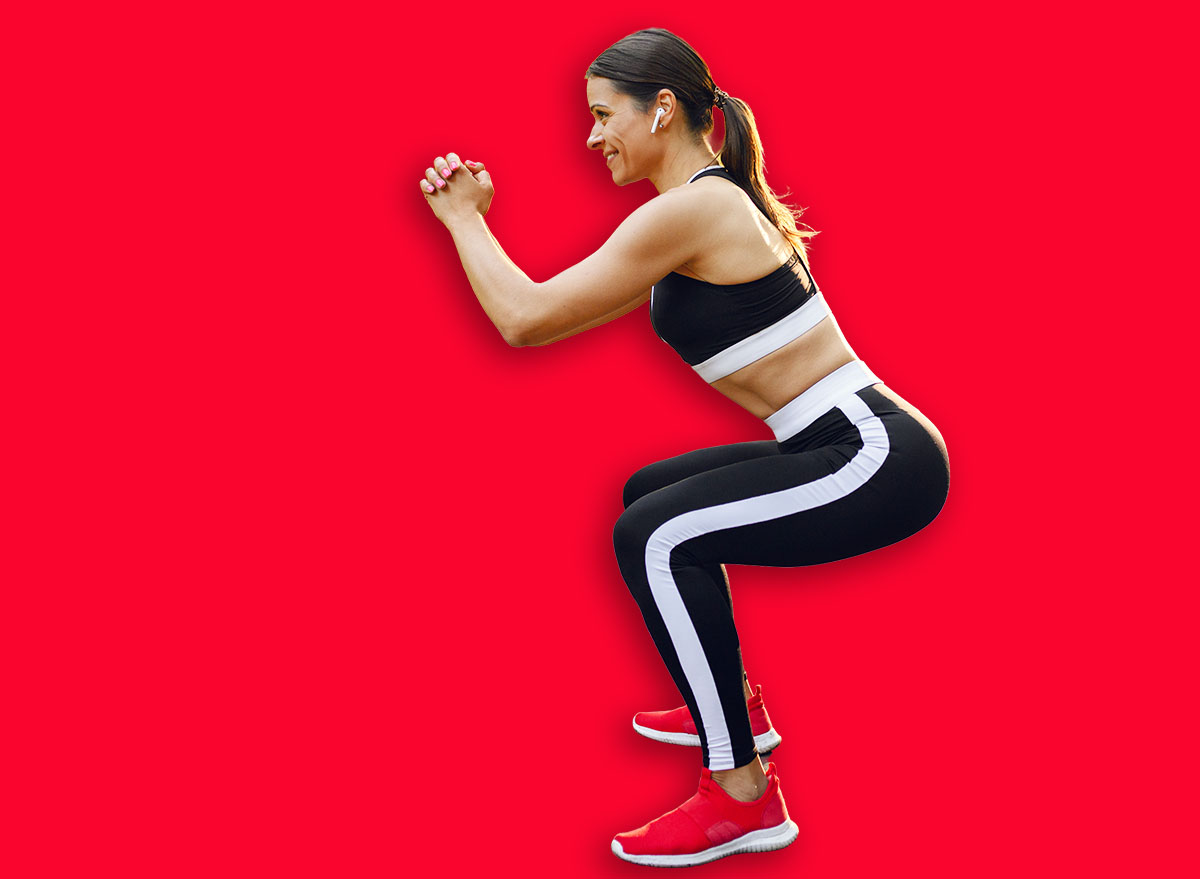
The air squat is perhaps the most vital movement pattern in human biology. It is the action of sitting down and standing up—a movement we perform dozens of times daily.
- The Science: Because both feet remain planted, you can exert force without the fear of losing balance. This allows you to focus on tempo and depth, creating the tension necessary to trigger muscle protein synthesis in the quadriceps.
- Execution: Stand with feet shoulder-width apart. Lower your hips back and down as if reaching for a chair. Keep your chest upright and ensure your knees track in line with your toes. Drive back to the starting position.
- Prescription: 3 sets of 10–15 reps. Focus on a 3-second descent to maximize muscle tension.
3. Bodyweight Good Mornings: Hinge Mechanics
Many people over 60 lose the ability to "hinge" at the hips, relying instead on the lumbar spine to bend forward. Good mornings correct this, teaching the body to use the hamstrings and glutes as the primary levers for movement.
- The Science: By keeping the spine neutral and moving through the hips, you develop the strength needed to pick objects up off the floor safely. This movement improves the structural integrity of the posterior chain.
- Execution: Stand tall with hands behind your head. With a slight bend in the knees, push your hips backward as if trying to touch a wall behind you with your glutes. Keep your back flat until you feel a stretch in the hamstrings, then return to vertical.
- Prescription: 3 sets of 10–12 reps.
4. Split Squat Holds: The Bridge to Lunges
If you eventually want to perform lunges, the split squat hold is your best friend. It provides the stability of a static stance with the intensity of a single-leg movement.
- The Science: Holding the bottom position of a split squat places the legs under constant, isometric tension. This is highly effective for building muscle fiber density and improving knee stability without the jarring impact of movement.
- Execution: Step into a lunge position but remain stationary. Lower your back knee toward the floor until the front thigh is roughly parallel to the ground. Hold this position, ensuring your weight is centered over your front heel.
- Prescription: 3 sets of 20–30 second holds per side.
Supporting Data: Why Strength Matters After 60
The physiological decline in muscle mass—known as sarcopenia—accelerates after the age of 60. According to research published in journals such as The Journals of Gerontology, the loss of type II muscle fibers (which are responsible for power and reaction speed) is particularly pronounced.
However, these studies also confirm that skeletal muscle remains "plastic" well into the later decades of life. This means that with the right mechanical stimulus, the body can still manufacture new protein and increase muscle cross-sectional area. The key is volume and consistency rather than high-impact load. By focusing on controlled eccentric movements (the lowering phase of the squat or good morning), seniors can stimulate growth with minimal risk of injury.
Official Perspectives: The Role of Neuromuscular Control
Physical therapists and exercise physiologists often highlight that for individuals over 60, the "weak link" is rarely the muscle itself, but rather the neuromuscular connection.
"We see many clients who have the physical capacity to move, but they have lost the neural ‘map’ of how to move," says one consultant in geriatric sports medicine. "When you remove the balance demand—as we do with these four moves—you allow the brain to focus entirely on the muscle contraction. Once that connection is re-established, the stability returns, and the fear of falling diminishes."
This is why the inclusion of "holds" and "paused reps" is not merely a preference; it is a clinical necessity. By slowing down the movement, you give the central nervous system the time it needs to recruit more motor units, leading to stronger, more stable limbs.
Implications for Daily Life: Beyond the Gym
The goal of this morning protocol is not to build a bodybuilder’s physique, but to improve the quality of daily life. The implications of these exercises are profound:
- Stair Navigation: Through the strengthening of the quadriceps via air squats, climbing stairs becomes a task performed with power rather than caution.
- Fall Prevention: By building the glutes and core, you improve your "postural sway," the body’s ability to remain steady when hit by an external force or an uneven surface.
- Metabolic Health: Larger muscle mass in the legs acts as a metabolic sink, helping to regulate blood glucose levels more effectively—an essential factor in preventing metabolic syndrome in older adults.
- Confidence: Perhaps most importantly, the psychological shift from "I cannot do this" to "I can perform these movements safely" provides a significant boost to daily morale and activity levels.
How to Integrate the Protocol
To see the benefits, consistency must trump intensity. You do not need to spend hours in the gym. Instead, treat these movements as a "morning hygiene" routine, similar to brushing your teeth.
- Warm-up: Start with two minutes of light walking or arm circles to get the blood flowing.
- Quality Over Quantity: If your form breaks down, stop the set. The goal is to build strength, not to accumulate fatigue that leads to sloppy movement patterns.
- Progression: Once these movements feel easy, don’t rush to change them. Instead, increase the time under tension. If you are doing air squats, try a 5-second descent. If you are doing glute bridges, hold the squeeze for 5 seconds.
By mastering these foundational movements, you are not just exercising; you are investing in your future independence. Your legs are the pillars of your autonomy. By treating them with the care and the challenge they require, you ensure that your 60s, 70s, and beyond are defined by mobility, not limitation.