











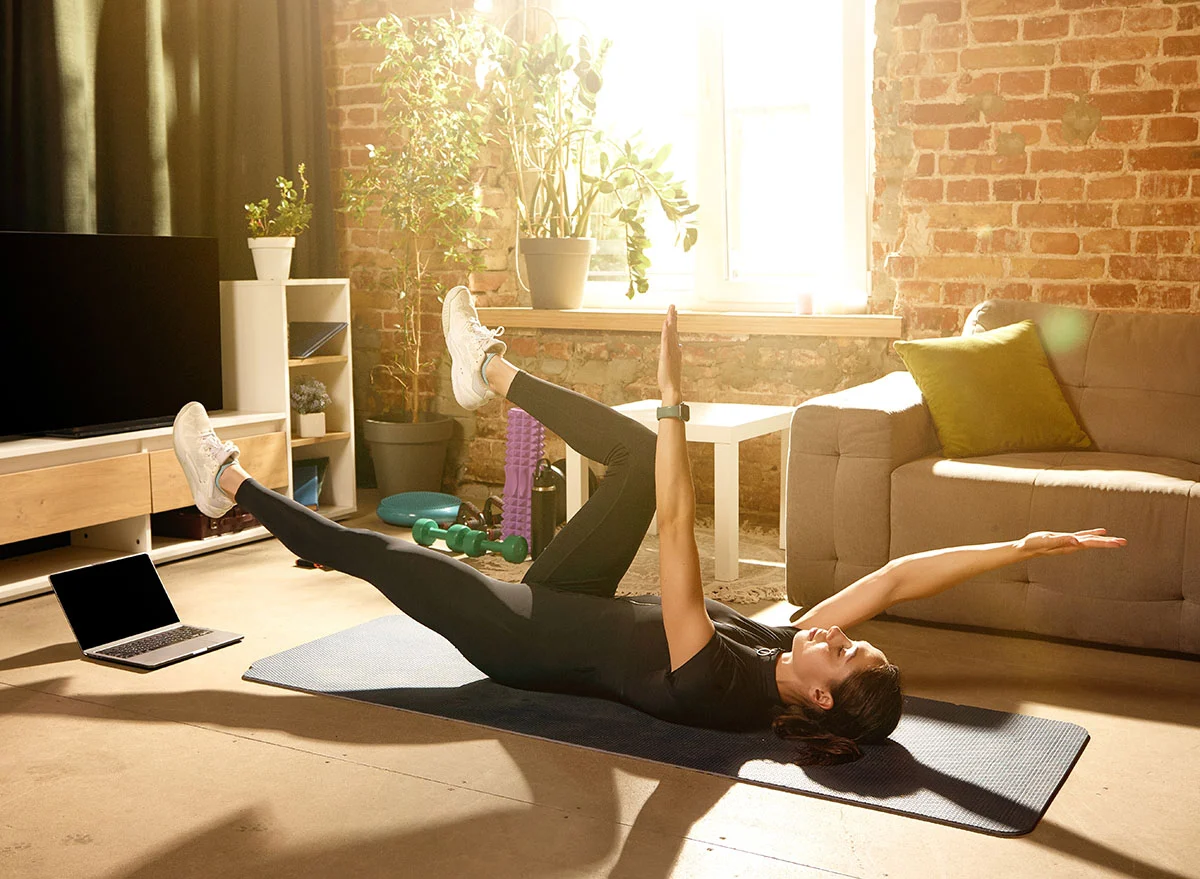
For decades, the fitness industry has championed the long-duration plank as the gold standard for abdominal strength. While the plank is undoubtedly effective for isometric stability, it is often touted as the "be-all and end-all" of core training. However, for those over the age of 55, the reality is more nuanced. Often, long-duration planks lead to shoulder fatigue and lower-back compensation long before the abdominal muscles have reached true exhaustion.
As we age, the focus of core training must shift from mere endurance to functional control—the ability to stabilize the spine while the limbs move through space. This article explores five essential bodyweight movements designed to enhance trunk stability, improve posture, and provide a safer, more sustainable path to a stronger core.
The Philosophy of Mid-Life Core Development
Core training after 55 works best when it feels simple and, more importantly, repeatable. The goal is to move away from static holds that stress the joints and toward dynamic movements that demand motor control. Research published in the Journal of Strength and Conditioning Research underscores that functional core training—where the abs remain active while the extremities move—is significantly more effective at improving spinal support than static exercises alone.
When you train your core to maintain tension while your arms or legs move, you are training for real-life tasks: reaching for a heavy object on a high shelf, carrying groceries, or maintaining balance on uneven terrain. This is the difference between having "gym strength" and having "functional resilience."
Chronology of Core Evolution: From Static to Dynamic
Historically, the evolution of exercise science has moved through distinct phases regarding abdominal training.
- The Era of the Crunch (1980s–1990s): This period focused on high-repetition spinal flexion. While it built muscle, it also put undue stress on the lumbar discs, leading to widespread reports of back pain.
- The Rise of the Plank (2000s–2010s): Fitness professionals pivoted toward stabilization, emphasizing the "bracing" of the core. While superior to the crunch, the limitation became "time-under-tension," where people began holding planks for minutes on end, often losing form in the process.
- The Functional Movement Era (Present Day): The current consensus emphasizes "anti-movement" and "dynamic stability." This approach focuses on using the core to resist rotation or extension while the body is in motion, which is far more representative of how we actually move in the real world.
5 Essential Bodyweight Exercises for the Over-55 Athlete
The following routine is designed to be performed three to five days per week. The objective is to keep the first round controlled to establish a mind-muscle connection, then gradually increase the intensity as your body warms up.
1. Alternating Dead Bug
The Dead Bug is the ultimate corrective exercise. It teaches the brain to decouple the movement of the limbs from the position of the spine.
- Why it works: It forces the deep core to stabilize the lower back against the floor, effectively eliminating the possibility of arching the spine.
- Execution: Lie on your back, arms extended toward the ceiling, knees at 90 degrees. Slowly lower the opposite arm and leg while keeping your lower back pressed firmly into the mat.
- Sets and Reps: 2 to 3 sets of 6 to 10 reps per side.
2. Reverse Crunch
Unlike the traditional crunch, which pulls on the neck, the reverse crunch targets the lower rectus abdominis by focusing on pelvic tilt.
- Why it works: It builds strength through a small, controlled range of motion, minimizing the risk of neck strain.
- Execution: Lying on your back, bring your knees toward your chest. Using your lower abs, gently lift your hips off the floor, curling your tailbone toward your ribs. Focus on a slow, controlled descent.
- Sets and Reps: 2 to 3 sets of 8 to 12 reps.
3. Flutter Kicks
Endurance is key for spinal health. Flutter kicks require the core to remain active under the weight of the legs.
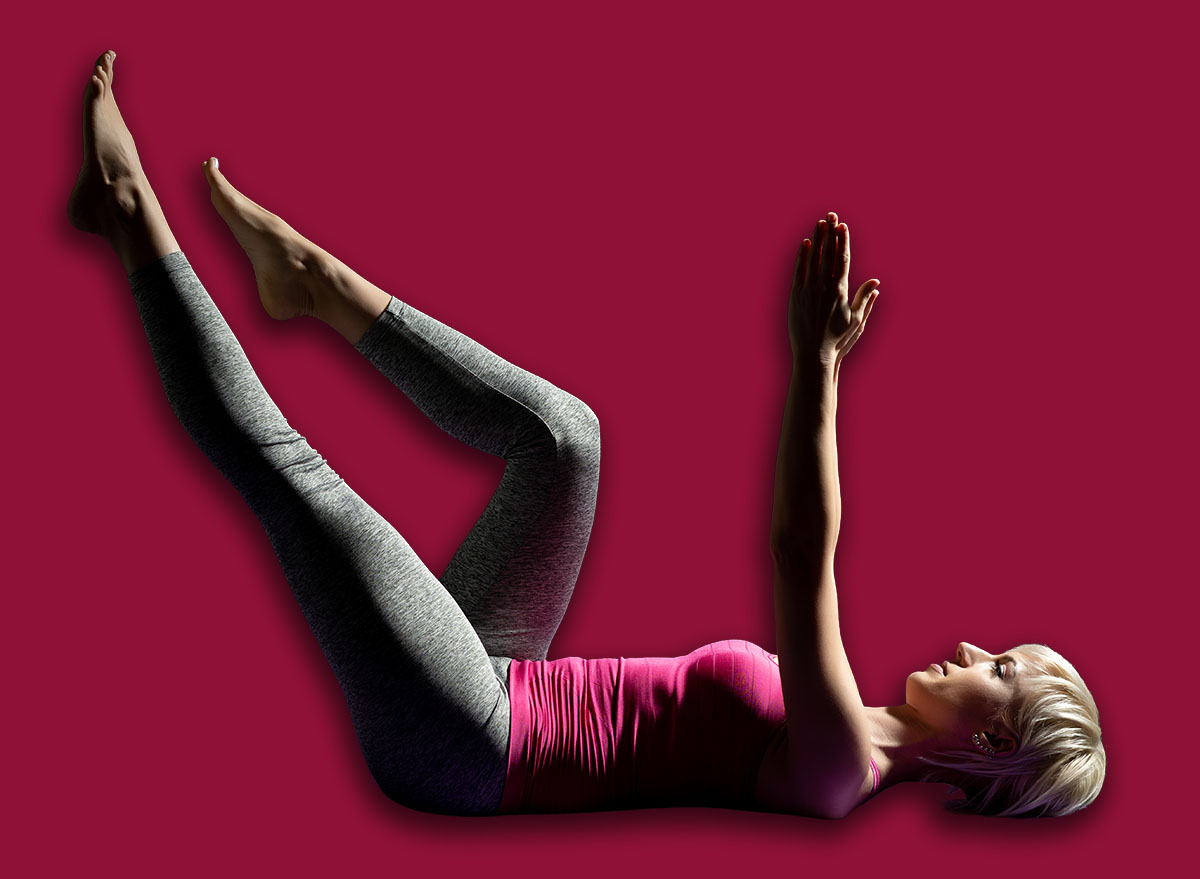
- Why it works: It challenges the "hip-core connection," ensuring that the deep abdominals are firing to protect the lumbar spine during movement.
- Execution: Lie flat with your hands under your glutes for support. Lift your legs slightly off the floor and perform small, rapid, alternating kicks. Keep the range of motion small to ensure your back doesn’t arch.
- Sets and Reps: 2 to 3 sets of 20 to 30 seconds.
4. Bear Hold with Shoulder Taps
This moves the work from a supine position to an athletic, quadruped position.
- Why it works: This is an "anti-rotation" exercise. Your core must fight to keep your hips square to the floor while you remove a point of stability.
- Execution: Get into a tabletop position, then lift your knees one inch off the ground. While holding this "bear" position, slowly tap your opposite shoulder with your hand without letting your torso sway.
- Sets and Reps: 2 to 3 sets of 6 to 10 taps per side.
5. Hollow Hold
Considered the "gold standard" of bodyweight tension, the hollow hold mimics the tension required in gymnastics.
- Why it works: It forces the entire core, including the obliques and transverse abdominis, to work in unison.
- Execution: Lie on your back, arms overhead and legs extended. Simultaneously lift your shoulders and legs a few inches off the floor, pressing your lower back into the mat.
- Sets and Reps: 2 to 3 holds of 10 to 25 seconds.
Supporting Data: The Clinical Perspective
Clinical studies, such as those found in the National Library of Medicine, consistently show that for adults over 55, the primary goal of exercise should be the preservation of independent mobility and the reduction of falls. A strong core acts as a "corset" for the spine. When the abdominal wall is weak, the lower back muscles compensate, which is the primary driver of chronic back pain in older populations.
Furthermore, training the core through these dynamic movements has been shown to improve proprioception—the body’s ability to sense its position in space. This, in turn, improves balance, which is the most critical factor in longevity and quality of life as we age.
Official Responses and Expert Recommendations
Physical therapists and geriatric fitness specialists have widely adopted these "functional" movements. Dr. Elena Rossi, a specialist in movement science, notes: "The mistake most people over 50 make is training their core as if they are preparing for a bodybuilding show. Instead, they should be training like they are preparing for a long, active life. These exercises—Dead Bugs, Bear Holds, and Hollow Holds—are ‘anti-pain’ exercises. They build a stable foundation that prevents the compression issues associated with traditional sit-ups."
The consensus is clear: prioritize quality of movement over duration. If you can only hold a position for five seconds with perfect form, that is infinitely more valuable than holding it for sixty seconds while sacrificing your alignment.
Implications for Your Routine
Integrating these five movements into your weekly schedule has significant implications for your physical health:
- Reduced Back Pain: By learning to stabilize the spine, you remove the burden from your vertebrae.
- Better Posture: Strengthening the core naturally pulls the shoulders back and aligns the pelvis, reducing the "slump" often seen in sedentary adults.
- Increased Energy Efficiency: A stable core allows the body to transfer force more efficiently, making walking, hiking, and daily chores feel significantly less taxing.
- Sustainability: Because these exercises are low-impact and require no equipment, they remove the barriers to consistency. Whether you are traveling or at home, these movements are always accessible.
A Note on Progressing
Do not rush the process. If a movement feels difficult, regress it. For instance, if the Hollow Hold is too intense, perform it with your knees tucked to your chest. The key to long-term success is not the intensity of a single session, but the frequency of your practice.
By dedicating just 10 to 15 minutes a day to these movements, you are not just building abdominal muscle—you are investing in the integrity of your spine and the longevity of your mobility. Start with two rounds this week, listen to your body, and allow your strength to grow naturally.