










For millions of families, the arrival of summer is synonymous with a transition from rigid school bells and homework deadlines to the promise of freedom and spontaneity. The common assumption is that this seasonal shift naturally ushers in a period of increased physical vitality—a time when children trade classroom chairs for bike saddles, neighborhood parks, and swimming pools. However, recent evidence suggests that the reality of summer fitness is far more complex, and often more sedentary, than many parents and educators realize.
As the structure of the school year dissolves, the consistent movement patterns provided by physical education (PE) classes, recess, and the daily commute between school buildings often evaporate. This creates a critical "activity gap" that fitness professionals, coaches, and parents must address to ensure that children remain physically engaged during the summer months.
Main Facts: The Myth of the "Active Summer"
The prevailing narrative suggests that summer is inherently healthier because children have more time for play. In truth, the absence of the school environment removes a surprising volume of movement. School-based activity—walking between classes, navigating campus, participating in structured PE, and engaging in mandated recess—accounts for a significant portion of a child’s daily caloric expenditure.
When the final bell rings for the summer, these structured opportunities vanish. Without a proactive approach, children often fall into a "sedentary drift," characterized by increased screen time, inconsistent sleep-wake cycles, and a lack of planned physical outlets. This is not to say that every child needs a high-intensity, regimen-based summer schedule; rather, it highlights the necessity of intentional, varied movement to replace the void left by the academic calendar.
A Chronological Shift: From Structure to Spontaneity
To understand the current crisis in youth activity, we must examine the progression of a child’s year.
- The School Year (September–June): Children benefit from "incidental movement." Even if they are not elite athletes, they are compelled to move throughout the day. This structure acts as a baseline of physical health.
- The Transition (Early Summer): As school ends, there is often a "de-training" period where children adjust to the lack of structure. Without alternative activities, this is the prime window where sedentary behaviors take root.
- The Mid-Summer Slump: In many regions, extreme heat creates a psychological and physical barrier to outdoor play. Families juggling work-life balance often find it difficult to transport children to recreational facilities, leading to a reliance on indoor, screen-based entertainment.
- The Late Summer Reset: As families prepare for the return to school, there is often a frantic attempt to re-establish routines, but the physical foundations have often weakened compared to the active baseline established in the spring.
Supporting Data: The Science of Movement Patterns
Research published in Preventive Medicine Reports and the Journal of Sports Sciences has shed light on the seasonal decline in activity. Studies indicate that while children do have more "free time," their total metabolic output often decreases during summer months.
Furthermore, the concept of Physical Literacy—defined as the motivation, confidence, competence, and knowledge required to value and take responsibility for engagement in physical activities for life—has become a cornerstone of modern kinesiology. Data shows that children who rely solely on organized sports for movement are at a higher risk of total inactivity if they eventually drop out of that sport. Conversely, children who develop a broad "movement vocabulary" through unstructured play are significantly more likely to remain active into adulthood.
The Misconception: Why Sports Are Not Enough
One of the most persistent hurdles in youth health is the conflation of "sports participation" with "physical activity." While youth sports are invaluable for building teamwork, discipline, and specific motor skills, they are merely one pathway to movement.
The Dangers of Early Specialization
The rise of "sport specialization"—where a child plays one sport year-round—has led to a narrow range of movement patterns. This repetition not only increases the risk of overuse injuries but also discourages the development of well-rounded physical skills. A child who spends their entire summer practicing only one set of movements is missing out on the neurological and physiological benefits of diverse play, such as climbing, balancing, throwing, and jumping.
The "All-or-Nothing" Trap
When we frame fitness strictly through the lens of competition, we alienate children who are not naturally inclined toward team sports. If a child perceives that "being fit" requires joining a league, scoring goals, or winning games, they may view themselves as "unfit" if they don’t excel in those arenas. This creates a mental barrier that can last a lifetime.
Official Perspectives: The Role of Professionals
Fitness professionals, educators, and pediatricians are increasingly advocating for a shift in how we program summer activities. According to the World Health Organization (WHO) and the International Physical Literacy Association, the focus must shift from performance-based metrics to "joy-based" movement.
"Success should not be measured by trophies or athletic rankings," notes a recent editorial in Fitness Journal. "Success is measured by whether a child leaves a session feeling confident, capable, and excited to move their body again tomorrow."
For coaches and trainers, this means:
- Incorporating Gamification: Using play-based challenges rather than traditional, monotonous exercise drills.
- Skill Diversification: Emphasizing fundamental movement skills (FMS) like coordination, agility, and balance, which are transferable across all physical pursuits.
- Parental Education: Helping families understand that a hike, a bike ride, or an afternoon of unstructured play is just as valid as a formal sports camp.
Implications: Building a Lifelong Foundation
The implications of this shift are profound. If we continue to view youth fitness as a series of sports seasons, we ignore the silent majority of children who are not engaged in organized athletics. By fostering physical literacy during the summer, we prepare children for a lifetime of health.
Psychological Benefits of Unstructured Play
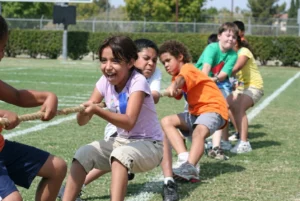
Unstructured play is not "wasted" time. It is a critical developmental tool. When children create their own obstacle courses or invent games in the park, they are solving problems, navigating social dynamics, and learning to manage risk. This autonomy builds a psychological connection to physical activity that is far more durable than the external motivation of a coach or a scoreboard.
The Path Forward
To bridge the summer activity gap, we must broaden our definition of "fitness." We need to normalize movement in all its forms—from the competitive intensity of a soccer pitch to the creative exploration of a backyard obstacle course.
As we look toward the future, the goal of any youth fitness initiative should be the creation of "lifelong movers." Whether it is a child dancing in the living room, riding a bike to a friend’s house, or learning to swim, these experiences form the bedrock of a healthy adult life. Summer provides the canvas; it is up to parents, professionals, and the community to ensure that the picture painted is one of movement, confidence, and enduring joy.
Ultimately, the most successful outcome of a summer is not how many medals a child wins, but how much they have learned to love the feeling of being active. By moving beyond the field and into the wider world, we can ensure that every child finds their own unique path to physical well-being.
References
- Brenner, J. S., et al. (2023). Promoting healthy youth sports participation and reducing burnout in young athletes. Pediatrics.
- Cairney, J., et al. (2022). Physical literacy, physical activity and health: Toward an evidence-informed conceptual model. Sports Medicine.
- Hulteen, R. M., et al. (2022). Development of foundational movement skills and physical activity across childhood. Sports Medicine.
- International Physical Literacy Association. (2023). Physical literacy and lifelong participation. Journal of Physical Education, Recreation & Dance.
- Lopes, L., et al. (2021). Associations between physical activity, motor competence and health-related fitness. Journal of Sports Sciences.
- McLoughlin, G. M., et al. (2023). Seasonal changes in children’s physical activity patterns. Preventive Medicine Reports.
- Rudd, J. R., et al. (2024). Physical literacy as a determinant of lifelong engagement. International Journal of Environmental Research and Public Health.
- Stodden, D. F., et al. (2022). The role of motor competence in promoting physical activity. Kinesiology Review.
- Tremblay, M. S., et al. (2022). Importance of outdoor play and unstructured movement for child health and development. Applied Physiology, Nutrition, and Metabolism.
- World Health Organization. (2024). Physical activity guidelines for children and adolescents: Evidence update.