











By Medical News Desk
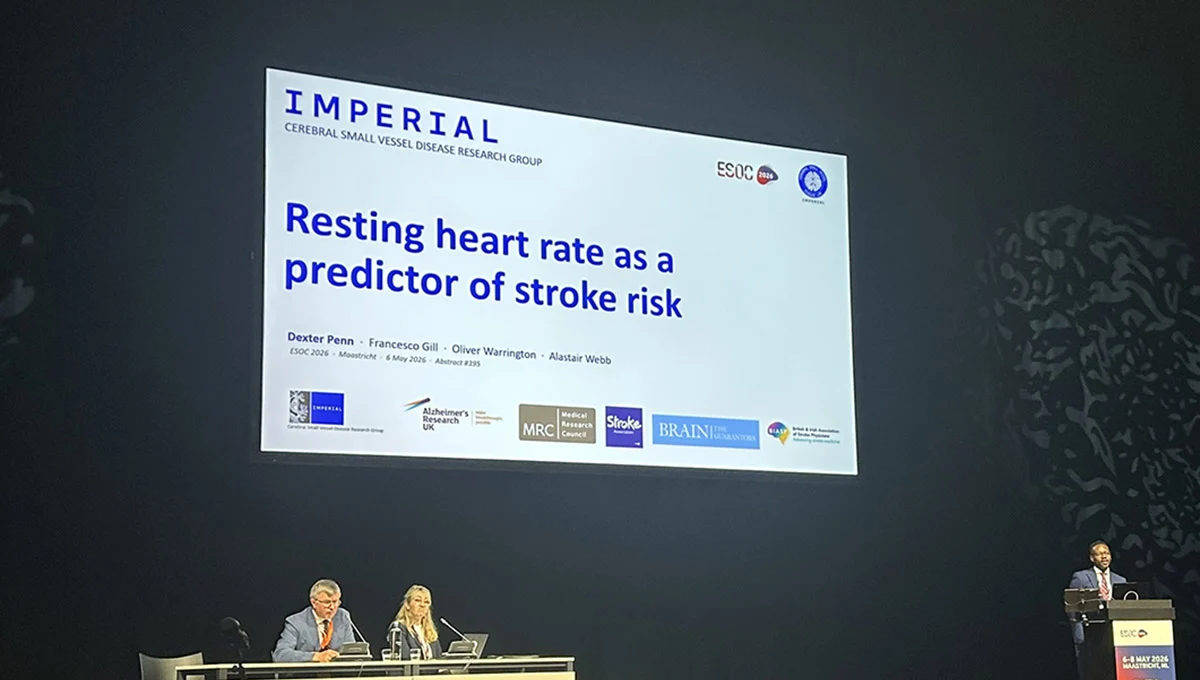
For decades, the medical community has viewed resting heart rate (RHR) primarily as a barometer of physical fitness—a lower number suggesting an efficient heart and a high number serving as a potential warning sign for metabolic or cardiovascular strain. However, new research presented at the European Stroke Organisation Conference 2026 suggests that the relationship between heart rate and cerebrovascular health is far more nuanced.
According to a massive analysis of UK Biobank data, individuals with resting heart rates that deviate significantly from the "sweet spot" of 60–69 beats per minute (bpm) face a statistically higher risk of stroke. Crucially, this association remains robust even in the absence of atrial fibrillation (AF), suggesting that our resting pulse may be a more sensitive indicator of underlying vascular vulnerability than previously understood.
The U-Shaped Risk Profile: Main Findings
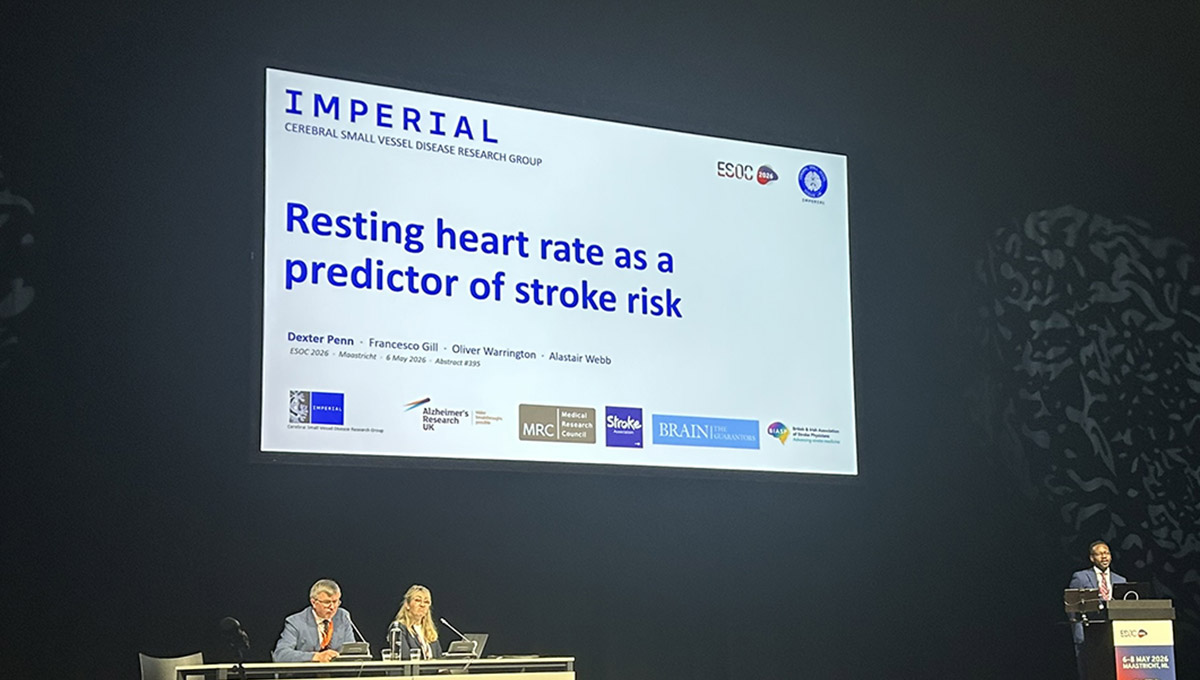
The study, led by Dexter Penn, MBBS, of Imperial College London, sought to clarify conflicting evidence regarding heart rate and stroke. While previous studies have produced contradictory results—with some suggesting that high heart rates increase risk and others pointing to genetic links between low heart rates and stroke—Penn’s research provides a comprehensive, large-scale investigation into the phenomenon.
The findings reveal a distinct, U-shaped relationship. In a fully adjusted model, the relative risk of ischemic stroke was 15% higher for individuals with an RHR below 50 bpm and 9% higher for those in the 80–89 bpm range, compared to the baseline group of 60–69 bpm.
Perhaps most compelling is the discovery that this risk profile is independent of atrial fibrillation. While AF is a well-known, potent driver of stroke, the researchers found that the association between heart rate and stroke was most pronounced in individuals who had never been diagnosed with the arrhythmia. In this specific subgroup, the risks associated with heart rate extremes were even more stark: those with an RHR of 90 bpm or higher faced a 77% increased risk of stroke compared to the 60–69 bpm group.
Chronology of the Investigation
The journey to these findings began with a deep dive into the UK Biobank, an extensive repository of longitudinal health data. Penn and his colleagues identified a cohort of 459,200 participants, all of whom had no prior history of stroke or known atrial fibrillation at the start of the study.
Baseline Characteristics
- Mean Age: 56.5 years
- Gender Distribution: 54.7% female
- Mean RHR: 69.6 bpm
- Mean BMI: 27.4 kg/m²
- Mean Blood Pressure: 139.7/82.2 mm Hg
Over a median follow-up period of 14 years, the researchers tracked 12,290 incident stroke events. The ratio of ischemic to hemorrhagic strokes followed a roughly 3:1 distribution. By tracking these participants over more than a decade, the team was able to account for the gradual development of comorbidities, including the onset of hypertension and AF, allowing for a clearer picture of how heart rate serves as a longitudinal predictor of cerebrovascular health.
Supporting Data and Mechanistic Hypotheses
The data provides a compelling counter-narrative to the idea that a "slow" heart rate is universally healthy. For years, clinicians have often praised low resting heart rates as a sign of athletic prowess. However, Penn suggests that in the general, non-athletic population, a very low heart rate may signal underlying cardiovascular dysfunction or, more specifically, "cerebral pulsatility."
"A low resting heart rate could indicate some underlying cardiovascular dysfunction, or it could be a true driver of cerebral pulsatility that transmits the damaging shearing forces on the neurovascular unit," Penn explained during his presentation at the conference.
His research group has previously demonstrated that cerebral pulsatility—the variation between peak and trough blood flow within the brain during a single cardiac cycle—is positively associated with white matter hyperintensities. These hyperintensities are hallmark markers of cerebral small-vessel disease, a condition that significantly increases the risk of both cognitive decline and stroke. The data suggests that at certain heart rates, the "hammering" effect of blood flow on the delicate vessels of the brain may be intensified, leading to structural damage over time.
This contradicts earlier, smaller-scale studies. A 2017 meta-analysis, for instance, suggested that stroke risk climbed linearly with every 10-bpm increase in heart rate. Conversely, a 2023 Mendelian randomization study found that genetic markers for low RHR were linked to higher stroke risk. Penn’s study serves as a necessary bridge between these conflicting viewpoints, suggesting that the relationship is not linear, but rather a curve where both ends of the spectrum present unique dangers.
Official Responses and Clinical Perspectives
The medical community has received the findings with a mix of intrigue and caution. The "U-shaped" curve suggests that clinical targets for heart rate might need to be reconsidered, though experts warn against premature panic for patients with bradycardia (slow heart rate) or tachycardia (fast heart rate).
When asked about the implications for athletes or individuals with physiologically low heart rates, Penn was quick to provide context. "I do not think that we should be telling anyone who is physically fit and they can go hiking and all of that, and they have a low heart rate, that they have an elevated risk," he noted. The study specifically adjusted for "walking pace" as a proxy for physical fitness to ensure that the risks observed were not simply a byproduct of sedentary behavior.
Instead, Penn views the findings as a potential diagnostic signal. For individuals who are not particularly fit, an RHR outside the 60–69 bpm range may serve as an early warning sign of "cardiovascular compromise." In such cases, the heart rate is not the disease itself, but rather a "canary in the coal mine" for deeper, systemic vascular issues.
Regarding the "washout" effect of atrial fibrillation, Penn noted that AF is such a dominant, high-impact risk factor for stroke that it may obscure the subtler, long-term impact of heart rate. "It could be that atrial fibrillation, being such a strong risk factor for stroke on its own, may have washed out the effects on the lower end," Penn said. "But we can see clearly in those individuals that do not have atrial fibrillation that this nonlinear relationship exists."
Clinical Implications: What Should Patients Do?
The implications of this research are potentially significant for primary care and cardiovascular screening. If resting heart rate is indeed a robust, independent marker for stroke risk, it could become a standard part of risk-stratification scores, similar to cholesterol levels or blood pressure.
1. Re-evaluating "Normal"
Currently, a resting heart rate between 60 and 100 bpm is generally considered "normal" by most clinical guidelines. Penn’s data suggests that the optimal range for minimizing stroke risk might be narrower than the current standard. If validated by further prospective trials, clinical guidance might eventually shift to highlight the 60–69 bpm range as an ideal target.
2. Identifying Silent Vulnerability
For patients with no history of AF or other obvious cardiovascular diseases, a resting heart rate that consistently trends below 50 bpm or above 80 bpm might warrant a more comprehensive assessment of vascular health, such as screening for subclinical atherosclerosis or small-vessel disease.
3. The Need for Further Research
Despite the robustness of the UK Biobank data, the study authors emphasize that this is an observational finding. Establishing a causal link will require further mechanistic research. Scientists need to determine whether modifying heart rate (e.g., through medication or exercise) would actually lower the risk of stroke, or if the heart rate is merely a non-modifiable marker of an already damaged vascular system.
4. Lifestyle and Heart Health
The study underscores the importance of physical fitness as a confounding factor. The fact that the association between low heart rate and stroke risk was not present in those with higher physical fitness (as indicated by walking pace) suggests that the context of the heart rate matters. For the average, sedentary individual, a low heart rate might represent a lack of autonomic regulation or cardiac muscle inefficiency, whereas, for an athlete, it represents a highly efficient heart.
Conclusion
The research presented at the European Stroke Organisation Conference serves as a vital reminder that the cardiovascular system operates on a delicate balance. While the focus of stroke prevention has long been dominated by blood pressure management and the treatment of atrial fibrillation, this study suggests that the resting heart rate may offer a hidden, yet highly predictive, window into the brain’s vascular health.
As the medical community continues to digest these findings, the message to clinicians is clear: do not dismiss the pulse. Whether it is persistently high or unexpectedly low, a heart rate outside the optimal range could be the first sign that the neurovascular system is under stress, providing a critical window of opportunity for intervention before a catastrophic event occurs. Future longitudinal studies and clinical trials will be essential to determine how we can best translate these findings into improved patient outcomes, but for now, the evidence points to the need for a more personalized approach to heart rate monitoring in the context of stroke prevention.