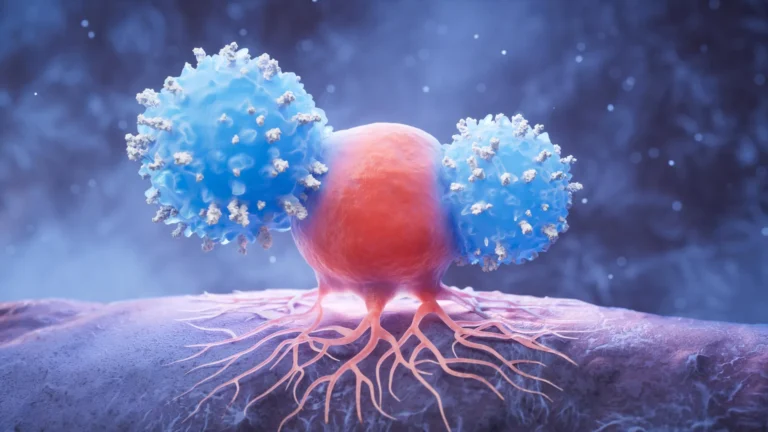











In a landmark achievement for global health security, researchers have successfully concluded the first human clinical trial of a universal coronavirus vaccine—a breakthrough that promises to shift the paradigm of pandemic preparedness from reactive crisis management to proactive, long-term immunity.
Developed by scientists at the University of Cambridge in collaboration with the university spinout company DIOSynVax (DVX) Ltd, the vaccine represents a fusion of cutting-edge computational biology and immunology. By utilizing artificial intelligence to design a "super-antigen," the team has created a prophylactic that targets the conserved genetic features of the Sarbeco coronavirus family, rather than a single, rapidly mutating strain. The trial, the findings of which were recently published in the Journal of Infection, confirms that this novel approach is safe for human use and capable of eliciting a robust immune response.
Main Facts: The Dawn of Proactive Vaccination
The core innovation of this vaccine lies in its design architecture. Traditional vaccines—such as those developed for seasonal influenza or the initial waves of COVID-19—are inherently "reactive." They are built to target specific circulating strains, necessitating frequent reformulations as viruses evolve. This "dog-chasing-its-tail" approach leaves global health systems perpetually vulnerable to the lag time between the emergence of a new variant and the distribution of an updated vaccine.
The DIOSynVax candidate, however, is a "future-proof" vaccine. Through the use of advanced machine learning, researchers analyzed vast datasets of genetic information from Sarbeco coronaviruses—the group that includes SARS-CoV-2, SARS-CoV-1, and various bat-borne coronaviruses that currently circulate in animal reservoirs. The AI identified the "Achilles’ heel" of the entire virus family: genetic sequences that remain consistent despite mutations. By synthesizing these shared features into a single, synthetic super-antigen, the vaccine trains the human immune system to recognize the entire family of viruses as a threat, effectively pre-empting future zoonotic spillover events.
A Chronology of Innovation
The journey to this clinical milestone began with the founding of DIOSynVax in 2017, a spinout supported by Cambridge Enterprise. The company’s mission was to utilize "Digitally Immune Optimised" technology to tackle high-threat pathogens.
- Pre-Clinical Foundation: Before moving to humans, the vaccine underwent rigorous animal testing. These preclinical studies demonstrated that the super-antigen could generate broad-spectrum immune responses, protecting subjects against multiple coronaviruses simultaneously.
- Clinical Recruitment: The Phase 1 trial was conducted at the National Institute for Health and Care Research (NIHR) Clinical Research Facilities in Cambridge and Southampton. Researchers enrolled 39 healthy volunteers aged 18 to 50.
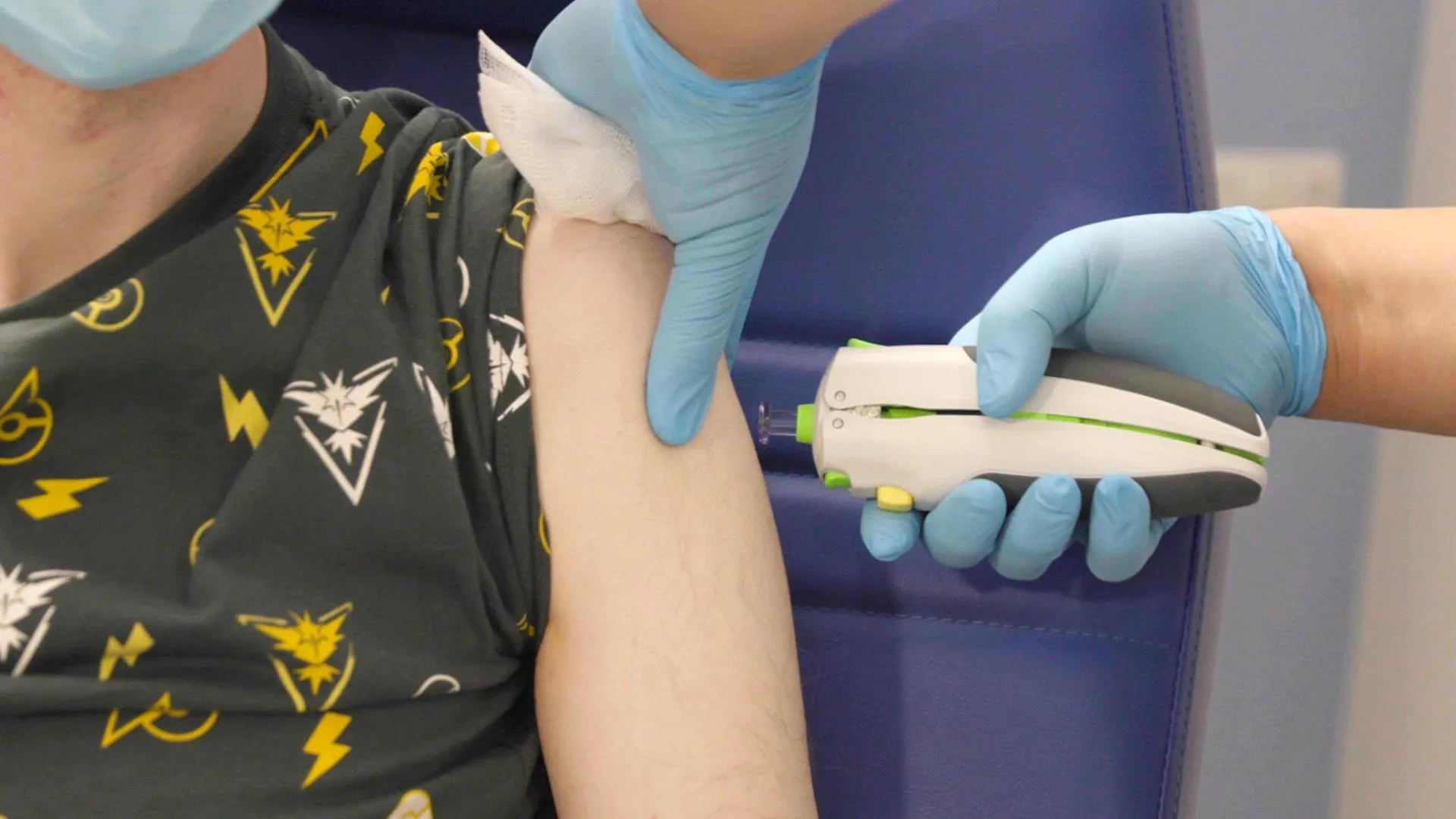
- Trial Execution: Participants were administered the vaccine via a needle-free, micro-fluidic jet system. This delivery mechanism offers significant logistical advantages, potentially simplifying mass vaccination campaigns in regions where cold-chain logistics or sterile needle supplies are limited.
- Safety Confirmation: The study reported no significant side effects, confirming the primary safety endpoint. Most importantly, blood analysis confirmed that the immune systems of the participants developed defenses not just against SARS-CoV-2, but against a range of related bat coronaviruses that have not yet crossed into human populations.
Supporting Data and Technological Milestones
This trial is notable not only for the medical objective but for the method of discovery. It marks the first instance in history where the active ingredient of a vaccine—the antigen itself—was designed entirely through computer simulations.
In traditional vaccinology, researchers isolate a live or weakened virus and manipulate it in a laboratory. Here, the AI system acted as a "digital architect," scanning global surveillance data to map the evolutionary landscape of the Sarbeco family. By combining the most stable, shared features into a synthetic antigen, the researchers ensured that the immune system is primed to look for the "scaffold" of the virus rather than its ever-changing exterior protein spikes.
The use of a needle-free delivery system also provides a secondary layer of data. By proving that the super-antigen can be successfully delivered via a micro-fluidic jet, the researchers have validated a platform that could be scaled rapidly in a pandemic scenario, removing the barriers associated with traditional syringe-based injections and reducing bio-hazardous waste.
Official Responses and Expert Commentary
The medical community has greeted the results with optimism, viewing the technology as a potential cornerstone of future pandemic prevention.
Professor Jonathan Heeney, who led the research from the University of Cambridge’s Department of Veterinary Medicine, described the shift as a necessary evolution in public health. "We’ve converted vaccine development from being reactive to being future-proof," Heeney stated. "We have overcome the limitations of traditional vaccines. It means we can escape the constant cycle of chasing the virus variants circulating in humans and updating the vaccines to try to catch up."
The trial’s chief investigator, Professor Saul Faust from the University of Southampton, emphasized the urgency of this work. "Viruses like influenza, coronaviruses, and the Ebola group are evolving continuously. By the time vaccines are rolled out, they may be poorly matched," Faust noted. "If we can develop and clinically advance this new class of vaccines before a virus outbreak begins, millions of lives could be saved, lockdowns avoided, and the economy preserved."
Professor Marian Knight, Scientific Director for NIHR Infrastructure, underscored the importance of the institutional partnership that made the trial possible. "The remarkable success of this AI-designed ‘super-antigen’ trial marks a pivotal leap forward in our ability to deliver broad, lasting viral protection," Knight said, highlighting the vital role of the NIHR in fast-tracking such innovations.
Implications for Global Health
The implications of this breakthrough extend far beyond coronaviruses. The DIOSynVax platform is inherently modular; the AI-driven methodology used to create this super-antigen is currently being applied to other high-risk viral families, including influenza and hemorrhagic fevers like Ebola.
1. Breaking the Pandemic Cycle
Current global vaccine strategy is locked into a pattern of "wait and see." Governments wait for a new variant to emerge, assess its threat, and then race to re-engineer, manufacture, and distribute a vaccine. This process is time-consuming and prone to failure. By deploying vaccines that offer broad-spectrum protection, nations could theoretically maintain a baseline level of immunity against entire families of viruses, essentially "de-risking" the emergence of new strains.
2. Economic and Social Resilience
The financial cost of the COVID-19 pandemic—measured in trillions of dollars—demonstrates the catastrophic impact of reactive policy. A universal vaccine would serve as a structural insurance policy for the global economy. By preventing the need for future lockdowns and rapid-response manufacturing pivots, this technology represents a significant return on investment for government funding agencies like Innovate UK, which provided the primary financial backing for this project.
3. Future Clinical Hurdles
While the Phase 1 results are promising, the researchers remain cautious. The next hurdle is a larger Phase 2 study, which will be required to evaluate the durability of the immune response in a more diverse population and determine how long this protection lasts. Furthermore, regulatory bodies will need to develop new frameworks to approve "universal" vaccines, as current licensing protocols are largely designed for strain-specific products.
Conclusion
The success of this first human trial is more than a scientific milestone; it is a proof of concept for a new era of "digital vaccinology." As the world continues to grapple with the reality of zoonotic spillover and the rapid evolution of pathogens, the ability to use artificial intelligence to look into the future—and prepare for viruses that have not yet emerged—may well be our most potent tool in preventing the next great pandemic.
The path ahead involves scaling these trials and refining the delivery platforms, but for the first time, the scientific community is no longer chasing the virus. With AI as a partner, humanity is finally starting to get ahead.