



For centuries, the act of fasting has been woven into the fabric of human culture, religious observance, and traditional medicine. From the management of epilepsy to the intuitive understanding of its restorative properties, humanity has long suspected that going without food does more than just hollow out the stomach. However, the exact biological mechanisms—the microscopic "what" and "how"—have remained largely shrouded in anecdotal evidence and preliminary observations.
A groundbreaking study published in Nature Metabolism in 2024 has finally pulled back the curtain, offering an unprecedented, high-resolution map of how the human body reacts to prolonged caloric restriction. Conducted by a team of researchers from Queen Mary University of London’s Precision Healthcare University Research Institute (PHURI) and the Norwegian School of Sports Sciences, the study reveals that the human body undergoes a sweeping, coordinated biological reconfiguration that only truly kicks into high gear after the 72-hour mark.
The Metabolic Pivot: Understanding the Basics
To appreciate the significance of this new research, one must first understand the fundamental shift the body makes when it is deprived of external fuel. In a standard, fed state, the human body operates primarily on glucose derived from dietary carbohydrates. This is the body’s "ready cash"—easily accessible and rapidly burned.
When the food supply is cut off, the body faces a crisis of energy. It initiates a well-documented metabolic switch: as glucose stores are depleted, the liver begins to mobilize stored fat, converting it into ketone bodies to fuel the brain and vital organs. Scientists have long understood this transition, but they have struggled to quantify what occurs beyond this energy-source swap. Does the body simply "burn fat," or does it initiate a deeper, system-wide maintenance cycle? The PHURI study suggests that the latter is true, and that this process is far more complex than a simple shift in fuel consumption.
Chronology of a Seven-Day Fast: A Molecular Timeline
To map these changes, researchers recruited 12 healthy volunteers to undergo a medically supervised, seven-day water-only fast. Throughout the week, the scientists performed rigorous monitoring, taking blood samples to measure the fluctuations of approximately 3,000 different proteins.
Days 1 to 2: The Glucose-to-Fat Transition
During the initial 48 hours, the body is primarily concerned with homeostasis. As the volunteers transitioned away from glucose, the metabolic markers shifted as expected. There was a noticeable decline in weight, totaling an average of 5.7 kilograms across the week. However, the study observed that this weight loss was not purely fat; it included a significant portion of "lean mass"—muscle tissue and water-rich components.
The Critical Threshold: Day 3 and Beyond
The most profound discovery of the study is what the researchers termed the "molecular turning point." While the body had begun adapting in the first few days, it was only after roughly 72 hours of complete caloric restriction that the researchers observed a dramatic, coordinated shift in protein expression.
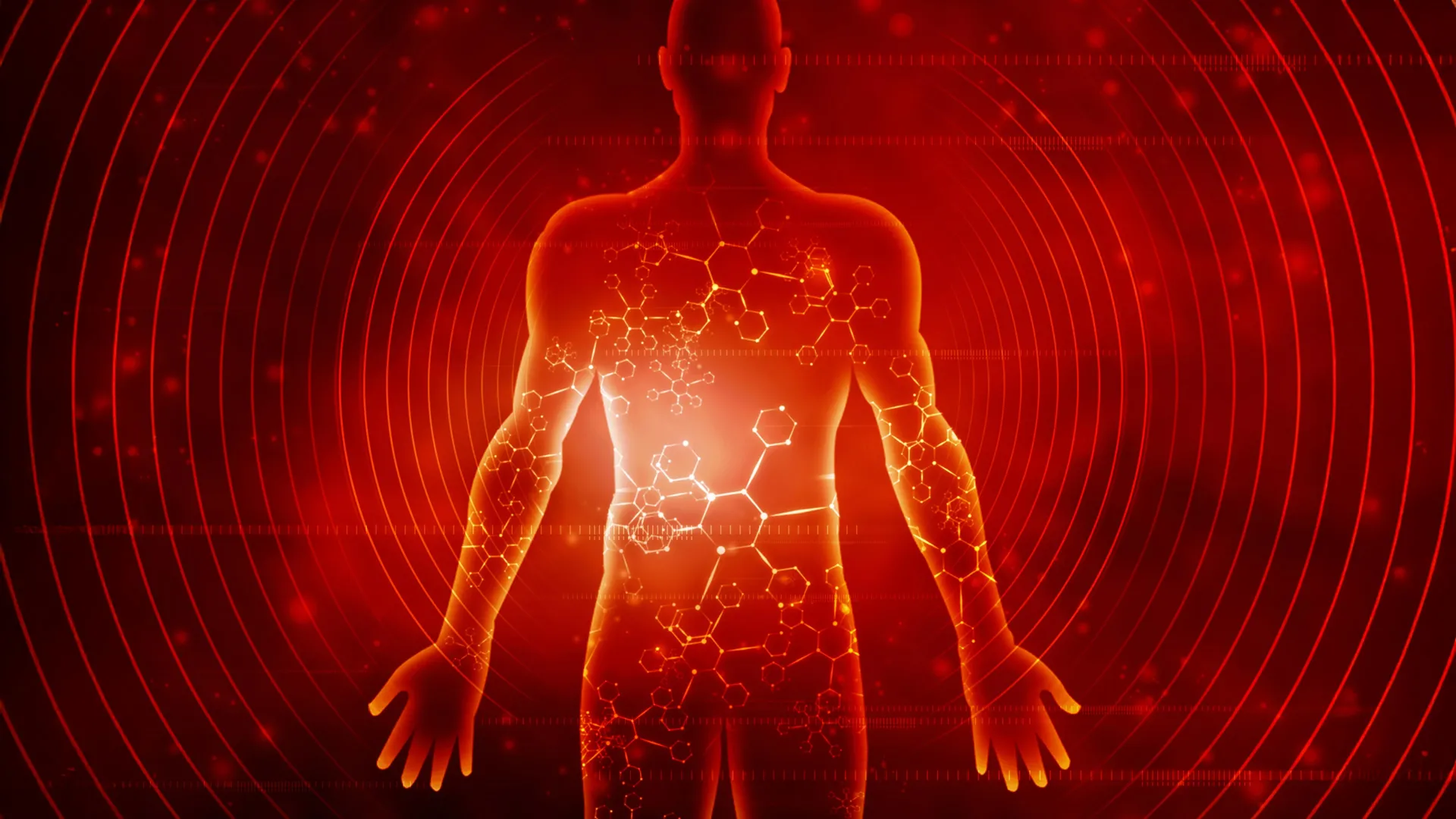
At this stage, the body moved beyond mere energy conservation. The data showed that approximately one-third of all measured proteins shifted significantly. These changes were not localized to the liver or the stomach; they were detected across all major organ systems. This suggests that the body, sensing an extended period of scarcity, initiates a whole-system "reset" that is not merely a byproduct of weight loss, but a distinct biological response to the absence of food.
The Post-Fast Recovery
Three days after the volunteers resumed normal eating, a fascinating pattern emerged. While the lost fat mass remained largely gone, much of the lean mass—the muscle and structural tissue lost during the week—had returned. This suggests that the body is highly efficient at prioritizing the preservation and restoration of functional tissue once the fast is broken, retaining the metabolic benefits of the fat loss while rebuilding the structural foundations.
Supporting Data: The Protein Perspective
The power of this study lies in its use of modern proteomic analysis. Proteins are the "workhorses" of the body; they build muscle, catalyze chemical reactions, and act as cellular messengers. By tracking 3,000 proteins simultaneously, the researchers created a multi-dimensional picture of the human body under stress.
One of the most striking findings involved the brain. The researchers observed significant changes in proteins associated with the structural support of neurons. These proteins are responsible for maintaining the integrity and function of the nervous system. The fact that fasting could influence the molecular environment of the brain suggests that the physiological benefits of caloric restriction may extend to neuroprotection and cognitive health, areas that have long been suspected but rarely proven at a molecular level.
Furthermore, by integrating this proteomic data with large-scale genetic population studies, the researchers were able to infer which biological pathways were being triggered. This allowed them to distinguish between changes caused simply by the loss of body weight and those triggered specifically by the state of fasting. The findings confirm that the body’s response to prolonged fasting is a unique, purposeful, and highly organized biological survival strategy.
Official Perspectives: Translating Science into Medicine
The lead researchers emphasize that this study is not merely an academic exercise; it is a blueprint for the future of precision medicine.
Claudia Langenberg, Director of PHURI, noted the significance of the timing. "For the first time, we’re able to see what’s happening on a molecular level across the body when we fast," she stated. "Our results provide evidence for the health benefits of fasting beyond weight loss, but these were only visible after three days of total caloric restriction—later than we previously thought."
Langenberg’s point is vital for those interested in popular fasting trends. Many modern intermittent fasting protocols—such as the 16:8 method—do not reach the 72-hour threshold required to trigger these deeper, systemic protein changes. While shorter fasts may offer other benefits, they likely do not replicate the specific, deep-tissue molecular reconfiguration identified in this study.
Maik Pietzner, Health Data Chair of PHURI, highlighted the potential for therapeutic intervention. "Our findings have provided a basis for some age-old knowledge as to why fasting is used for certain conditions," Pietzner said. "While fasting may be beneficial for treating some conditions, often times, fasting won’t be an option to patients suffering from ill health. We hope that these findings can provide information about why fasting is beneficial in certain cases, which can then be used to develop treatments that patients are able to do."
Implications: The Future of "Fasting Mimetics"
The most exciting implication of this research is the possibility of "fasting mimetics." If researchers can identify the specific molecular pathways—the "switches"—that are activated after 72 hours of fasting, they may be able to develop pharmacological interventions that flip those same switches without requiring the patient to undergo the physical hardship of a seven-day fast.
This is particularly critical for vulnerable populations. Elderly patients, those with metabolic disorders, or individuals undergoing aggressive treatments like chemotherapy may lack the physical reserve to survive a prolonged fast. If the benefits of cellular repair, metabolic optimization, and neuronal support can be delivered via a targeted treatment, it would represent a massive paradigm shift in preventative and restorative medicine.
Rethinking Medical Fasting
Historically, fasting has been a blunt instrument. It has been used to manage everything from rheumatoid arthritis to epilepsy, often with success, but with little understanding of the mechanism. By decoding the molecular map of fasting, scientists are moving from the era of "fasting as an art" to "fasting as a science."
The researchers caution that prolonged fasting should only be conducted under medical supervision. The study’s participants were healthy and monitored daily, a luxury not available to the average person. However, the data provided by this research serves as a foundation for a new generation of metabolic therapies.
Conclusion
The study by the Precision Healthcare University Research Institute is a landmark contribution to our understanding of human physiology. It confirms that the body is not merely a passive recipient of nutrition, but a dynamic, adaptive system capable of profound transformation when pushed to its limits.
By identifying the three-day threshold and the subsequent cascade of protein changes, scientists have cleared the fog surrounding the physiological benefits of fasting. Whether through future fasting-mimicking drugs or more refined nutritional protocols, the goal remains the same: to harness the body’s innate ability to repair and rejuvenate itself, turning the ancient practice of fasting into a modern tool for longevity and health. The scale may show weight loss, but the molecular data shows something much more significant: a body in the process of a deep, systemic renewal.