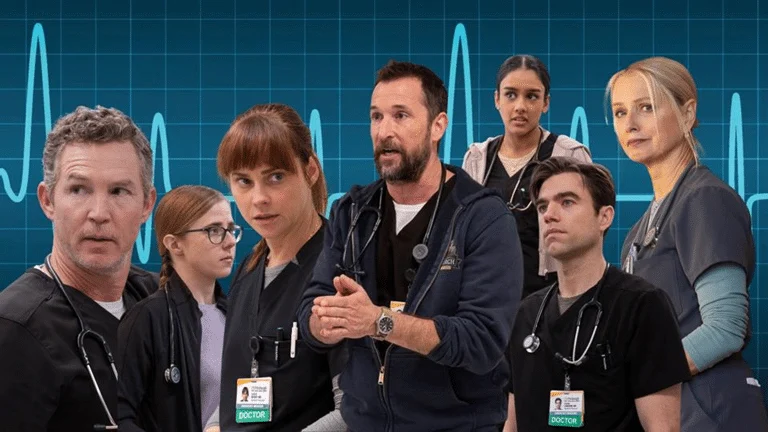
If you haven’t yet immersed yourself in the high-octane, emotionally bruising corridors of HBO Max’s medical drama The Pitt, you are missing one of the most vital pieces of cultural commentary currently airing. While television is rife with medical procedurals—many of which lean into the "hero doctor" trope or sanitize the complexities of hospital administration—The Pitt dares to do something different. It trades melodrama for grit, offering a searingly honest depiction of an emergency department (ED) in Pittsburgh that functions less like a well-oiled machine and more like a dam struggling to hold back a flood of systemic failure.
But beyond the technical precision of its “clamshell” thoracic surgeries and the frenetic pacing of its shift-based narrative, the show performs a more profound service: it holds up a mirror to the crumbling infrastructure of American geriatric care. As the series moves through its second season, it has become an unintentional—but essential—documentary on the hidden crises of aging in the 21st century.
The Core Crisis: The "Caregiver Burden" Narrative
The Pitt does not treat its older patients as mere background noise. Instead, it places the spotlight on the invisible, often agonizing labor of caregiving. Through storylines involving an exhausted adult daughter struggling to manage her mother’s increasing dependency and a husband attempting to sustain his household while navigating his wife’s terminal cancer, the show captures a raw, visceral truth.
In one particularly harrowing sequence from Season 1, the show depicts a daughter who, overwhelmed by the mounting demands of her mother’s health, disappears for several hours—not to run away, but simply to collapse in her car, desperate for a moment of silence. It is a moment of profound vulnerability that avoids the trap of “filler” drama; these characters are not props for the lead, Dr. Robby, to mentor. They are placeholders for the 63 million Americans currently acting as unpaid, often unsupported, caregivers.
The Reality of Unpaid Labor
According to data from the Caregiver Action Network, the scope of this crisis is staggering. With one in five caregivers balancing their duties with full-time employment, the physical and psychological toll is quantifiable. These individuals face elevated risks of clinical depression, anxiety, and a cascade of their own chronic health conditions, often triggered by the neglect of their personal wellbeing in favor of their loved ones. The Pitt succeeds because it visualizes the “caregiver cliff”—the moment where love and duty collide with the brutal lack of institutional support.
The Geriatrician Shortage: A Crisis in the Making
Perhaps the most poignant moment in the show’s second season occurs during a contentious exchange between Dr. Robby and Dr. Mohan. When Mohan is recommended for a geriatrics fellowship, the suggestion is framed as a slight—an implication that the field is "slow," "easy," or a career retreat.
The dialogue is a sharp, intentional jab at a systemic bias that plagues the medical community: the devaluation of aging medicine. In reality, the “slight” leveled at Dr. Mohan masks a terrifying national deficit.
Chronology of a Shortage
- The Boomer Surge: By 2030, every single member of the Baby Boomer generation—representing one in five Americans—will be age 65 or older.
- The Numbers Gap: Currently, the United States employs roughly 7,000 board-certified geriatricians. To put this in perspective, there are over 60,000 pediatricians in the country. The disparity is not just a rounding error; it is a fundamental misalignment of medical resources.
- The HHS Projection: The U.S. Department of Health and Human Services has projected a shortfall of nearly 27,000 geriatric providers. We are not approaching this deadline; we have effectively crossed it.
Even as the demand for specialized care for the elderly skyrockets, only one in ten U.S. medical schools requires a clinical rotation in geriatrics. We are sending thousands of doctors into the workforce who have never been formally trained to handle the complex, multi-morbidity profiles of the patients who will make up the majority of their caseloads.
Emergency Medicine at the Breaking Point
The hallmark of The Pitt is its atmosphere of perpetual overwhelm. Waiting rooms are overflowing, charts are backlogged, and doctors are stretched to the point of cognitive collapse. In one scene, Dr. Langdon admits to treating 16 patients in a single morning, only to realize he cannot recall a woman he treated just four hours prior.
The Burnout Epidemic
This is not mere hyperbole for dramatic effect. The American Medical Association (AMA) has consistently identified emergency medicine as the specialty with the highest rate of physician burnout. When an ED is overwhelmed, the most vulnerable victims are inevitably the elderly.
The implications are severe:
- "Boomeranging": Older adults are at a higher risk of being readmitted to the hospital shortly after discharge due to insufficient follow-up care.
- Adverse Outcomes: In a chaotic environment, medication errors and miscommunications increase exponentially.
- The "Waiting Room" Trap: When the system is log-jammed, the wait times for geriatric patients lead to physical and cognitive decline, making a routine visit to the ED a catalyst for a permanent loss of independence.
The "Last Mile" Problem: Transportation and Equity
One of the most heart-wrenching arcs in the show involves a patient named Vera. Technically “cleared” for discharge, she finds herself stranded. Her neighbor, who drove her to the hospital, cannot navigate night driving, and Vera lacks the funds for a cab. Ultimately, the burden falls on a medical student, Dr. Whittaker, who pays for a ride-share out of his own pocket to ensure she gets home safely.
This scene highlights the "Last Mile" problem—the gap between clinical success and social reality.
Data on Healthcare Access
Transportation is one of the most consistent, yet under-discussed, barriers to healthcare equity. Research indicates that approximately 3.6 million Americans skip or delay medical appointments specifically due to a lack of reliable transportation. Perhaps more worrying is that 50% of older adults report that they anticipate having to miss future appointments for the same reason. When the medical system considers a patient "treated" but fails to consider how that patient will survive the journey home, the clinical intervention becomes, in practice, a failure.
Financial Dread and the "GoFundMe" Culture
The Pitt does not shy away from the ledger. The show weaves a constant, stifling theme of financial dread. We see patients calculating whether their survival is worth the debt it will leave behind. When cuts to Medicaid force doctors to find "workarounds" to provide care, it illustrates the erosion of the Hippocratic Oath under the weight of fiscal policy.
The most tragic illustration occurs when a patient chooses to leave the hospital to avoid burdening his family with debt, only to return hours later in a state of terminal decline. The daughter’s subsequent turn to a crowdfunding site—a common, desperate reality for millions of Americans—highlights the shift from a robust social safety net to a system where survival is determined by the generosity of strangers and the limits of a credit card.
Implications for the Future
The genius of The Pitt lies in its ability to bridge the gap between abstract policy debates and human suffering. Issues like caregiver burnout, the geriatrician shortage, and the spiraling costs of care are often discussed in the sterile, air-conditioned rooms of Congress or in the ivory towers of medical schools.
However, The Pitt forces us to confront these issues in the sterile, fluorescent-lit rooms of an emergency department.
The implications are clear: if we continue to build a healthcare system that does not account for the specific, nuanced needs of an aging population, the "system" will eventually break under its own weight. We are at a crossroads. The decisions currently being made regarding medical education requirements, Medicaid funding, and social support services for caregivers will define the quality of life for the largest generation of older adults in American history.
As we watch the fictional staff of The Pitt struggle to save their patients, we must ask ourselves if we are providing them the tools to succeed in the real world. Are we investing in the geriatricians of tomorrow? Are we supporting the unpaid caregivers of today? Or are we content to let the "waiting room" of our society remain permanently overwhelmed?
The drama on the screen is scripted, but the crisis in our healthcare system is not. It is time we start treating it with the urgency it deserves.
Katrin Werner-Perez is the Director of Health Programs at the Alliance for Aging Research.