29 May, 2026
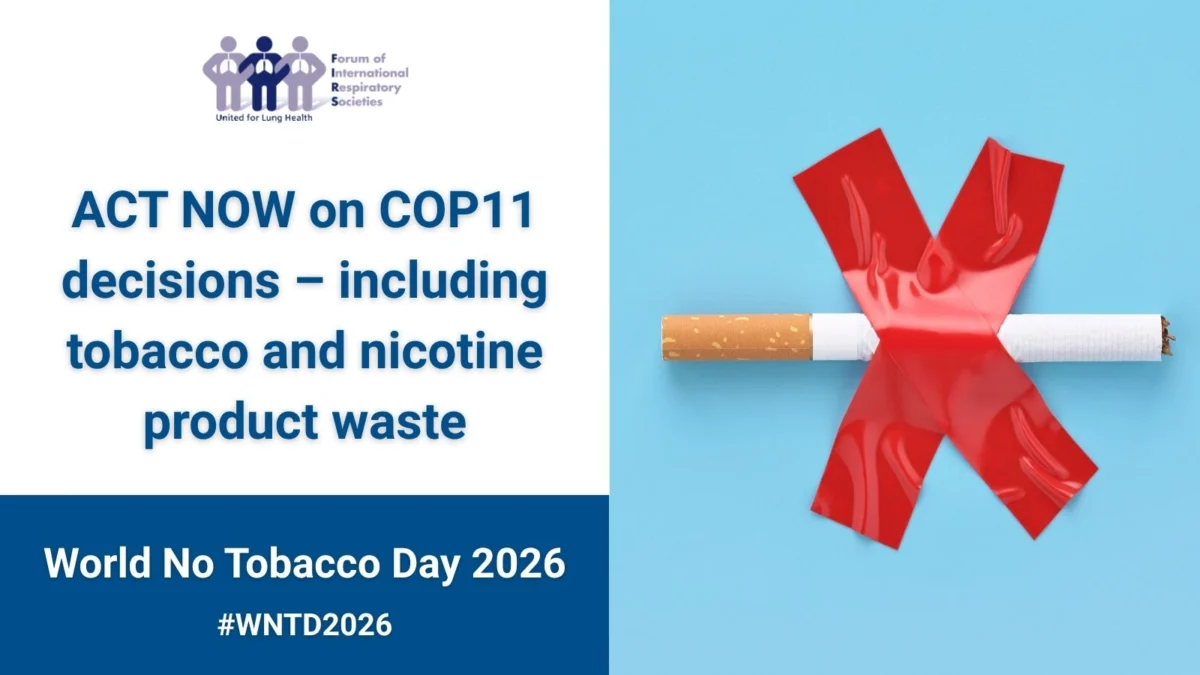
As the global community prepares to mark World No Tobacco Day on 31 May, 2026, the Forum of International Respiratory Societies (FIRS)—a leading voice in global lung health—has issued a clarion call for urgent, systemic reform. At the heart of this advocacy is a demand for nations to move beyond rhetoric and immediately implement the decisions ratified at the 11th Conference of the Parties (COP11) to the WHO Framework Convention on Tobacco Control (FCTC).
The focus of this year’s initiative is not merely the well-documented respiratory health crisis caused by nicotine consumption, but the often-overlooked environmental devastation wreaked by the tobacco industry. Specifically, the European Respiratory Society (ERS), a founding member of FIRS, is spearheading a movement to regulate—and ultimately phase out—cigarette filters and single-use electronic nicotine delivery systems, citing their dual role as both a public health menace and an environmental pollutant.
The Core Mandate: COP11 and the Regulatory Imperative
The 11th Conference of the Parties (COP11) served as a pivotal turning point in international tobacco policy. Recognizing that the tobacco industry has successfully decoupled its products from their environmental footprint for decades, delegates prioritized comprehensive regulatory frameworks for tobacco and nicotine components.
The COP11 resolutions explicitly encourage member states to explore legislative options that target the "environmental harms" inherent in tobacco product design. This includes the implementation of stricter product standards, the removal of filters that fail to provide health benefits, and the rejection of industry-led "cleanup" initiatives that mask the true cost of production and disposal.
The ERS has been vocal in interpreting these mandates, arguing that environmental protection is not peripheral to tobacco control; it is central to it. By addressing the life cycle of a cigarette—from the cultivation of tobacco to the final disposal of its toxic plastic filter—governments can strike a blow against both respiratory disease and the climate crisis.
A Toxic Legacy: The Environmental Impact of Filters
Cigarette filters, the most common form of litter on the planet, are a triumph of marketing over reality. Often composed of cellulose acetate—a plastic that does not biodegrade in any meaningful sense—these filters serve as a reservoir for the hundreds of toxic chemicals inhaled during smoking.
Microplastic Contamination
Once discarded, filters do not vanish. Instead, they break down into microplastics, infiltrating soil and water tables. These particles serve as vectors for heavy metals and nicotine residues, which are then leached into surrounding ecosystems. Research indicates that this toxicity has a measurable impact on marine life, entering the food chain and posing risks to broader biodiversity.
The Myth of Recyclability
A significant challenge in current policy is the persistent narrative—often bolstered by the tobacco industry—that cigarette waste can be recycled. Extensive studies have confirmed that there is no evidence suggesting cigarette filters can be safely or effectively recycled. The chemical complexity of the waste, combined with the extreme contamination levels of the materials, renders recycling programs technologically and economically unfeasible.
Deconstructing the "Harm Reduction" Fallacy
Perhaps the most insidious aspect of the cigarette filter is the consumer perception that it makes smoking "safer." For decades, the tobacco industry utilized filters to increase the palatability of cigarettes, making the inhalation of smoke smoother and easier for new users.
The Lung Adenocarcinoma Link
Far from reducing harm, the presence of a filter has been linked to an increased risk of lung adenocarcinoma. The filter encourages smokers to inhale more deeply to compensate for the "smoother" smoke, drawing toxic particulates deeper into the peripheral lung tissue where adenocarcinoma is most likely to develop.
Marketing and Cessation
Filters are a key component in the industry’s strategy to maintain a customer base. By making the product appear "cleaner" or "filtered," companies inadvertently discourage cessation. Many smokers believe they are choosing a less harmful option, thereby delaying their decision to quit. Furthermore, research suggests that banning filters would reduce the palatability of cigarettes, acting as a natural deterrent for younger demographics and potential new users who find the harshness of unfiltered tobacco a barrier to entry.
Industry Accountability: The "Greenwashing" Problem
A major point of contention between health advocates and tobacco corporations is the rise of "Extended Producer Responsibility" (EPR) programs. These programs often see tobacco companies funding cleanup drives or investing in minimal-impact recycling initiatives.
Health experts, including the ERS Tobacco Control Committee, characterize these efforts as blatant "greenwashing." By positioning themselves as environmental stewards, tobacco companies seek to distract from their primary business model: the sale of an addictive, toxic, and polluting product. Such initiatives are criticized for:
- Undermining Marketing Bans: By participating in "public interest" campaigns, the industry gains a seat at the table where regulations should be drafted.
- Deflecting Financial Responsibility: EPR programs allow companies to pay a fraction of their profits toward "cleanup" rather than being held accountable for the total economic burden placed on healthcare systems and environmental cleanup agencies.
- Diluting Policy: These programs distract from the only effective solution: total prohibition of the polluting component itself.
Official Perspective: Expert Testimony
Dr. Filippos Filippidis, Chair of the ERS Tobacco Control Committee and Associate Professor in Public Health at Imperial College London, has been a leading voice in articulating the intersection of lung health and environmental sustainability.
"Beyond their direct health effects, tobacco and nicotine products also degrade the environment through waste, pollution and emissions—which compounds the burden on lung health that groups such as ERS’s Tobacco Control, and Environment and Health Committees jointly work to address," Dr. Filippidis stated following the COP11 proceedings.
He further emphasized the necessity of a hard-line approach, noting, "Phasing out and prohibiting cigarette filters, and single-use electronic nicotine delivery systems alongside them, is the only way forward towards reducing, and ultimately eliminating, the huge environmental burden that these products pose."
Implications: A Path Toward 2030
The urgency of the ERS and FIRS call is set against the backdrop of the 2030 Sustainable Development Goals. To meet these targets, nations must synchronize their public health policies with their environmental commitments.
Policy Recommendations
- Legislative Bans: Governments should move to ban the sale of filtered cigarettes, citing both health risks and environmental hazards.
- Single-Use ENDS Regulation: Electronic Nicotine Delivery Systems (ENDS) present a new environmental nightmare, combining batteries, plastics, and toxic chemical liquids. Stronger regulations on the lifecycle management of these products are essential.
- Fiscal Accountability: Taxation on tobacco products should be adjusted to account for the environmental externalities, with proceeds directed toward ecological restoration rather than industry-led PR campaigns.
- Public Awareness: Educational campaigns must explicitly address the "filter myth," ensuring consumers understand that filtered cigarettes are not a safer alternative and are, in fact, a significant contributor to global plastic pollution.
Conclusion: A Turning Point for Global Health
As we approach World No Tobacco Day 2026, the message from the international respiratory community is clear: the tobacco industry can no longer hide behind the illusion of safer products or the promise of sustainable cleanup. The damage caused by filters is systemic, cumulative, and increasingly difficult to ignore.
The path forward requires courage from policymakers to defy industry lobbying and implement the evidence-based recommendations established at COP11. By eliminating the filter, we do not only improve the health outcomes of current and future smokers; we begin the long-overdue process of cleaning our soil, protecting our water, and holding the tobacco industry accountable for the full scope of its global impact.
For those committed to the fight against tobacco, the next step is clear: advocate for a future where products are judged not just by the breath they take away, but by the legacy of waste they leave behind.
For further reading on ERS’s tobacco control advocacy and the full text of their post-COP11 statement, please visit the official ERS website.