





April marks Esophageal Cancer Awareness Month, a time dedicated to shedding light on a disease that has historically remained one of oncology’s most stubborn challenges. Despite advances in surgical techniques and traditional chemotherapy, esophageal cancer remains a condition characterized by high recurrence rates and complex biological variability. However, a new frontier in medicine—led by innovators like Dr. Valsamo (Elsa) Anagnostou—is shifting the paradigm. By treating cancer not as a static entity, but as a "moving target," researchers are developing the tools necessary to stay one step ahead of the disease.
Main Facts: The Clinical Reality of Esophageal Cancer
Esophageal cancer is a biologically heterogeneous disease, meaning it does not behave the same way in every patient. Even when patients are diagnosed at an early stage and undergo curative-intent surgery and chemotherapy, the risk of recurrence remains daunting. For those with stage 2 or 3 disease, the specter of the cancer returning within a few years is a pervasive clinical reality.
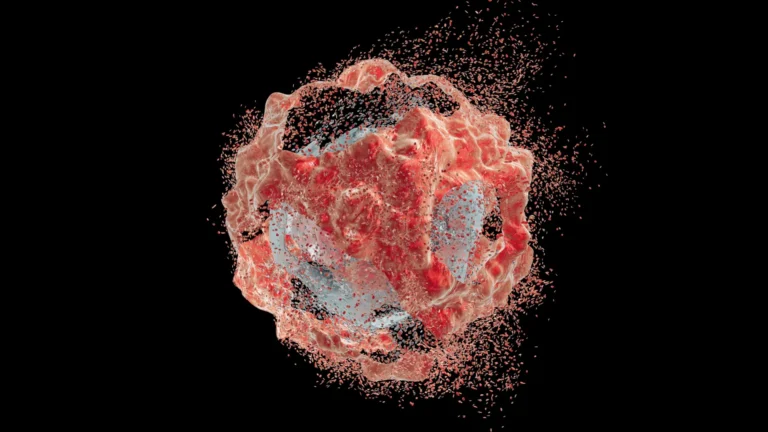
The core of the problem lies in "cancer evolution." Tumors are dynamic; they constantly adapt under the selective pressure of treatments, particularly immunotherapy. When a therapy is introduced, it may kill the majority of the tumor cells, but the remaining "resistant" cells can survive, evolve, and eventually proliferate, leading to recurrence.
Dr. Valsamo (Elsa) Anagnostou, a Professor of Oncology at the Johns Hopkins School of Medicine and a Torrey Coast Foundation CRI CLIP Investigator, is at the forefront of tackling this volatility. Her laboratory specializes in combining experimental biology with computational data science to map this evolutionary process. Her focus is to transition clinical practice from static, one-time snapshots of a tumor to a model of continuous, real-time monitoring.
Chronology: A History of Treatment and the Rise of Precision
The evolution of esophageal cancer treatment has been a slow, incremental climb, marked by several critical turning points:
- The Era of Standardized Care: For decades, treatment for esophageal cancer was largely limited to a "one-size-fits-all" approach: surgery followed or preceded by systemic chemotherapy. While effective for some, this approach often failed to account for the unique genetic makeup of the individual’s tumor.
- The Genomic Revolution: As sequencing technologies became more affordable, researchers began to realize that esophageal cancers are not a singular entity but a collection of distinct biological subtypes. This shift opened the door to molecular diagnostics.
- The Advent of Immunotherapy: In recent years, the integration of immunotherapy into the perioperative window (before and after surgery) has begun to transform patient outcomes. This shift represents a move toward biological intervention rather than just cytotoxic damage.
- The Liquid Biopsy Breakthrough: Currently, we are in the midst of the "liquid biopsy era." Scientists have mastered the ability to detect circulating tumor DNA (ctDNA) in the bloodstream, providing a non-invasive way to track tumor dynamics that was previously impossible without repeated, painful tissue biopsies.
Supporting Data: Why ctDNA is a Game Changer
The power of the liquid biopsy lies in its precision. As tumor cells die, they shed fragments of DNA into the bloodstream. By sequencing this ctDNA, clinicians can gain a window into the tumor’s molecular composition without ever performing an invasive procedure.
Recent clinical studies conducted by Dr. Anagnostou’s team have provided compelling evidence for the utility of this technology. The data shows a stark correlation between ctDNA levels and patient outcomes:
- Clearance as a Proxy for Success: Patients whose ctDNA was cleared from their bloodstream prior to surgery showed significantly better survival rates. This suggests that the blood test can act as an early indicator of treatment efficacy.
- Residual Disease Detection: Conversely, patients who exhibited residual ctDNA—even if they appeared healthy according to traditional imaging or pathology—faced a much higher risk of recurrence. This molecular insight reveals "hidden" disease that standard tests simply cannot see.
- Refining Stratification: The data suggests that ctDNA can distinguish between patients who appear similar on a standard pathology report but have vastly different biological trajectories. This allows for a more personalized "risk-stratified" approach to treatment.
Official Responses and Expert Perspective
Dr. Anagnostou emphasizes that the goal is not just to detect cancer, but to "read" the tumor’s strategy in real time. In her recent commentary on the state of the field, she notes that current progress in immunotherapy, while promising, is hampered by our limited understanding of resistance.
"To truly understand response and resistance, we need a holistic view—one that integrates genetic, molecular, and cellular data to uncover what’s driving each patient’s disease," Dr. Anagnostou explains.

Her perspective is shared by many in the oncology community who argue that "multi-omic" approaches—integrating DNA, RNA, and protein data—are the only way to resolve why some tumors respond to immunotherapy while others remain completely dormant or resistant. This collaborative, interdisciplinary approach is exactly what the CRI CLIP (Clinical Laboratory Integration Program) was designed to foster.
Implications: A New Model of Personalized Care
The implications for the future of esophageal cancer are profound. We are moving toward a model where treatment is not just prescribed at the start of a journey, but is iteratively adjusted based on the tumor’s feedback.
The New Clinical Paradigm
In this future, the patient journey would look significantly different:
- Initial Molecular Profiling: Every patient’s tumor is matched with a specific therapy based on its unique biological fingerprint.
- Real-Time Monitoring: Instead of waiting for a follow-up scan that occurs months after treatment, liquid biopsies track the ctDNA response continuously.
- Refinement and Intervention: If the liquid biopsy indicates that the cancer is evolving or becoming resistant, clinicians can pivot to a different therapeutic strategy before the tumor has a chance to clinically manifest as a recurrence.
The Role of Technology
This model relies on the convergence of three pillars:
- Biological Insight: A deeper understanding of the tumor microenvironment and the genetic drivers of resistance.
- Adaptive Technology: The use of liquid biopsies to provide a "live" feed of the cancer’s status.
- Advanced Immunotherapy: The use of agents that can be "tuned" or combined with other therapies to overcome specific resistance mechanisms identified by the molecular data.
Challenges Remaining
While the progress is undeniable, researchers caution that challenges remain. The cost and accessibility of high-sensitivity sequencing for liquid biopsies must be addressed to ensure these benefits reach all patient populations. Furthermore, interpreting the data from these tests requires sophisticated computational infrastructure, meaning that the "future of medicine" also depends on the "future of data science."
Conclusion: A Reason for Hope
Despite the gravity of an esophageal cancer diagnosis, the narrative is shifting from one of fatalism to one of strategic management. As Dr. Anagnostou notes, the progress on multiple fronts—from more effective immunotherapies to the unprecedented clarity provided by liquid biopsies—is fueling a new era of optimism.
"I’m very encouraged by the advances in immunotherapy for early-stage gastroesophageal cancer," Dr. Anagnostou says. "As we deepen our understanding of how tumors respond and resist treatment, and continue advancing liquid biopsy technologies, I’m hopeful we can better optimize care and improve outcomes for patients."
By bridging the gap between the laboratory and the bedside, the medical community is moving closer to a future where esophageal cancer is no longer a terminal surprise, but a manageable condition. For the thousands of patients diagnosed each year, this research is not just an academic exercise—it is the development of a lifeline that will ultimately redefine what it means to live with cancer.