










For decades, the diagnosis of metastatic pancreatic cancer has been synonymous with a grim prognosis. Often described as a "silent killer," the disease frequently remains undetected until it has already metastasized to distant organs. Historically, the statistics have been sobering: for patients diagnosed between 2015 and 2021, a staggering 97% did not survive beyond five years.
However, a paradigm shift is underway. Following the publication of landmark clinical trial data, the oncology community is witnessing the emergence of a therapeutic breakthrough that challenges the long-standing belief that the primary drivers of pancreatic cancer are beyond the reach of modern medicine. The development of a new oral drug, daraxonrasib, has demonstrated the ability to effectively "switch off" the mutation responsible for the vast majority of these cancers, offering a glimmer of hope where once there was almost none.
The Anatomy of a Medical Milestone: Main Facts
Pancreatic cancer remains one of the most challenging malignancies to treat, primarily due to its lack of early warning signs. By the time symptoms such as jaundice—the yellowing of skin and eyes—or persistent abdominal pain emerge, the cancer has often progressed beyond the point of surgical intervention.
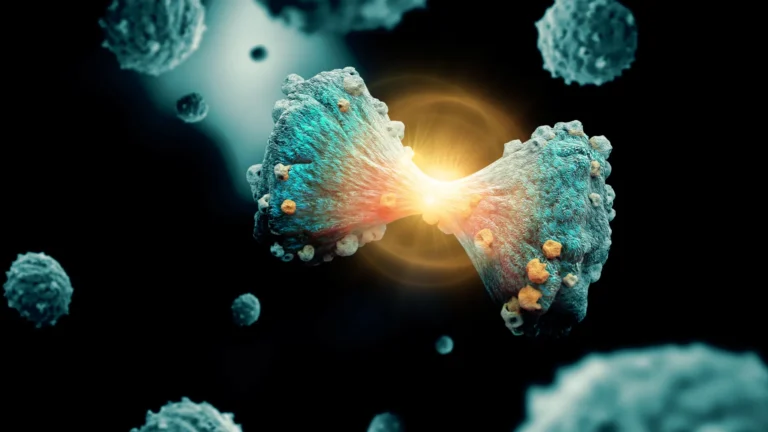
At the heart of the disease’s lethality is the KRAS gene. In over 90% of pancreatic tumors, KRAS undergoes a mutation that forces the protein it codes for to remain in a permanently "on" position. This molecular malfunction acts like a broken accelerator in a car, commanding cancer cells to divide and multiply uncontrollably. For years, scientists dubbed KRAS "undruggable" because the protein’s surface was too smooth and lacked the necessary molecular pockets for conventional drugs to latch onto.
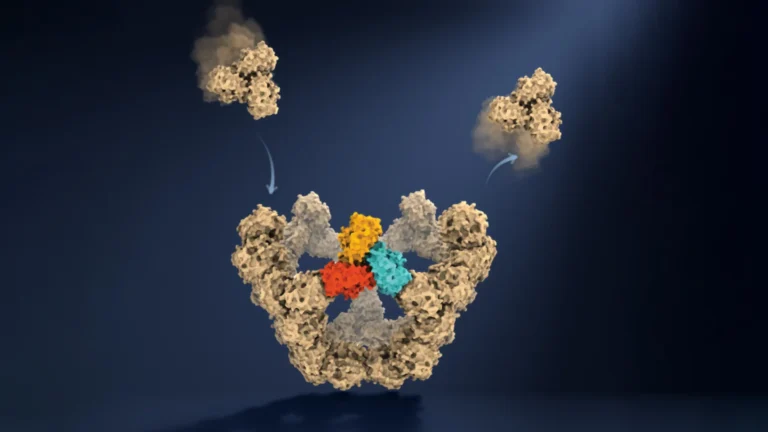
Daraxonrasib changes this narrative. Rather than attempting to bind directly to the smooth surface of the KRAS protein, the drug utilizes a sophisticated "indirect" approach. It attaches to cyclophilin A, a cellular molecule responsible for folding proteins into their 3D structures. By forming a complex with this molecule, the drug successfully inhibits the active KRAS protein, effectively silencing the signaling pathways that drive tumor growth.
A Chronological Perspective: From "Impossible" to Clinical Reality
The journey to this discovery spans decades of frustration and incremental progress in molecular biology.
- 1980s–2000s: The KRAS mutation is identified as the primary driver of pancreatic cancer. However, attempts to develop small-molecule inhibitors fail repeatedly due to the protein’s unique, featureless structure. The oncology field largely shifts focus toward generalized, toxic chemotherapy, which serves as a blunt instrument against the disease.
- 2010s: Research into tumor resistance mechanisms begins to reveal why chemotherapy often fails. Pancreatic cancer cells demonstrate a remarkable ability to adapt to stress, effectively "learning" to survive the chemical onslaught.
- Early 2020s: Revolution Medicines begins development of specialized inhibitors capable of interacting with the KRAS-cyclophilin A complex.
- May 31, 2026: The company formally presents the results of its Phase 3 clinical trial. The study, involving 500 patients with metastatic pancreatic cancer who had already failed prior treatments, marks the first time a targeted therapy has significantly outperformed standard care in this specific population.
Supporting Data: The Power of Targeted Inhibition
The Phase 3 trial data presented in mid-2026 provides empirical evidence of the drug’s efficacy. In a direct comparison against standard chemotherapy regimens, patients treated with daily oral daraxonrasib saw their median overall survival increase from 6.7 months to 13.2 months—effectively doubling the life expectancy for this cohort.
Crucially, the data suggests a 60% reduction in the risk of death compared to traditional treatments. While the side-effect profile is distinct, it is notably different from the systemic toxicity of chemotherapy.

Managing the Trade-offs
Clinical trial participants reported:
- Skin Rash: Observed in over 86% of patients. While common, it represents a dermatological side effect rather than the systemic organ damage often seen with heavy-duty chemotherapy.
- Stomatitis: Painful mouth sores were a frequent complaint, alongside gastrointestinal issues like diarrhea, nausea, and vomiting.
- Quality of Life: Despite these side effects, patients reported a higher overall quality of life and reduced pain levels compared to the chemotherapy group. Importantly, the rate of treatment discontinuation due to adverse events was significantly lower for daraxonrasib, suggesting that the drug is more tolerable for long-term administration.
Official Responses and Regulatory Outlook
The oncology community has reacted to the trial results with cautious optimism. As a gastrointestinal oncologist and researcher, I have witnessed firsthand the desperation of patients who have exhausted all standard options. The arrival of a targeted therapy that actually hits the KRAS driver is a watershed moment.
Regulatory bodies are expected to fast-track the review of daraxonrasib. Given the severity of metastatic pancreatic cancer and the lack of existing effective alternatives, the drug is a prime candidate for "Breakthrough Therapy" designation by the U.S. Food and Drug Administration (FDA). Such a status would expedite the review process, potentially bringing the drug to clinical practice within a matter of months rather than years.
Industry experts note that this is not just a win for a single company, but a validation of a new methodology in drug design—moving away from "blunt" chemotherapy toward precision medicine that targets the underlying genetic "switches" of cancer.
Implications for the Future of Oncology
The success of daraxonrasib serves as a proof-of-concept that "undruggable" targets are, in fact, vulnerable if the right molecular approach is employed.
The Path Forward
- Combination Therapies: The immediate implication is the shift toward combination trials. Researchers are already looking at pairing KRAS inhibitors with other targeted agents to "double-team" the tumor, preventing it from developing the adaptive resistance that has historically doomed treatment efforts.
- Personalized Medicine: As we gain a deeper understanding of the KRAS mutation and its surrounding proteins, we move closer to a future where pancreatic cancer treatment is tailored to the specific genetic makeup of an individual’s tumor.
- Broadening the Scope: The success of this drug provides a roadmap for tackling other "undruggable" proteins in different types of cancer, potentially unlocking treatments for lung, colorectal, and other aggressive malignancies that share similar molecular drivers.
A New Chapter
While 13.2 months of survival is a massive improvement over 6.7, the goal remains long-term remission. We are not yet at the point of "curing" metastatic pancreatic cancer, but we have undeniably moved the needle. We have transitioned from a landscape of near-certain mortality to one where survival can be extended, quality of life can be preserved, and, for the first time, we have a targetable mechanism that we can reliably hit.
The story of daraxonrasib is not merely about a new pill; it is about the triumph of persistence over dogma. By rejecting the notion that certain diseases are inherently untreatable, science has opened a door that many believed was permanently locked. As we move into the next phase of clinical implementation, the focus will be on ensuring equitable access to this therapy and continuing the rigorous research necessary to turn this extension of life into a sustained victory against the disease.
For the patients and families who have long endured the hopelessness of a pancreatic cancer diagnosis, the era of "undruggable" is officially over. The era of precision, targeted, and effective intervention has begun.