As we cross the threshold into our fifties, a subtle but undeniable transformation often begins to occur. Many individuals find that despite maintaining their usual eating habits and activity levels, their body composition begins to shift. Softness appears in places it never used to—the backs of the arms, the midsection, and the upper thighs. While societal narratives often frame this as a failure of willpower or a lack of dietary discipline, the reality is far more biological.
After nearly four decades in the fitness industry, including two decades as the director and co-founder of TRAINFITNESS—the UK’s leading fitness educator—I have observed that the primary driver of this mid-life "softness" is not a sudden influx of fat, but a silent, steady erosion of muscle mass.
The Biological Reality: The Muscle Recession
The process of muscle loss, known clinically as sarcopenia, is a natural part of aging, but its impact is frequently underestimated. Muscle mass begins to decline in our thirties, but this process accelerates significantly once we pass the age of 40. By the time many people reach their fifties, they have lost a far greater percentage of their lean muscle tissue than they realize.
This muscle loss is the "missing link" in the mid-life health puzzle. When muscle mass decreases, our resting metabolic rate slows down. Essentially, the "engine" that powers our body becomes smaller. Consequently, the same caloric intake that sustained a lean physique in our thirties begins to result in surplus energy storage, which manifests as fat.
Crucially, the fat we see in the mirror looks more pronounced because the underlying "scaffolding"—the muscle—is no longer there to hold the skin and tissue in a firm, lifted position. It is a dual problem: a slower metabolism combined with a loss of structural tension.
The Strategy: Why Standing Exercises Prevail
Many people over 50 turn to group exercise classes, such as aerobics or high-intensity interval training (HIIT), hoping to reverse these changes. While these classes provide cardiovascular benefits, they often fail to address the underlying issue of muscle atrophy.
Standing, functional exercises are superior for this demographic because they mirror the movement patterns of daily life. By engaging the legs, glutes, back, chest, and trunk simultaneously, these movements generate significant muscle activation. This creates a more profound metabolic "afterburn" than isolated, seated machine work or choreographed cardio, which often neglects the muscle-building stimulus required to reshape the physique.
The Four Pillars of Mid-Life Transformation
To effectively combat muscle loss, we must focus on compound, multi-joint movements. These four exercises, when performed with consistency, serve as the foundation for reclaiming muscle tone.
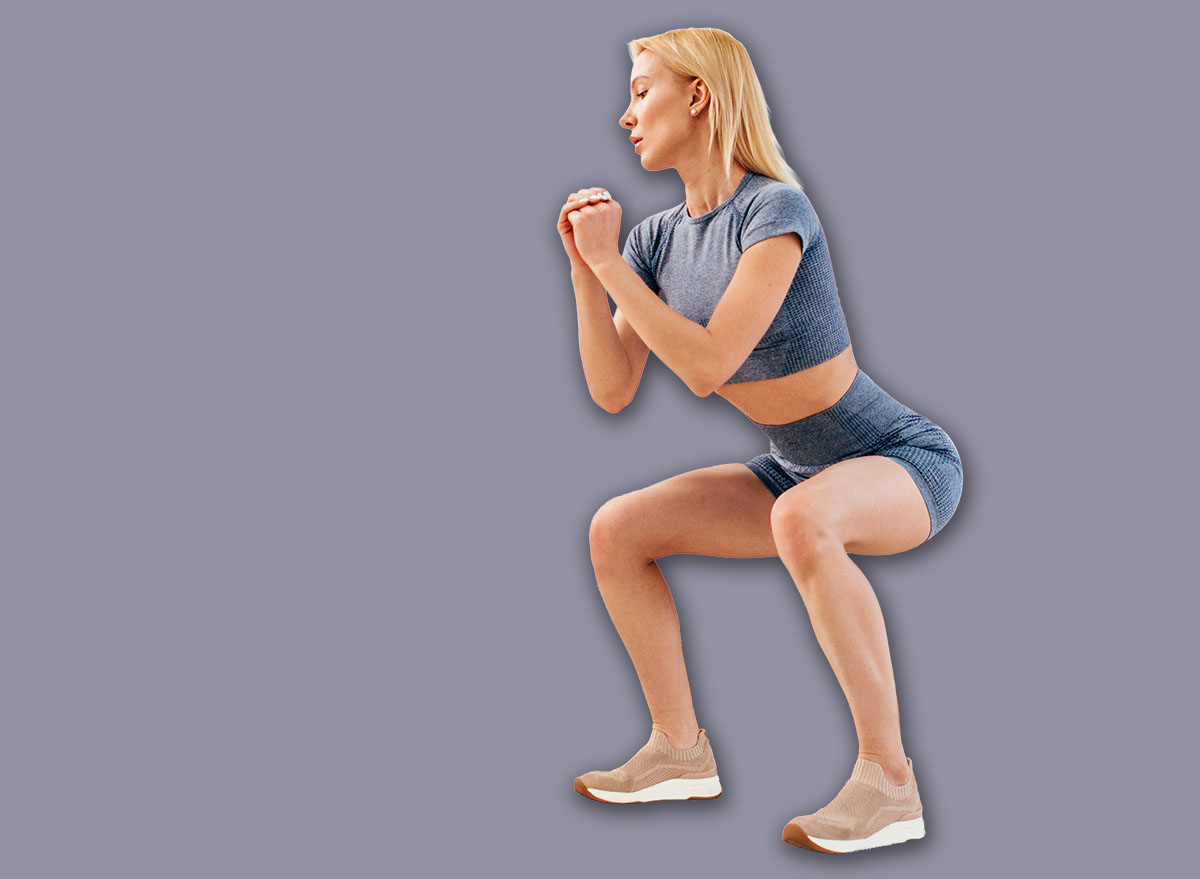
1. The Bodyweight Squat
The squat is the king of functional movements. It trains the two largest muscle groups in the body—the quadriceps and the glutes—in a pattern that mimics sitting and standing.
- The Impact: This move is the fastest way to firm the thighs and the posterior. Because the muscles worked are so large, the metabolic demand is significant, effectively "turning on" your metabolism for the remainder of the day.
2. The Reverse Lunge with Overhead Reach
While standard squats are excellent, unilateral training (working one side at a time) is essential for addressing imbalances.

- The Impact: The reverse lunge demands stability, forcing the core to work harder to keep you upright. By adding an overhead reach, you integrate the shoulders and upper back, transforming a lower-body exercise into a total-body firming sequence.
3. The Counter Press-Up
Upper body strength is often the most neglected area for those over 50. Floor-based push-ups can be daunting for many, but the counter press-up—performed against a sturdy kitchen counter or table—provides the perfect solution.
- The Impact: This move targets the chest, shoulders, triceps, and the deep trunk muscles. It is a safe, effective way to rebuild upper-body definition without the risks associated with heavy bench pressing or the strain of floor-based gravity.
4. The Doorway Row
Poor posture is a hallmark of aging, often manifesting as a slumping of the shoulders. The doorway row works the upper back and rear shoulders.
- The Impact: A strong upper back not only corrects posture but creates an immediate aesthetic change. When the shoulders are pulled back and the chest is lifted, the entire torso appears leaner and more athletic.
Chronology of Progress: What to Expect
Consistency is the variable that determines success. While individual results vary, the following timeline outlines the typical trajectory for those who commit to a 20-minute, four-day-a-week routine.
Weeks 1–2: The Awakening
Most individuals report a change in how their clothing fits within the first fortnight. Sleeves may feel slightly less snug, and trousers may feel more comfortable around the hips and thighs. This is the initial "firming" effect as muscle tone begins to return under the skin.
Weeks 4–8: The Visual Shift
By the one-month mark, the mirror begins to tell a different story. The upper arms appear tighter, the glutes are lifted, and the midsection starts to look flatter. By week eight, these changes are typically significant enough that family and friends begin to notice. Strength gains in the exercises themselves are often as high as 30 to 50 percent during this window.

Month 3 and Beyond: Long-Term Maintenance
By the three-month mark, the three major pillars of physical health—firmness, strength, and balance—are firmly established. These improvements continue to compound over six months or more, provided the stimulus is maintained.
Supporting Data and Metabolic Implications
The science of muscle activation suggests that when multiple large muscle groups work in unison, the body’s hormonal response is optimized. Unlike steady-state cardio, which may lead to muscle catabolism (breakdown) if overdone, progressive resistance training encourages the retention and growth of lean tissue.
A study published in the Journal of Aging and Physical Activity highlights that resistance training in older adults is the single most effective intervention for increasing basal metabolic rate. Furthermore, the "functional" nature of standing exercises improves proprioception—the body’s ability to sense its position in space—which is vital for long-term mobility and fall prevention.
Official Industry Perspective
The fitness industry has shifted its focus in recent years toward "longevity training." Experts now emphasize that the goal for the over-50 demographic should not be to train like an athlete in their twenties, but to train for structural integrity. The consensus among leading trainers is that equipment-free, gravity-based training is the most sustainable way to prevent the "softness" associated with sarcopenia.
By eliminating the barrier of needing a gym membership or specialized equipment, this methodology removes the most common excuses for inconsistency. When exercise is accessible, it becomes a permanent lifestyle habit rather than a temporary "fix."

Implications for Your Lifestyle
To integrate this into a busy life, aim for three to four sessions per week. Each session, consisting of two rounds of the four moves mentioned above, requires only 18 to 20 minutes.
The Weekly Protocol:
- Strength Days: Perform the four moves (Squats, Lunges, Press-ups, Rows).
- Recovery Days: Engage in 30 minutes of brisk walking. This combination of strength and low-impact movement is the "gold standard" for body composition change.
- Progression: After one month, increase the difficulty by adding a third round, or by slowing the tempo of the movement to three seconds on the descent. This "time under tension" is a potent trigger for muscle growth.
The message is clear: You are not losing your shape because of your age; you are losing it because of inactivity in specific, crucial muscle groups. By shifting your focus from "burning calories" to "building muscle" through simple, standing movements, you can reclaim your strength, your posture, and your confidence. The engine can be rebuilt, regardless of your starting point. All it takes is the commitment to stand up and start moving.