In a startling incident that has ignited a firestorm of concern regarding biosafety oversight and international scientific conduct, two prominent researchers from the National Institutes of Health (NIH) have been charged with smuggling undeclared biological materials into the United States. The case, which involves the transport of deactivated mpox virus on a commercial Delta Air Lines flight, has sent shockwaves through the scientific community and triggered a rigorous federal investigation into the lapses in protocol that allowed such a breach to occur.
Vincent Munster, 53, a Dutch citizen and chief of the Virus Ecology Section at the Rocky Mountain Laboratories (RML), and Claude Kwe Yinda, 38, a Cameroonian national and research fellow at the same institution, face serious federal charges. As of June 2, 2026, both men have been charged in Detroit federal court with conspiracy to smuggle goods and making false statements to federal investigators. If convicted, each researcher faces a maximum sentence of five years in federal prison.
The Incident: A Commercial Flight Risk
The chain of events began on January 25, 2026, at Detroit Metropolitan Airport. The two scientists were returning to the U.S. following a research trip to the Republic of Congo, a nation currently grappling with an ongoing mpox outbreak. While the nature of their work—researching zoonotic viral pathogens—is inherently hazardous, the method of transport they chose has been labeled a reckless violation of federal law by prosecutors.
Upon their arrival, Customs and Border Protection (CBP) officers flagged the men after noticing a large, nondescript black plastic case among their luggage. When questioned about the contents of the case, both Munster and Kwe allegedly asserted that the container held only diagnostic and testing equipment. However, a subsequent inspection revealed a far more concerning cargo: 113 vials of biological materials, concealed within Styrofoam coolers.
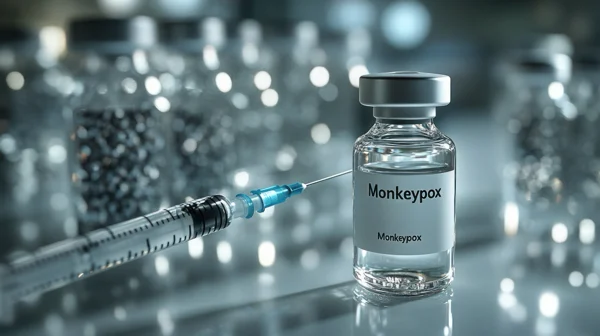
Preliminary testing conducted by the FBI on a sample of 20 vials confirmed the presence of 17 vials containing deactivated mpox virus, one vial containing chickenpox virus, and two vials containing human DNA. The discovery immediately raised red flags, as the transportation of such pathogens is strictly regulated by international aviation laws and U.S. federal health mandates.
Chronology of Events
- January 25, 2026: Munster and Kwe are intercepted at Detroit Metropolitan Airport by CBP officers after arriving on a connecting flight from Brazzaville, Republic of Congo.
- January 25, 2026 (Post-Interception): FBI forensic teams analyze the contents of the researchers’ luggage, confirming the presence of deactivated mpox, chickenpox, and human biological samples.
- June 2, 2026: Federal prosecutors unseal a criminal complaint in Detroit, charging both researchers with conspiracy to smuggle and making false statements.
- June 2026 (Ongoing): The defendants are scheduled for voluntary appearances in federal court in Missoula, Montana, before the venue shifts to Detroit for trial.
The Institutional Context: Rocky Mountain Laboratories
The involvement of researchers from Rocky Mountain Laboratories (RML) adds a layer of professional gravity to the case. Located in Hamilton, Montana, RML is one of the nation’s elite Biosafety Level 4 (BSL-4) facilities. These laboratories are designed to handle the most lethal and dangerous pathogens known to humanity, where researchers must adhere to stringent decontamination and security protocols.
As the chief of the Virus Ecology Section, Munster occupies a high-ranking position within the NIH hierarchy. His work, alongside that of Kwe, centers on the mechanisms of viral spillover—the process by which pathogens jump from animal reservoirs to human populations. This research is critical for pandemic preparedness, but it is precisely because of the potential danger that the federal government mandates extreme transparency and specialized, secure transport for any biological materials being brought into the country.
Official Responses and Public Outcry
The reaction from federal authorities has been swift and unforgiving. U.S. Attorney Jerome F. Gorgon Jr. did not mince words when discussing the implications of the researchers’ behavior. "These NIH experts apparently broke our laws by smuggling viral pathogens on a packed commercial airplane from an outbreak in the Republic of Congo. Let that sink in," Gorgon said in a press release.
The FBI’s involvement underscores the severity with which the government views this breach. FBI Detroit Special Agent in Charge Jennifer Runyan issued a stern reminder regarding the limits of scientific autonomy: "No researchers should believe their positions, credentials, or professional status place them above the law."
While prosecutors stopped short of accusing the men of intending to weaponize or release the pathogens—noting that the virus was "deactivated"—the concern lies in the breach of the chain of custody. Marcus L. Sykes, special agent in charge for the Department of Health and Human Services (HHS) Office of Inspector General, categorized the actions as a "breach of the public’s trust." Sykes noted that the unauthorized transport of such materials, regardless of their state, presents an unacceptable risk to public safety and aviation security.
The "I Do This All The Time" Defense
One of the most damaging aspects of the FBI affidavit is the account of the interrogation. According to investigators, when confronted about the vials, Munster "adamantly denied" carrying biological samples. When pressed, he allegedly claimed his laptop contained all necessary documentation, telling officers, "I do this all the time."
However, authorities report that Munster failed to produce any valid documentation, leading to the charge of making false statements. The claim that this was a routine procedure for the researcher has sparked a deeper investigation into whether this was an isolated incident or a long-standing pattern of bypassing biosafety regulations.
Broader Implications and Scientific Scrutiny
The scandal has reopened old wounds regarding the oversight of high-risk research. Munster’s name has surfaced in previous congressional inquiries. A 2024 letter from then-Senator Rand Paul highlighted Munster’s participation in coronavirus research involving the EcoHealth Alliance, the University of North Carolina, and the Wuhan Institute of Virology. While those documents did not explicitly allege criminal wrongdoing at the time, they placed Munster in the center of a politically charged debate over the origins of COVID-19.
Dr. Richard Ebright, a molecular biologist at Rutgers University and a vocal critic of current biosafety practices, argues that this incident is symptomatic of a culture of impunity within elite research circles. "If the reports are correct, Munster’s record likely includes not only the unlawful importation and false claims for which he was arrested, but also a broader disregard for the protocols that keep the public safe," Ebright stated.
The NIH, for its part, has issued a brief statement confirming it is "cooperating fully with law enforcement." However, for the general public, the damage may already be done. This case arrives during a period of intense public skepticism toward federal health institutions, potentially fueling concerns that the agencies tasked with protecting the public are not always following the rules themselves.
Conclusion: A Question of Trust
As Munster and Kwe prepare to face the judicial system, the case serves as a sobering reminder of the intersection between scientific ambition and public accountability. Regardless of the legal outcome, the incident has highlighted a significant gap in the enforcement of biosafety protocols for international travel.
The core of the issue is not just the 113 vials, but the erosion of confidence in the researchers tasked with handling the world’s most dangerous biological threats. When top-tier experts allegedly circumvent the very laws designed to prevent catastrophic exposure, the public is left to wonder what other risks may be hiding behind the doors of secure laboratories. For the NIH, the path forward will require not only full cooperation with the legal process but a comprehensive review of how its researchers conduct themselves beyond the confines of their laboratory walls.