“I just bought a new BPA-free Tupperware set.”
The comment came from my friend Anna, a brilliant legal professional known for her razor-sharp intellect and an uncanny ability to dismantle weak arguments in the courtroom. She is a woman who thrives on evidence-based logic. Yet, as she sat across from me, she was clutching a set of food containers like a talisman, believing that this purchase was the missing link in her quest to lose 15 pounds.
To any observer, the irony was thick. Anna had spent the last several months lamenting her lack of consistency at the gym, her reliance on late-night takeout, and the "doom scrolling" that consistently robbed her of restorative sleep. When I suggested that she focus on those foundational pillars—consistent movement and intentional meal prep—her response was dismissive: “I’ve tried that a thousand times. If it were that simple, it would have worked already.”
Anna is not an outlier. She is a perfect example of a psychological phenomenon where high-functioning individuals bypass the "unsexy" fundamentals of health in favor of niche, low-impact interventions. This article explores the pervasive tendency to chase "magic bullets" and how to dismantle the barriers standing between us and sustainable, life-altering change.
The Illusion of Progress: Why We Avoid the Basics
We have all been there. We spend hours researching the "optimal" pre-workout supplement or debating the merits of the latest biohacking trend, all while failing to execute the basic, fundamental habits we already know work.
Why do we do this? Because buying new gear or consuming content about health feels like making progress. It provides an immediate dopamine hit—a sense of agency—without the discomfort of actual behavioral change. It is a sophisticated form of procrastination. We tell ourselves we are preparing, when in reality, we are merely building a stage for a performance that never begins.
The tragedy is that real, lasting change is rarely found in a new kitchen gadget or a trendy supplement. It is found in the repetitive, often mundane execution of basic health behaviors: moving our bodies, eating whole foods, managing stress, and getting adequate rest.
Chronology of the "Magic Bullet" Mindset
The cycle of health-goal failure often follows a predictable timeline:
- The Trigger: A moment of frustration with current physical or mental health status.
- The Search: An exhaustive hunt for a "hack" or "system" that promises to bypass the difficulty of traditional lifestyle changes.
- The Acquisition: The purchase of a product or the adoption of a rigid, complex plan that feels "pro" or "cutting-edge."
- The Honeymoon Phase: A brief period of motivation fueled by the novelty of the new strategy.
- The Inevitable Collision: Real life intervenes—work deadlines, family commitments, or exhaustion—and the rigid, complex plan collapses.
- The Narrative of Failure: The individual internalizes the collapse as a personal moral failing, blaming "lack of willpower" or "poor discipline," rather than the unrealistic nature of the plan itself.
Supporting Data: The 6 Percent Reality
The health and fitness industry is built on the premise that we are failing because we don’t know enough. The reality is that we know exactly what to do; we just struggle to do it.
Data suggests that only six percent of the American population consistently adheres to the five core pillars of health:
- Daily Movement: At least 30 minutes of moderate-to-vigorous activity, including resistance training.
- Whole Foods: Deriving 80 percent of calories from minimally processed sources.
- Protein Adequacy: Consuming 1.2 to 2.2 grams of protein per kilogram of body weight to support muscle mass and satiety.
- Sleep Hygiene: Achieving seven to eight hours of quality, restorative sleep.
- Substance Limitation: Avoiding excessive alcohol, nicotine, and recreational drugs.
If 94 percent of the population is failing to meet these basic criteria, the problem is not a lack of information or a lack of "BPA-free" plastic. The problem is a systemic inability to integrate these behaviors into a modern, high-stress lifestyle.
Understanding Ambivalence and Resistance
When we contemplate changing our lives, we often feel a push-and-pull sensation. Psychologists call this ambivalence. It is the perfectly normal experience of wanting to change while simultaneously wanting to keep our current, comfortable habits.

Furthermore, we experience resistance. This is not a sign that we are "not ready" or "not motivated." Instead, resistance is a hallmark of change that actually matters. When we feel anxious about stepping away from our phones or nervous about starting a workout routine, it is because we are stepping into a domain that we care about deeply. Rather than viewing this as a sign to stop, we should view it as a signal that the change is meaningful.
Three Primary Barriers to Sustained Action
1. Ambition Overload
We often attempt to change everything at once. We decide to overhaul our diet, sleep, and exercise in a single "Monday Morning" blitz. This rarely works because it ignores the reality of our current bandwidth. We overestimate our future capacity for willpower, failing to account for the hidden, minute-by-minute demands of a busy life.
2. The Myth of the "Industry Secret"
There is a pervasive belief that if a simple habit like eating vegetables and walking were effective, the world would be healthy. Because we see high rates of obesity and chronic disease, we assume the "truth" must be hidden behind some complex, secret, or expensive barrier. This leads us to trust unproven supplements or unsustainable, extreme diet protocols over the proven efficacy of consistency.
3. The Perfectionism Trap
Many of us operate under the delusion that "perfect" health is attainable if we just follow the right plan. We treat health as an "on/off" switch. If we eat one "bad" meal, we feel we have failed, leading to a "what-the-hell" effect where we abandon our goals entirely. This binary thinking is the greatest enemy of progress.
Four Steps to Effective, Realistic Action
If you want to break the cycle, you must move from idealistic dreaming to realistic execution.
Step #1: Explore the "Why"
Before choosing a path, use the "5 Whys" technique. Keep asking "why" until you reach the emotional core of your goal. Are you losing weight to look better, or to have the energy to play with your children? A surface-level goal is easily abandoned; a core value is worth fighting for.
Step #2: Prioritize the Essentials
Stop trying to do everything. Identify the one movement, nutrition, or recovery practice that would move the needle the most. Use a "Skills, Practices, and Daily Actions" framework to select one small, manageable habit to implement for the next 30 days.
Step #3: The "Floor and Ceiling" Approach
Instead of an "on/off" switch, view your habits as a dial.
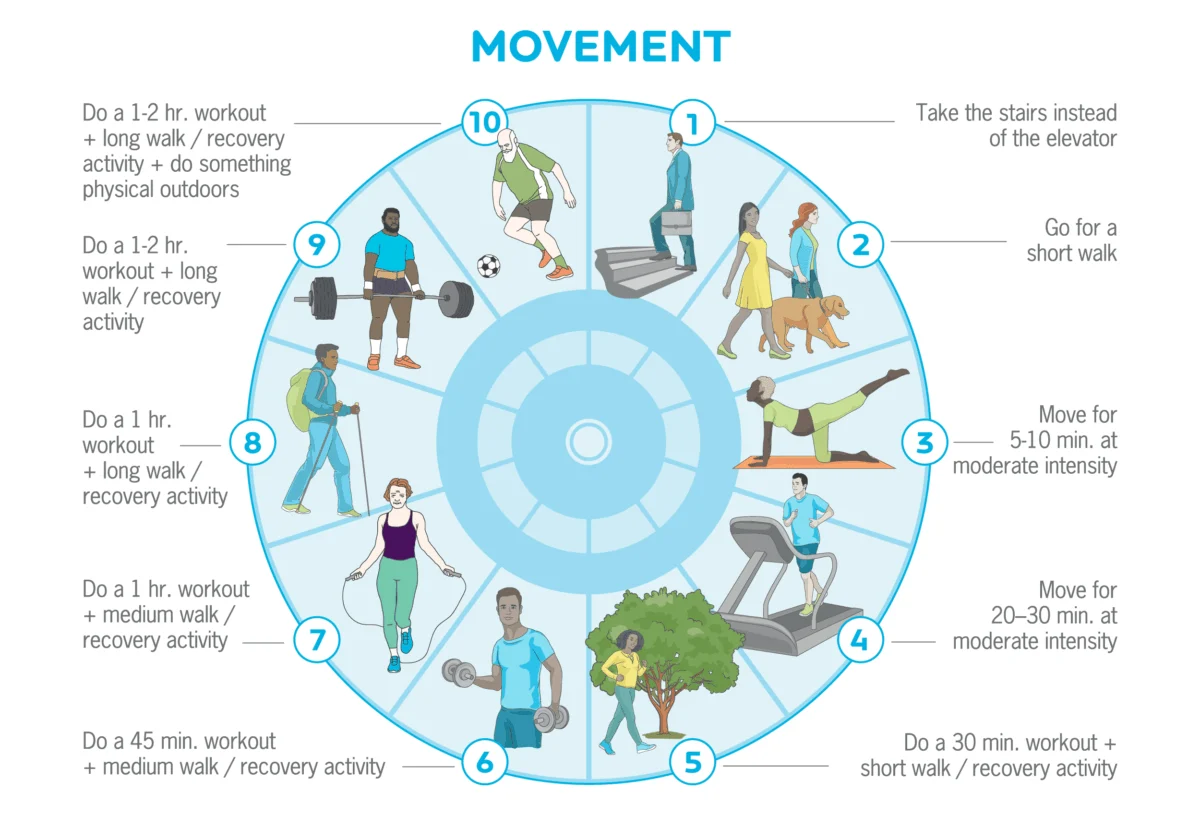
- The Floor: What is the absolute minimum you can do on your worst day? (e.g., a 5-minute walk). This keeps the habit alive.
- The Ceiling: What is your goal when life is going perfectly? (e.g., a 60-minute gym session).
By operating within this range, you remove the guilt of "not doing enough" and replace it with the consistency of "doing something."
Step #4: Design Your Ecosystem
Environment often trumps willpower. If you want to eat better, make healthy food the easiest, most accessible option in your kitchen. If you want to exercise, set your clothes out the night before or join a gym on your commute. Design your surroundings so that the "right" choice is the path of least resistance.
Conclusion: Embrace "C+" Effort
For the perfectionist, the idea of "C+" effort feels like a defeat. In reality, it is the only way to win the long game. A "C+" effort sustained over five years will yield exponentially better results than an "A+" effort that lasts three weeks before burning out.
Accepting that you are human—with all the messiness, fatigue, and cravings that entails—is not an excuse for mediocrity. It is the foundation of sustainability. Stop looking for the magic bullet. The "secret" is in the mundane, the boring, and the consistent. It is in the "good enough" workout you do on a Tuesday, and the vegetables you eat when you’d rather have pizza.
That is how you win. Not with better Tupperware, but with a better relationship with your own human limitations.