A compelling new case report has emerged from the 2026 American Academy of Dental Sleep Medicine (AADSM) Annual Meeting, suggesting that the path to treating obstructive sleep apnea (OSA) may lie in a combined, minimalist approach rather than aggressive mechanical intervention. The report, which details the successful treatment of a 45-year-old respiratory therapist, highlights the efficacy of the myTAP chairside titratable oral appliance when paired with a simple mouth shield to encourage nasal breathing.
The findings, presented in abstract #013, offer a fresh perspective on how dental practitioners can achieve rapid, significant clinical improvements in patients who have struggled with traditional treatment modalities.
Main Facts: The Power of Synergistic Intervention
The core of this development is the shift toward "enforced nasal breathing." For years, the gold standard for moderate-to-severe OSA has been continuous positive airway pressure (CPAP) therapy. While effective for many, CPAP suffers from notoriously low long-term adherence rates due to discomfort, claustrophobia, and the cumbersome nature of full-face masks.
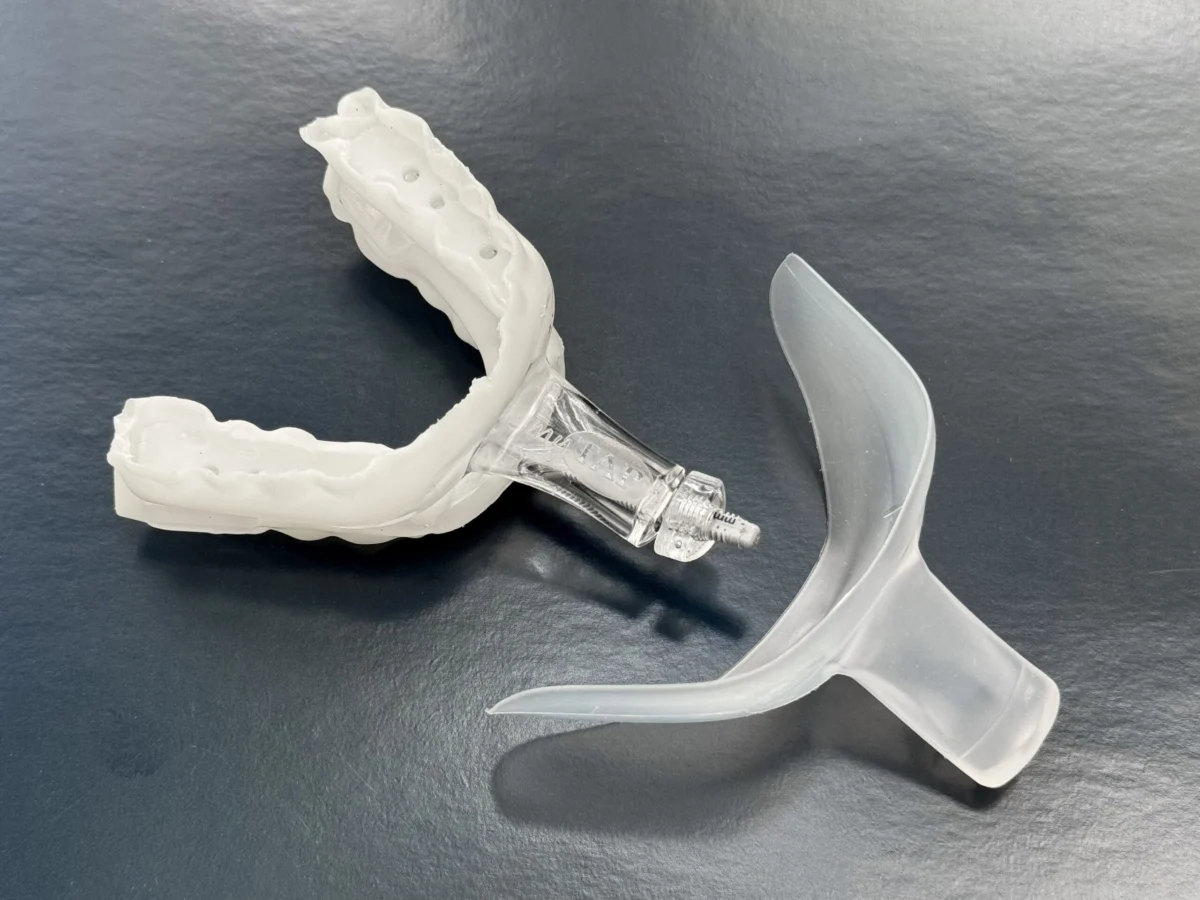
The study, authored by Jason Hui, DDS, MAGD, ABDSM, and Alan G. McDavid, DDS, MAGD, ABDSM, of Texas Sleep and TMJ Solutions, focuses on a patient who presented with moderate-to-severe OSA. By utilizing the myTAP appliance—an FDA-cleared device known for its 15-minute chairside fitting process—the researchers achieved what they describe as "synergistic effects."
The treatment protocol involved two distinct components:
- Mandibular Advancement: Using the myTAP device to hold the jaw in a forward position, thereby preventing the collapse of the upper airway.
- Nasal Patency Support: Using a mouth shield to prevent oral breathing and force the patient to utilize nasal pathways throughout the night.
This combination led to an 86% reduction in the patient’s Apnea-Hypopnea Index (AHI), dropping from a clinically concerning 25.4 events per hour to a healthy 3.6 events per hour.
Chronology: From Diagnosis to Clinical Breakthrough
The trajectory of this case study provides a roadmap for how modern dental sleep medicine can pivot toward rapid-response care.
Pre-Therapy Assessment
The patient, a 45-year-old female respiratory therapist, arrived for consultation presenting with moderate-to-severe OSA. Despite her medical background, she reported an absence of subjective symptoms—a common phenomenon where patients become accustomed to chronic fatigue and poor sleep quality, failing to recognize the extent of their physiological impairment until it is treated.
Immediate Fitting
The primary advantage of the myTAP system is its "same-day" viability. Unlike custom-molded appliances that require multiple office visits and laboratory fabrication time, the myTAP was fitted in approximately 15 minutes. This allowed for immediate implementation, bypassing the weeks of waiting often associated with oral appliance therapy.
The Two-Night Polysomnography Study
The efficacy of the treatment was validated through a two-night polysomnography study. The initial night established the baseline for her apnea severity. The second night, following the integration of the myTAP device and the mouth shield, provided the data that would ultimately form the basis of the AADSM presentation. The transition from 25.4 AHI to 3.6 AHI occurred in just one night of active therapy, marking a rapid success that is rare in sleep medicine.
Post-Therapy Realization
Following the trial, the patient’s perspective shifted dramatically. She reported an immediate improvement in daytime alertness and a renewed ability to share a bed with her partner—a lifestyle gain that often outweighs the physiological data in terms of patient satisfaction.
Supporting Data: Quantifying the Improvement
The statistical evidence provided by the researchers suggests that the benefits of this combined approach extend far beyond simple AHI reduction.
Hemodynamic and Autonomic Gains
Beyond the reduction in airway obstruction, the case report noted significant improvements in oxygenation metrics and the patient’s "hypoxic burden"—a measure of the total amount of oxygen deprivation suffered during sleep. By stabilizing the airway, the researchers also observed a positive shift in the patient’s autonomic nervous system balance.
The Role of Nitric Oxide
A critical component of the report’s scientific argument is the physiological importance of nasal breathing. When a patient breathes through the nose, the body produces nitric oxide, a vasodilator that helps to open blood vessels and improve oxygen uptake. By enforcing nasal breathing via the mouth shield, the researchers leveraged this natural process to reduce airway resistance and improve vagal tone, a key indicator of cardiovascular health and stress regulation.
Official Responses and Clinical Perspectives
The reaction from the professional community and the leadership at TAP Sleep Care underscores the importance of this study.
Perspectives from the Field
Dr. Alan G. McDavid, a co-author of the study, emphasized the practical utility of this approach for clinicians. "This case illustrates myTAP’s unique ability to deliver same-day therapy and achieve clinically meaningful results quickly, even at conservative advancement levels," McDavid stated in a press release. He highlighted that the "simple nasal patency support" amplified the results, making this a highly "patient-friendly" approach for dental practices that may not have the capacity for complex, long-term lab-based appliance management.
Corporate Insight
Charles Collins, CEO of TAP Sleep Care, pointed to the broader implications for the industry. "By pairing minimal mandibular advancement with enforced nasal breathing, we achieved an 86% reduction in AHI in just one additional night, along with major gains in oxygenation and autonomic balance," Collins noted. The company views this as a validation of the myTAP system’s precision, which allows for adjustments in 0.25mm increments, providing a "goldilocks" level of comfort that promotes high patient compliance.
Implications: Challenging the Status Quo
The results of this case report have significant implications for the future of sleep medicine, particularly in how we view the "airflow equivalence" of various therapies.
Rethinking CPAP and Full-Face Alternatives
Historically, many practitioners have assumed that if an oral appliance fails, the next step is a full-face CPAP mask to account for mouth leaks. However, this study suggests that full-face CPAP might be an over-correction. If an oral appliance is paired with a mouth shield to enforce nasal breathing, the patient may achieve the same, or even better, results without the high-pressure air requirements and facial interface issues associated with CPAP.
The Future of Dental Sleep Medicine
The study authors acknowledge that while this is a promising case report, the next step is the expansion of these findings into larger, longitudinal trials. Specifically, future research must address:
- Long-term efficacy: Does the combination of the appliance and the mouth shield maintain its 86% reduction in AHI over 6, 12, or 24 months?
- Overjet Considerations: Evaluating the long-term impact of mandibular advancement on the patient’s dental occlusion and overjet.
- Patient Selection Criteria: Identifying which specific types of OSA patients are the ideal candidates for this dual-therapy approach.
Accessibility and Patient-Centered Care
Perhaps the most significant implication is the potential for increased accessibility. By offering a treatment that is affordable, immediate, and minimally invasive, dental sleep medicine providers can reach a segment of the population that has either failed CPAP or been intimidated by the prospect of lifelong machine-assisted breathing.
In conclusion, the case report presented by Drs. Hui and McDavid serves as a catalyst for a more nuanced approach to sleep apnea. By moving away from a "one-size-fits-all" reliance on high-pressure air and toward a synergy of mechanical advancement and physiological optimization, the dental sleep medicine community is opening a new, highly effective door for patients who have previously been labeled as "treatment-resistant." As the industry moves toward 2027 and beyond, it is likely that this "minimalist but synergistic" approach will become a foundational strategy in the treatment of sleep-disordered breathing.