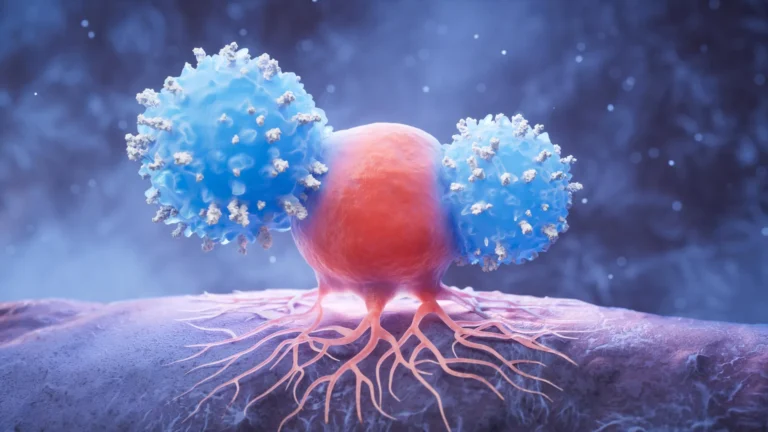
In the rapidly evolving landscape of oncology, T-cell receptor (TCR) therapy has emerged as a beacon of hope for patients facing some of the most stubborn and aggressive forms of cancer. By genetically modifying a patient’s immune cells to identify and neutralize malignant cells with surgical precision, scientists have unlocked a powerful new dimension of precision medicine. However, the path to widespread adoption has been paved with daunting obstacles: prohibitive costs, long lead times, and the life-threatening risks associated with donor-derived immune responses.
A groundbreaking study recently published in Cell Reports Medicine suggests that these hurdles may soon be a thing of the past. Researchers at UCLA have unveiled a novel, scalable platform for generating "off-the-shelf" cancer-targeting T cells derived from cord blood stem cells. This innovation, which has already demonstrated remarkable efficacy in preclinical models, could represent a seismic shift in how we approach the treatment of solid tumors, making life-saving immunotherapy both accessible and affordable.
The Core Innovation: Moving Beyond Conventional TCR Therapy
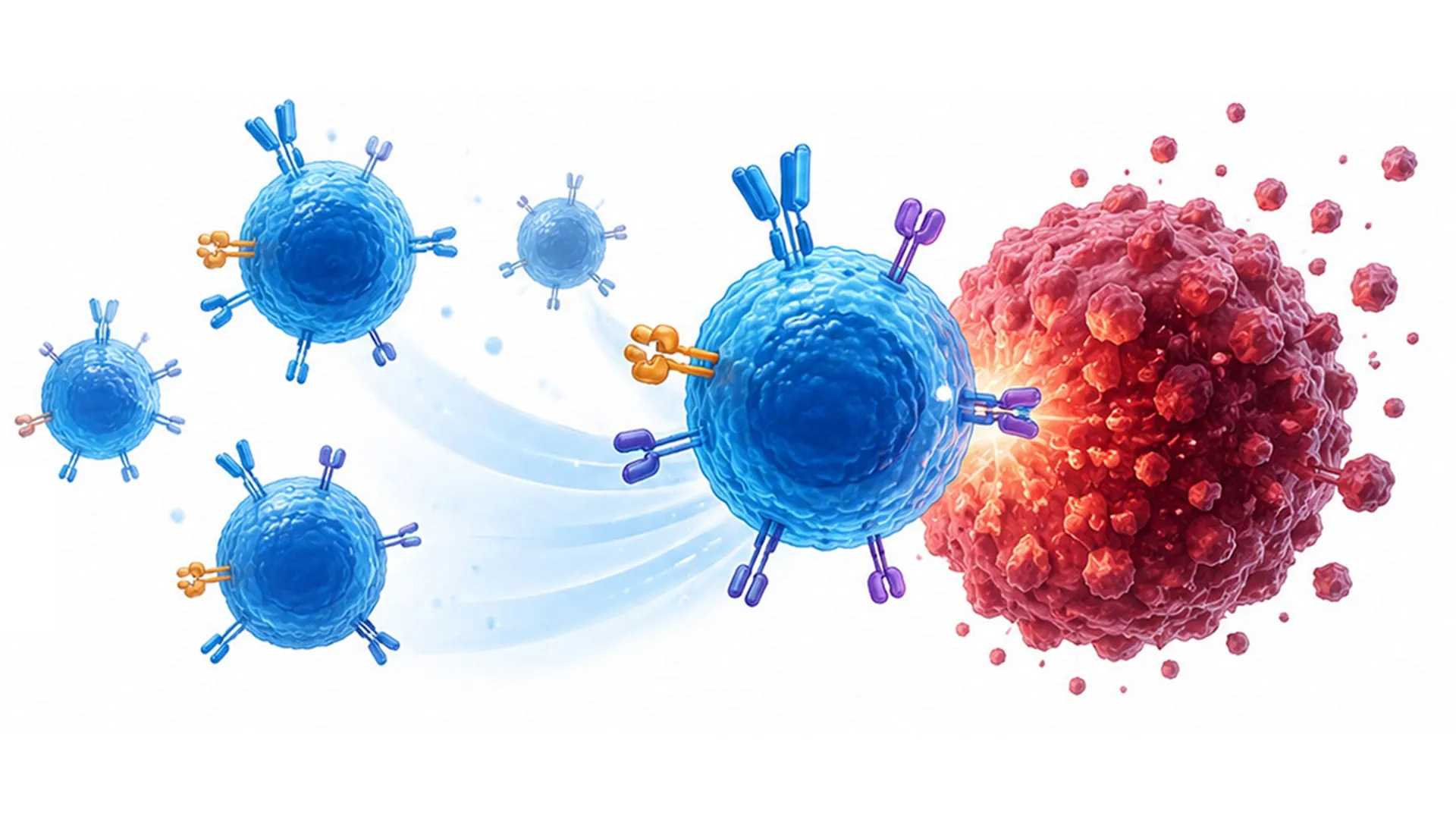
TCR therapy is frequently compared to CAR T-cell therapy, the current gold standard in blood cancer treatment. While both involve engineering immune cells, they operate with different mechanisms of detection. CAR T-cell therapies are limited to identifying proteins on the surface of a cell. In contrast, TCR therapy can peer inside the cell. It targets small protein fragments—antigens—that originate within the cancer cell and are subsequently "presented" on the cell surface like a molecular ID badge.
For solid tumors, this internal access is critical. The molecular mutations that drive solid tumor growth are often buried within the cellular interior, rendering them invisible to traditional surface-targeting therapies. By exploiting the cell’s internal protein-processing machinery, TCR therapy gains a tactical advantage.
Despite this potential, the industry has been hamstrung by the "personalized bottleneck." Conventional methods require extracting T cells from the specific patient being treated, modifying them in a lab, and re-infusing them—a process that takes weeks and costs hundreds of thousands of dollars. Using T cells from healthy donors could theoretically solve this, but it introduces the specter of graft-versus-host disease (GVHD), where the donor cells perceive the patient’s own healthy organs as foreign invaders and attack them.
The UCLA team, led by a multidisciplinary group of experts, has bypassed these limitations by initiating the T-cell development process at an even earlier stage: the hematopoietic stem cell.
Chronology of Development and Experimental Success
The journey to this discovery began by rethinking the origin of the therapeutic cell. Instead of using mature T cells, which already possess a "fixed" identity and receptor, the researchers utilized blood stem cells sourced from donated cord blood.
Engineering at the Source
- Stem Cell Selection: By starting with undifferentiated cord blood stem cells, the team avoided the risk of "pre-programmed" reactivity.
- Genetic Programming: Researchers inserted a specific gene into these stem cells that codes for a receptor targeting NY-ESO-1—a protein frequently expressed in various solid tumors, including melanoma and ovarian cancer.
- Directed Maturation: The engineered stem cells were guided in the laboratory to differentiate into mature T cells. Because this occurred in a controlled environment, the resulting cells did not develop the random, potentially dangerous receptors found in traditional donor-derived cells.
- Dual-Targeting Mechanism: Recognizing that tumors are masters of evasion, the team engineered the cells with a "backup" system: natural killer (NK) cell receptors. This allows the T cells to detect stress signals on tumor cells, providing a second line of defense if the tumor stops expressing the primary NY-ESO-1 target.
Preclinical Performance
When tested in mouse models of ovarian cancer and melanoma, the performance of these "AlloESO-T" cells was striking. A single infusion resulted in sustained tumor control and significantly extended survival rates. Unlike conventional donor-derived cells, which tended to accumulate dangerously in the liver and lungs, the AlloESO-T cells showed a remarkable ability to home in on the tumor site, proliferate internally, and persist for weeks without causing toxic side effects or GVHD.
Supporting Data: Scalability and Economic Impact
The implications of this research extend far beyond the laboratory bench, touching on the fundamental economic structure of modern immunotherapy.
Manufacturing Efficiency
The current paradigm of personalized T-cell therapy is essentially artisanal; each patient requires a bespoke, "one-off" manufacturing cycle. The UCLA platform transforms this into an industrial-grade process. Because cord blood stem cells possess the capacity to self-renew and differentiate, a relatively small starting sample can be expanded into trillions of therapeutic cells.
- Capacity: A single, high-quality cord blood donation can yield enough material for thousands of standardized doses.
- Time-to-Treatment: Because the cells are "ready-to-go" and frozen, the wait time for the patient is effectively reduced to the time it takes to thaw and administer the dose.
- Cost-Effectiveness: The research team estimates that each dose could eventually cost approximately $5,000—a massive reduction from the current six-figure costs that define the market.
Overcoming "Antigen Escape"
The inclusion of natural killer (NK) cell receptors addresses one of the most common reasons for treatment failure: antigen escape. When a tumor "hides" the primary marker a treatment is designed to find, the treatment usually fails. The UCLA team’s data confirms that even when the NY-ESO-1 pathway is blocked or lost, the secondary NK-cell receptor mechanism allows the T cells to continue their assault on the tumor, essentially closing the door on the cancer’s primary method of adaptation.
Official Perspectives from the UCLA Team
The researchers view their work as a platform, not just a singular product. By proving that the stem-cell-to-T-cell pipeline is viable, they have created a template that can be applied to a vast array of cancer antigens.
"This platform brings us closer to a future where the product is already made, frozen, and ready to go as soon as the patient needs," says Dr. Lili Yang, co-senior author and professor at the UCLA Health Jonsson Comprehensive Cancer Center.
Yichen (John) Zhu, a graduate student and co-first author, emphasizes the elegance of the stem cell approach: "Stem cells are undifferentiated—they’re not yet mature T cells with a fixed receptor already in place. When we differentiate our engineered stem cells into T cells, essentially all of the resulting cells carry the same receptor and go after the same tumor target."
Dr. Yanruide (Charlie) Li, co-senior author, underscores the potential for rapid clinical translation. By leveraging existing partnerships with the UCLA Health Center for Advanced Biotherapies—the same infrastructure used for their CAR-NKT platform—the team is well-positioned to move toward clinical-grade manufacturing. "We’re not just presenting one therapy for one target," Dr. Li explains. "We want to share the platform itself. As long as a receptor for a given cancer antigen has been validated, we can build it into this system."
Implications for the Future of Oncology
The transition from laboratory success to human trials is the next necessary step. It is imperative to note that while the results in mice are highly encouraging, the AlloESO-T therapy has not yet been vetted through human clinical trials, nor has it received FDA approval. The safety profile observed in animal models must be rigorously confirmed in human participants to ensure that the "off-the-shelf" nature of the cells does not trigger unforeseen immune rejection.
However, the implications of this study are profound. By solving the dual problems of manufacturing costs and donor-cell-related toxicity, the UCLA team has provided a blueprint for democratizing immunotherapy. If successful in human trials, this approach could:
- Expand Access: Bring high-end immunotherapy to hospitals that currently cannot afford the complex, bespoke manufacturing required for existing treatments.
- Broaden the Target List: Enable the treatment of solid tumors—such as prostate, lung, and pancreatic cancers—that have historically been resistant to standard immune checkpoint inhibitors.
- Standardize Care: Move cancer treatment away from the unpredictable, patient-specific manufacturing cycle and toward a consistent, reliable supply chain of validated biological products.
As cancer research moves toward a more "plug-and-play" model of medicine, the ability to engineer the immune system from the ground up represents perhaps the most promising frontier in 21st-century medicine. The UCLA study serves as a critical milestone, moving us closer to a day when a diagnosis of solid-tumor cancer is met not with despair, but with a readily available, effective, and scalable therapeutic solution.