




At the 2026 American Association for Cancer Research (AACR) Annual Meeting, the global oncology community gathered to recognize a luminary whose intellectual fingerprints are found on the very architecture of modern immunotherapy. The Cancer Research Institute (CRI) and the AACR jointly bestowed the prestigious AACR-CRI Lloyd J. Old Award in Cancer Immunology upon Kenneth M. Murphy, MD, PhD.
The award serves as a testament to Dr. Murphy’s multi-decade career, which has fundamentally redefined our understanding of dendritic cells (DCs) and their role as the "master conductors" of the immune system. His work has transitioned from the sequestered benches of basic immunology labs to the clinical front lines, where it now informs the development of next-generation cancer vaccines and checkpoint inhibitor strategies.
The Nonlinear Path of Scientific Discovery: A Fireside Reflection
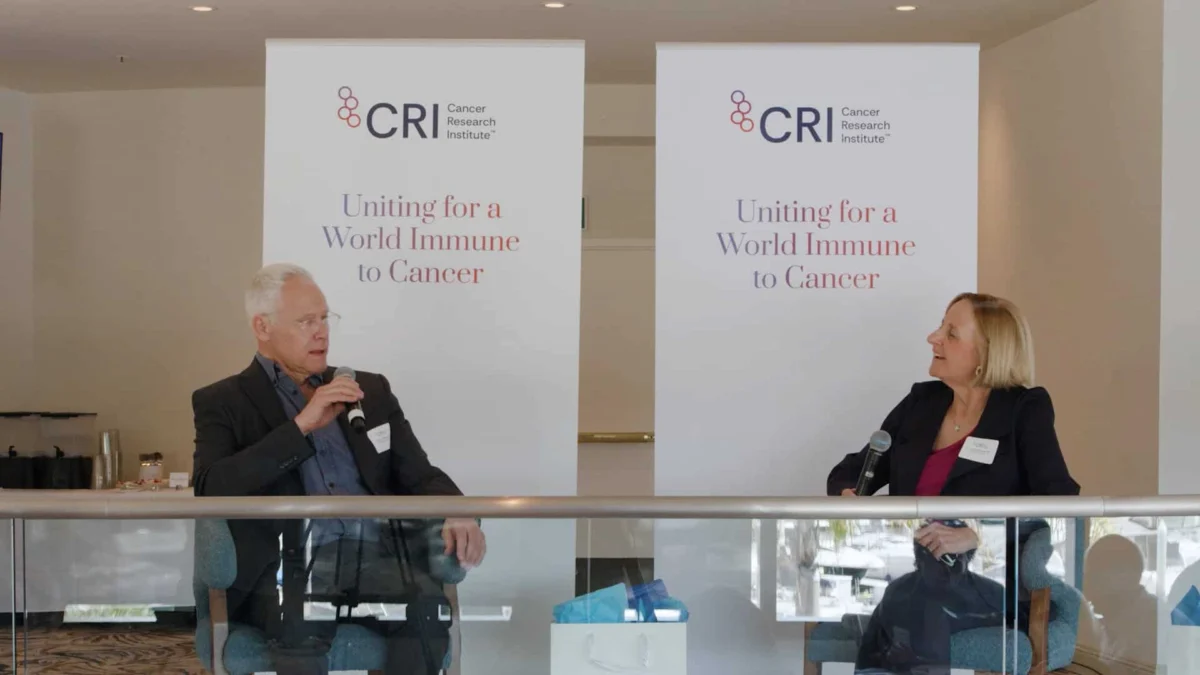
In a departure from traditional award ceremony formats, the 2026 proceedings featured a "fireside-style" dialogue between Dr. Murphy and the 2025 laureate, Dr. Crystal Mackall. This intimate exchange moved beyond the polished summaries of published papers, offering a candid exploration of the scientific process.
The conversation highlighted a fundamental, often uncomfortable, truth about high-impact research: progress is rarely linear. Dr. Murphy characterized his career not as a series of calculated milestones, but as an iterative, curiosity-driven journey. "We’re still asking the same question that we started off with," Dr. Murphy noted, reflecting on the decades spent probing the mechanisms that dictate how the immune system chooses its response profile.
Chronology of Influence: From Fundamental Biology to Clinical Application
To understand the gravity of Dr. Murphy’s contributions, one must look at the timeline of his research, which has evolved from molecular characterization to therapeutic design:
- The Early Years (Foundational Mapping): Dr. Murphy’s early work focused on the differentiation of T-helper cell subsets, providing the bedrock for understanding T-cell polarization.
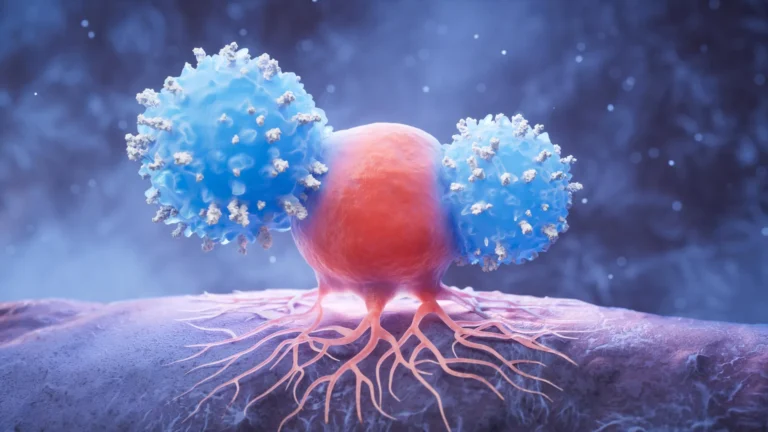
- The Dendritic Cell Paradigm Shift: His identification of the cDC1 (conventional Type 1 dendritic cell) subset proved to be a watershed moment. Dr. Murphy demonstrated that cDC1s are uniquely tasked with cross-presenting antigens to CD8+ T cells—the "killer" cells responsible for tumor destruction.
- Mechanistic Validation: His lab’s research revealed that the efficacy of immune checkpoint inhibitors—the standard of care for many cancers today—is intrinsically linked to the presence and function of these specific DC subsets.
- The Vaccine Era: Most recently, his work has provided the theoretical framework for modern mRNA and cDNA vaccine platforms, establishing that the "packaging" of an antigen is less important than the "delivery vehicle"—the dendritic cell—required to prime a potent, durable immune response.
Supporting Data: The Criticality of cDC1s
The implications of Dr. Murphy’s research are supported by a body of evidence that has reshaped oncology protocols. The cDC1 subset is now recognized as the "bottleneck" in anti-tumor immunity.
Data presented during the award lecture highlighted that in tumor microenvironments where cDC1s are absent or exhausted, T-cell priming fails entirely, rendering even the most potent checkpoint inhibitors ineffective. This discovery has led to a pivot in clinical research: rather than focusing solely on increasing T-cell numbers, modern trials are increasingly focusing on DC-potentiating therapies—treatments designed to recruit, expand, or activate the cDC1 population within the tumor to facilitate a "natural" immune-mediated clearance.
Official Perspectives: The Role of Mentorship and AI
The conversation between Dr. Murphy and Dr. Mackall served as a bridge between the "old guard" of immunology and the high-tech future of the field.
The AI Paradox
Both researchers weighed in on the integration of Artificial Intelligence into bench science. Dr. Murphy acknowledged that AI is an indispensable tool for navigating the "omics" era—specifically in analyzing the massive, multidimensional datasets generated by single-cell RNA sequencing and spatial transcriptomics. However, he cautioned against over-reliance. "AI can help us manage the data, but it cannot replace the scientific intuition required to interpret what that data means in a biological context," he stated.
The Challenge for the Next Generation
Dr. Mackall identified a modern dilemma: the "data deluge." With access to unprecedented amounts of information, early-career researchers face the paradox of choice. She argued that the role of the mentor has evolved from being a source of technical expertise to a "navigator" who helps young scientists identify the "right" questions among the noise.
Implications: The Future of Cancer Immunotherapy
The discussions at the 2026 AACR meeting point toward several key shifts in the landscape of cancer treatment:
1. The Durability of Response
The most pressing question in the field remains: why do some patients achieve permanent remission while others experience recurrence? Dr. Murphy’s research into the transition between stem-like T cells and effector T cells offers a potential answer. If we can manipulate the metabolic and signaling pathways that maintain these stem-like cells, we may be able to induce "immunological memory" that persists long after the initial treatment.
2. Refining Vaccine Platforms
The failure of many early cancer vaccine trials was often attributed to poor antigen selection. Dr. Murphy’s work suggests a different culprit: the failure to adequately engage the dendritic cell compartment. Future vaccine designs will likely prioritize the use of adjuvants specifically engineered to target cDC1s, ensuring that the immune system perceives the tumor-associated antigen as a "danger signal" rather than a benign protein.
3. The Return to Basic Science
The unifying message of the award ceremony was a call to protect the integrity of basic research. In a research environment increasingly dominated by the pressure for rapid commercialization and "quick wins," Dr. Murphy’s career stands as a reminder that the most transformative clinical advances are almost always built on a foundation of fundamental, curiosity-driven discovery.
Conclusion: Following the Biology
As the field of cancer immunology moves forward, the insights provided by Dr. Murphy’s decades of work will serve as a compass. The transition from crude, systemic immune stimulation to precision, cell-specific priming represents the next frontier.
For the next generation of scientists, the takeaway is clear: do not look for a defined endpoint or a rigid hypothesis. Instead, follow the biology. As Dr. Murphy demonstrated, if you ask the right questions of the immune system and possess the patience to interpret its answers, the path toward a cure will eventually reveal itself—one question at a time.
The full discussion between Dr. Murphy and Dr. Mackall is available for viewing on the Cancer Research Institute’s official media portal.