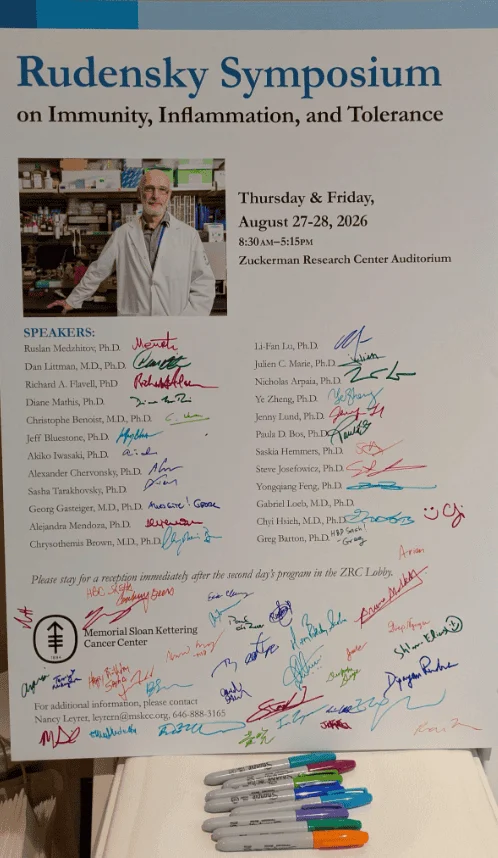
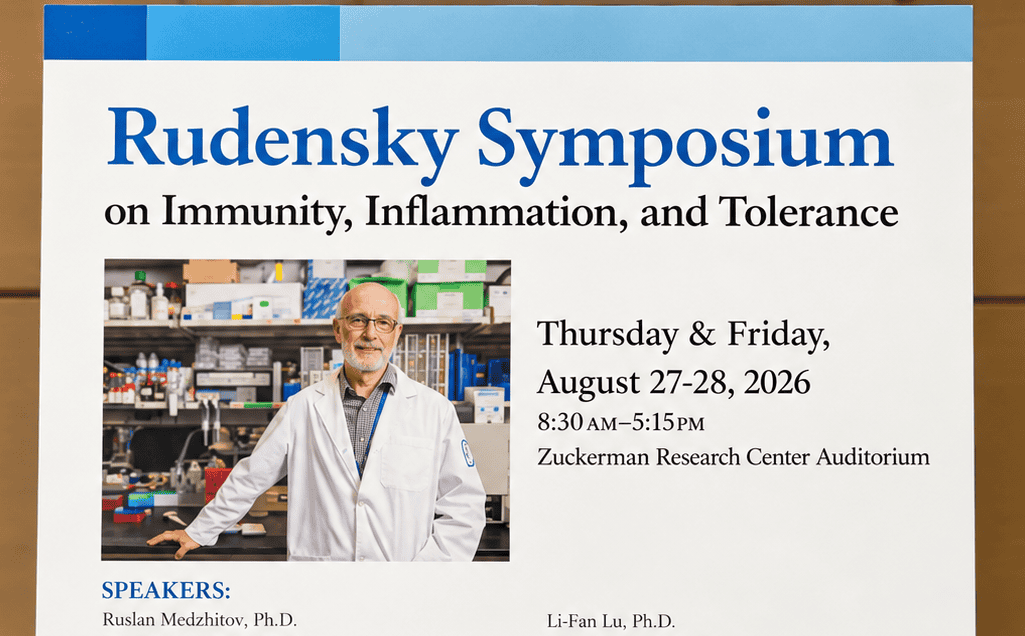
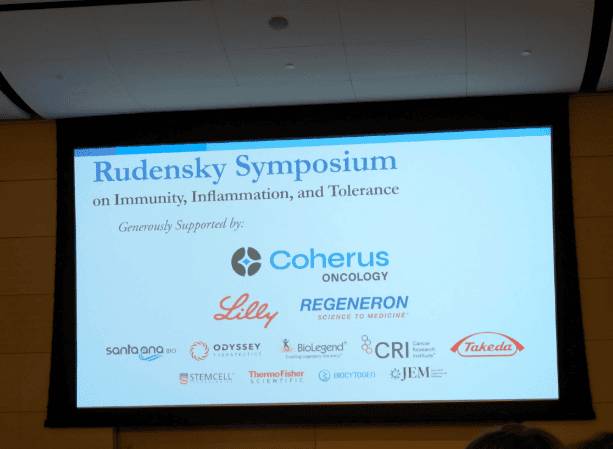
On August 27–28, 2026, the scientific community gathered for a milestone event that transcended the standard academic conference. The Rudensky Symposium on Immunity, Inflammation, and Tolerance was convened not only to examine the frontiers of modern immunology but to honor the 70th birthday of Dr. Alexander “Sasha” Rudensky of the Memorial Sloan Kettering Cancer Center (MSKCC).
The symposium served as a living archive of scientific progress, bringing together former trainees, collaborators, and esteemed colleagues whose professional relationships span decades. For the Cancer Research Institute (CRI), which has supported Dr. Rudensky’s research and mentorship for over two decades, the event was a poignant reminder that the most significant breakthroughs in medicine often begin as curiosity-driven inquiries into the fundamental laws of biology.
The Architecture of Mentorship: A Legacy of Inquiry
At the heart of the symposium was the recognition of Dr. Rudensky’s seminal work on regulatory T cells (Tregs)—the immune system’s "brakes" that prevent autoimmune damage. In 2015, the CRI honored this work with the William B. Coley Award for Distinguished Research in Basic and Tumor Immunology.
However, the symposium highlighted that Dr. Rudensky’s influence extends far beyond his own bench. Over the past 20 years, the CRI has funded more than a dozen fellows who have passed through the Rudensky laboratory. These alumni are now leading their own research programs, illustrating a "ripple effect" of discovery. The event underscored a core CRI philosophy: by investing in the individual, the institution fosters a generational ecosystem where rigorous mentorship and intellectual freedom pave the way for future medical miracles.
Basic Science as the Foundation of Oncology
A central theme of the symposium was the paradigm shift in cancer research: the realization that the mechanisms maintaining healthy tissue homeostasis are often the same processes hijacked by cancer.
The Maintenance Crew: Immunity in Healthy Tissue
Dr. Ruslan Medzhitov, a 2003 CRI Coley Awardee, set the tone by shifting the focus from "fighting invaders" to "maintaining health." He detailed how stressed cells recruit macrophages—not just to fight infection, but to act as a cellular sanitation crew, clearing damaged protein "garbage." This perspective reframes the immune system as an essential maintenance department for the body.
Similarly, 2024 CRI Coley Awardees Dr. Diane Mathis and Dr. Christophe Benoist presented data on the multifunctional nature of Tregs. Their work demonstrated that these cells are not merely suppressive; they are active architects of tissue repair, guiding muscle recovery and preventing excessive scarring. These findings are critical to oncology, as they highlight the "Goldilocks" principle of immune regulation: too little leads to autoimmunity, while too much provides a shield for cancer to grow undetected.
Chronology of Discovery: From Molecules to Metastasis
The symposium mapped a scientific journey that began with the fundamental study of T cell identity and culminated in sophisticated strategies for cancer immunotherapy.
- Early Detection (Pre-Clinical): Dr. Richard A. Flavell (2012 CRI Coley Awardee) presented startling evidence that immune surveillance begins long before a tumor is visible. Using mouse models, he observed how the immune system actively weeds out intestinal stem cells carrying the BRAF mutation. When mutant cells lose the ability to "communicate" with T cells, they gain a survival advantage, allowing them to take root.
- Inflammation and Malignancy: Dr. Julien C. Marie explored the plasticity of inflammatory cells. By disrupting the TGF-β signaling pathway, his team observed intestinal Th17 cells entering a state of persistent, damaging inflammation that eventually paved the way for cancer. This suggests that the inflammatory "programs" driving cancer may be reversible if identified early enough.
- The Ecological Approach: Dr. Dan Littman (2016 CRI Coley Awardee) expanded the scope to the gut microbiome. His research into how intestinal bacteria "train" the immune system has profound implications for checkpoint immunotherapy, suggesting that a patient’s microbial profile may dictate the success of their cancer treatment.
The Tumor Microenvironment: Navigating the Ecosystem
The symposium shifted from the gut to the tumor itself, with researchers illustrating how tumors manipulate their surroundings to survive.
Reshaping the Tumor Neighborhood
Dr. Paula D. Bos presented compelling data on how Tregs orchestrate the tumor environment in breast cancer. By modulating macrophages and physical collagen structures, Tregs effectively create a "highway" for cancer cells to escape into the bloodstream. Dr. Bos’s research suggests that temporary, targeted manipulation of these cells could disrupt metastasis without the systemic side effects of broad immune suppression.
Furthering this theme, Dr. Nicholas Arpaia demonstrated how lung tumors recruit fibroblasts to create "suppressive neighborhoods" that keep effector T cells at bay. His collaboration with CRI Lloyd J. Old STAR awardee Dr. Tal Danino has led to the development of engineered bacteria capable of delivering immune-modulating payloads directly into these tumor-rich zones. This precision-medicine approach represents the next frontier in minimizing collateral damage to healthy tissues.
Implications for Future Therapies
The implications of the Rudensky Symposium are far-reaching. As the speakers noted, many of these breakthroughs began with a seemingly esoteric question: How does a Treg know where to go? or How does the gut tell the T cell what to do?
The symposium underscored three critical takeaways for the future of the field:
- Preventative Immunology: The work of Dr. Flavell and others suggests that we are moving toward a future where we might identify and eliminate "pre-cancerous" immune landscapes before they manifest as clinical tumors.
- Precision Modulation: Rather than "activating" the immune system broadly, which carries the risk of severe side effects, the future lies in the precise reprogramming of the tumor microenvironment—turning the "highways" for cancer cells into "dead ends."
- Systemic Connectivity: We can no longer treat cancer as an isolated event. From the gut microbiome to the architecture of collagen, the immune system is a systemic entity. Successful therapy will require viewing the patient as a complex, interconnected ecosystem.
Reflections: The Human Element
The symposium concluded with a poignant look at the "Research Family" that Dr. Rudensky has built. A poster board, signed by generations of his mentees, stood as a testament to the fact that scientific progress is a human endeavor.
For the Cancer Research Institute, this gathering was a validation of its 70-year commitment to basic immunology. By funding the "foundational" questions, the CRI has enabled a community of scientists to connect the dots between tissue repair, microbiome health, and cancer eradication.
As the symposium closed, the prevailing sentiment was one of optimism. The challenges in cancer research remain immense, but the collaborative, rigorous, and questioning spirit showcased in New York suggests that the answers are well within reach. The Rudensky Symposium was not merely a retrospective of a career, but a masterclass in how to conduct science that is both deeply fundamental and profoundly transformative for patients worldwide.
In the words of the organizers, the "ripple effect" of this work is only beginning. As these trainees move into their own laboratories, they carry with them the rigor and the vision of their mentor—ensuring that the quest for a cancer cure remains a shared, global, and multi-generational pursuit.