By Elise Reuter
Published July 21, 2026
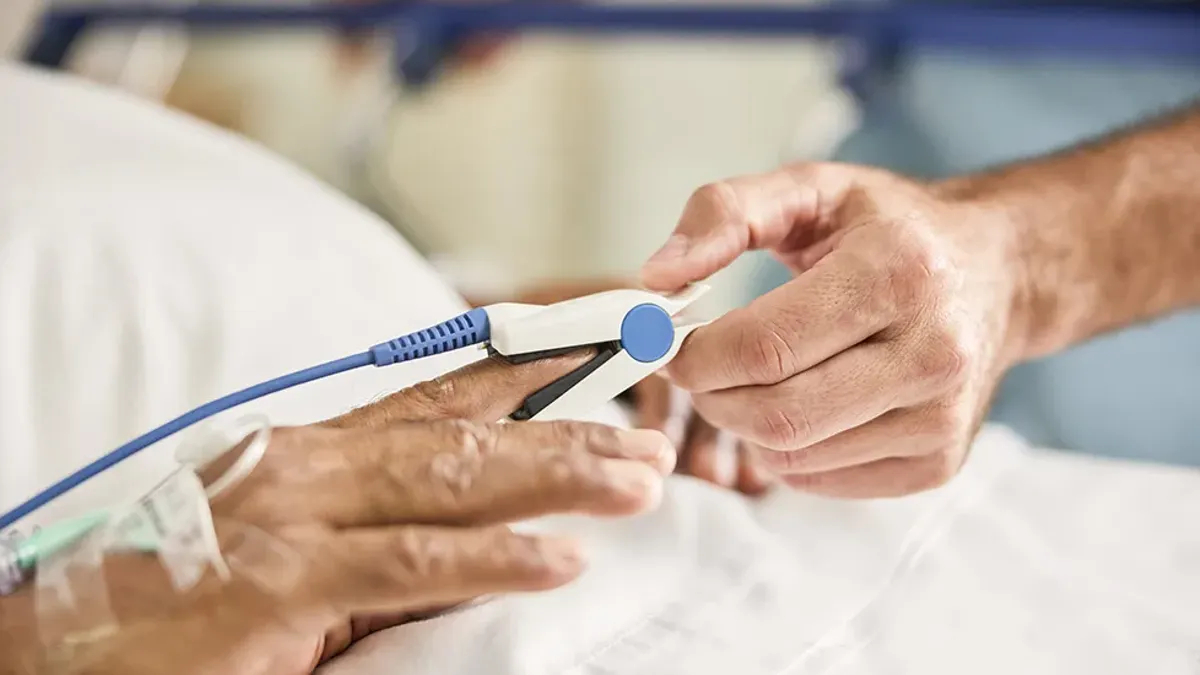
In a significant move toward addressing long-standing health inequities in medical device performance, Philips has announced FDA clearance for its latest SpO2 clip sensor. The device, designed to measure blood oxygen saturation, has been engineered specifically to provide consistent, accurate readings across a diverse spectrum of skin tones. This development arrives at a critical juncture for the medtech industry, as manufacturers face mounting pressure from regulators, clinicians, and patient advocates to rectify documented performance disparities that have historically disadvantaged patients with darker skin pigmentation.
The Core Advancement: Precision Across the Spectrum
The fundamental challenge with traditional pulse oximetry—a technology that relies on the transmission of light through the skin to measure oxygen levels—is that the optical properties of melanin can interfere with signal accuracy. For decades, this has been an "open secret" in the medical community.
Philips’ new sensor aims to bypass these limitations through its proprietary validation program. By testing the device under a wide array of physiological and clinical conditions, the company reports that it has achieved an accuracy root mean square (ARMS) value of 1.6%. This metric, which quantifies the discrepancy between sensor readings and actual arterial blood oxygen saturation, is nearly twice as precise as the 3% industry standard recommended by the International Organization for Standardization (ISO) and recognized by the FDA.
Perhaps most significantly, the company reported that the variance in accuracy between individuals with light skin and those with dark skin pigmentation was less than 0.5%. This negligible margin of error represents a major technological leap forward, signaling that the "skin tone gap" in pulse oximetry is not an immutable physical law, but an engineering challenge that can be overcome.
A Chronology of Clinical Disparity
To understand why this clearance is a landmark event, one must look back at the historical context of pulse oximetry failures.
- Pre-2020: While researchers had intermittently noted that pulse oximeters were less reliable on patients with darker skin, the technology was widely treated as a "black box" standard, with few systemic calls for a comprehensive redesign.
- 2021: The issue reached a breaking point during the COVID-19 pandemic. A landmark study published in the New England Journal of Medicine (NEJM) provided empirical evidence that Black patients were three times more likely than white patients to experience undetected hypoxemia. Because the devices often overestimated the amount of oxygen in the blood, many patients were mistakenly cleared for discharge or denied necessary supplemental oxygen.
- 2022: A follow-up study published in JAMA Internal Medicine deepened the crisis, linking these inaccuracies to systemic clinical delays. The findings revealed that racial disparities in pulse oximetry performance were directly associated with delayed eligibility for life-saving COVID-19 therapies, such as antiviral treatments.
- 2025: Facing intense public scrutiny and advocacy from medical boards, the FDA issued draft guidance in early 2025. The proposal mandated more rigorous study protocols, including a minimum participant pool of 150 individuals and strict requirements for skin tone representation.
- 2026: Philips, following in the footsteps of competitors like Medtronic—which recently secured clearance for its own updated Nellcor system—has officially brought a validated solution to the commercial stage.
Supporting Data: The Science of Accuracy
The "accuracy root mean square" (ARMS) is the gold standard for evaluating oximeters, but for years, clinical trials for these devices were heavily skewed toward lighter-skinned cohorts. Philips’ recent validation studies shifted this paradigm by intentionally balancing test subjects across the Fitzpatrick skin type scale.
In desaturation studies conducted by the firm, the data demonstrated a robust performance that held steady even as oxygen levels dropped. The 1.6% ARMS value is a marked improvement over the 3% ceiling, effectively insulating the device against the "noise" created by skin melanin. By optimizing the sensor’s light-emitting diodes (LEDs) and the sophisticated algorithms that interpret the returning light signals, Philips has managed to isolate the oxygen-saturated hemoglobin signal from the optical interference caused by skin pigmentation.
Official Responses and the Regulatory Landscape
The FDA’s role in this transition has been one of cautious, albeit necessary, oversight. The 2025 draft guidance, though still technically labeled as "under construction" on the agency’s fiscal year agenda, has effectively set the floor for future innovation. By signaling that the "old way" of testing was no longer acceptable, the FDA forced the hand of major manufacturers.
"The industry is responding to a clear market and moral imperative," noted one industry analyst. "Regulatory guidance is the floor, but companies like Philips and Medtronic are now using ‘inclusivity’ as a competitive advantage."

Despite the progress, the road to implementation remains. The draft guidance has yet to be finalized, leaving some uncertainty regarding whether current, older models of pulse oximeters will eventually be subject to mandatory recalls or forced software updates. For now, the FDA continues to monitor the performance of legacy devices while encouraging the adoption of these new, inclusive-by-design sensors.
Implications for Global Healthcare
The implications of this technological shift are profound, particularly for global health equity. Pulse oximetry is a cornerstone of modern medicine, used in everything from routine check-ups to critical care in neonatal units and operating rooms.
1. Clinical Equity:
Clinicians will no longer have to second-guess the reliability of their equipment based on the patient’s race. This restores trust in the diagnostic process and ensures that medical decisions—such as the administration of oxygen—are based on accurate, universal data.
2. Policy and Procurement:
Hospital systems and procurement departments are likely to prioritize these new devices in their future acquisitions. As health systems strive to meet Diversity, Equity, and Inclusion (DEI) goals, the "equity-by-design" feature of these new sensors will likely become a primary requirement in RFPs (Requests for Proposals).
3. The Future of Medical AI:
Pulse oximetry is a precursor to a larger discussion regarding bias in medical algorithms. Many diagnostic tools, including AI-driven imaging systems and predictive health models, are trained on datasets that lack ethnic diversity. The success of the Philips sensor demonstrates that when companies commit to diverse testing protocols from the beginning, the resulting technology is safer for every patient.

Conclusion: A New Standard for Medtech
The announcement from Philips is more than just a product launch; it is a turning point for the medical device industry. By validating their device across a wide range of skin tones and meeting a significantly higher accuracy threshold than required, Philips is setting a new benchmark for what is expected of modern diagnostic tools.
As the industry moves into the latter half of the decade, the focus will likely shift from merely "improving" legacy technology to entirely rethinking how medical devices are validated. While the regulatory landscape continues to evolve, the message from the market is clear: the future of medicine must be inclusive, accurate, and transparent for all patients, regardless of their background. With the upcoming rollout of this sensor in global markets, the industry has taken a definitive step toward closing a dangerous gap, ensuring that the light of medical innovation truly shines for everyone.