








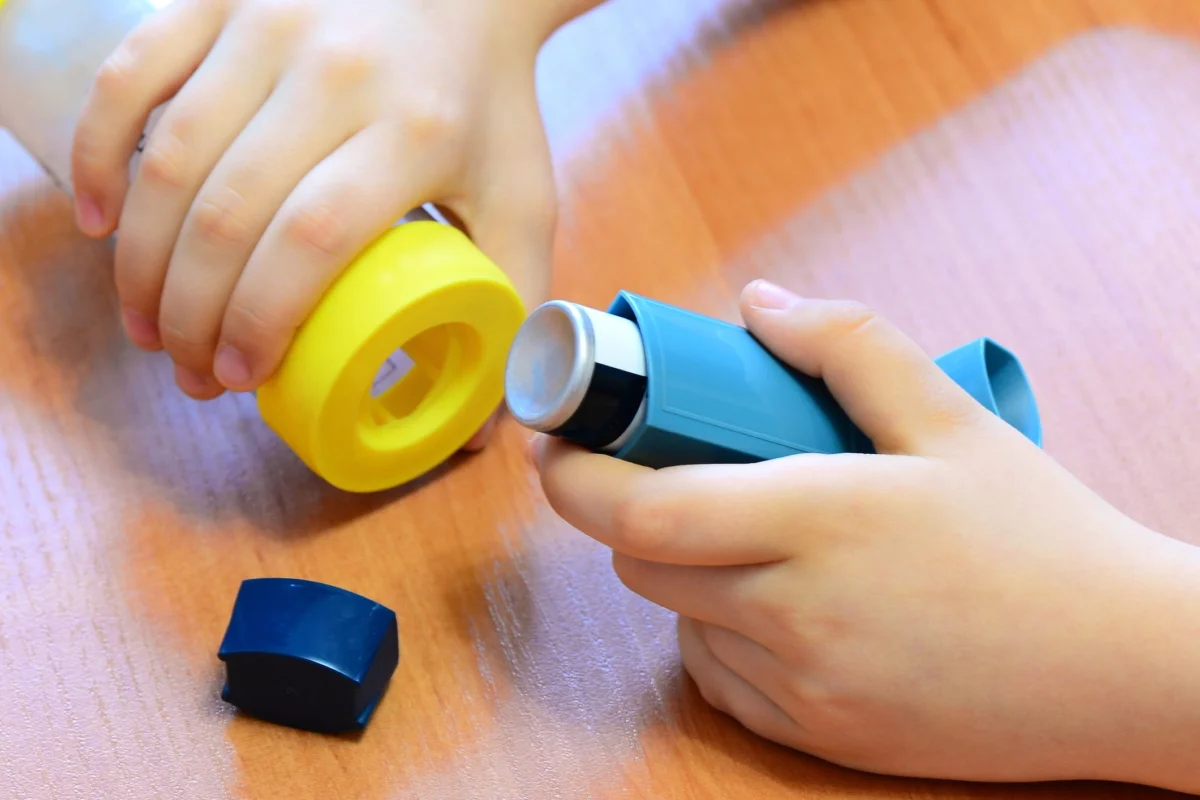
The American Thoracic Society and global partners emphasize that inhaled medications are essential for reducing preventable deaths and hospital admissions.
On World Asthma Day 2026, the international medical community issued a unified and urgent call to action. The American Thoracic Society (ATS) and the Forum of International Respiratory Societies (FIRS) have formally demanded a global commitment to ensuring universal access to anti-inflammatory inhalers. This initiative seeks to address a stark reality: despite the existence of highly effective, evidence-based treatments, asthma remains a leading cause of preventable mortality worldwide.
RT’s Three Key Takeaways:
- The Shift to Dual-Action Therapy: Global clinical standards now prioritize “Anti-Inflammatory Relievers” (AIR)—a two-in-one inhaler combining inhaled corticosteroids (ICS) and rapid-acting bronchodilators—to treat both symptoms and underlying inflammation.
- The Mortality Crisis: With over 450,000 annual deaths attributed to asthma, the vast majority of these fatalities occur in low-to-middle-income countries (LMICs) due to the prohibitive cost or unavailability of basic inhaled medication.
- A Policy Mandate: The ATS and FIRS are calling on governments and the pharmaceutical industry to treat inhaled corticosteroids as essential medicines, demanding price stabilization and supply chain reform to ensure that socioeconomic status no longer dictates respiratory health outcomes.
Main Facts: The Clinical Imperative for ICS Therapy
Asthma is not merely a disease of “shortness of breath”; it is a chronic, non-communicable condition characterized by the obstruction of air passages in the lungs. When a patient suffers an asthma attack, the airways undergo a tripartite crisis: muscle spasms tighten the bronchial tubes, the lining of the airways becomes severely inflamed, and excessive mucus production blocks oxygen flow.
Historically, the medical approach focused heavily on bronchodilators—drugs like albuterol that relax the muscles surrounding the airways. However, the ATS and GINA (Global Initiative for Asthma) emphasize that these medications treat only the symptom, not the root cause. If the underlying inflammation is not addressed, the patient remains at constant risk of a life-threatening exacerbation.
Inhaled corticosteroids (ICS) are the gold standard for managing this inflammation. By integrating ICS into daily management and, more recently, into the acute "reliever" protocol, clinicians can effectively keep the airway structure calm and resistant to triggers. The current medical consensus is clear: every patient with asthma, including the vast majority of pre-school children, should have consistent access to ICS-based therapy.
Chronology of the 2026 World Asthma Day Campaign
The 2026 campaign represents a culmination of a decade-long shift in respiratory medicine.
- 2019-2020: The Global Initiative for Asthma (GINA) began a fundamental shift in its clinical guidelines, moving away from recommending short-acting bronchodilators (SABA) alone as a rescue inhaler, citing the risk of over-reliance and lack of anti-inflammatory protection.
- 2022-2024: Pilot programs in various regions demonstrated that patients using dual-action AIR inhalers experienced significantly fewer emergency room visits and hospital admissions.
- May 5, 2026 (World Asthma Day): The ATS and FIRS synchronized their efforts to publish the 2026 GINA update. This document formalized "Track 1" and "Track 2" treatment protocols, both emphasizing the inclusion of an anti-inflammatory reliever.
- Post-Announcement: The campaign moved into the advocacy phase, targeting international health ministers and pharmaceutical CEOs to address the 96% disparity in asthma-related deaths in LMICs.
Supporting Data: A Global Disparity
The statistics surrounding asthma are not just clinical figures; they are indicators of deep-seated global inequality. Asthma affects more than 260 million people globally. While the disease is prevalent in both wealthy and impoverished nations, the outcomes are drastically different.
- The 96% Statistic: According to the latest data from the World Health Organization and FIRS, 96% of all global asthma-related deaths occur in low- and middle-income countries. This is not due to a lack of medical knowledge regarding the disease, but a lack of infrastructure for basic, inhaled medication delivery.
- The Cost Barrier: In many high-income countries, the high cost of maintenance inhalers remains a hurdle for underinsured or marginalized populations, leading to poor control and frequent hospitalizations. In LMICs, the situation is dire; inhalers are often categorized as luxury or specialized goods rather than essential primary care medicine.
- Preventable Morbidity: Data shows that when patients are transitioned from monotherapy (SABA only) to combination therapy (ICS + SABA), the risk of severe exacerbations drops by nearly 30% to 50%, depending on the baseline severity of the patient’s condition.
Official Responses: The Clinical Perspective
The medical community has been vocal in its support of the new guidelines. Guy Brusselle, chairman of the GINA board of directors, highlighted the necessity of the paradigm shift in a recent press statement:
"In the GINA 2026 update, the preferred reliever in both GINA track 1 and track 2 is an anti-inflammatory reliever (AIR). By combining a fast-acting bronchodilator with an inhaled corticosteroid in a single inhaler, the patient receives two benefits simultaneously. The bronchodilator provides the rapid symptom relief the patient craves during an attack, while the corticosteroid tackles the underlying airway inflammation. This is the only way to effectively reduce the risk of future, potentially fatal, asthma attacks."
The ATS and FIRS are now calling upon doctors and allied healthcare professionals to take a more aggressive role in prescribing these evidence-based medications. The directive to practitioners is simple: do not rely on symptomatic relief alone. Every rescue inhaler prescription must be accompanied by, or integrated with, an anti-inflammatory regimen.
Implications: A Call for Systemic Reform
The implications of this 2026 campaign extend far beyond the doctor’s office. To achieve the goals set forth by the ATS and FIRS, significant systemic changes are required across three primary pillars:
1. Government Policy and Healthcare Funding
Governments must reclassify inhaled corticosteroids as “Essential Medicines” under their national healthcare schemes. This includes subsidies that ensure the cost of an AIR inhaler does not exceed the cost of the older, less-effective monotherapy inhalers. Without legislative support, the clinical recommendations remain inaccessible to the populations that need them most.
2. Pharmaceutical Industry Accountability
The pharmaceutical industry faces mounting pressure to standardize the manufacturing of affordable, high-quality combination inhalers. The current market is often saturated with high-priced, proprietary delivery systems that are difficult to replicate in generic form. Manufacturers are being urged to work with the WHO and international partners to facilitate technology transfers and licensing agreements that allow for the local production of these essential devices in underserved regions.
3. Patient Education and Public Health Literacy
Even with access, a medicine is only effective if used correctly. A major component of the 2026 initiative is the training of primary care providers in resource-poor areas. Ensuring that local health workers can teach patients how to use inhalers properly—and ensuring that patients understand why they must use their medication even when they are not actively experiencing symptoms—is critical to long-term success.
Conclusion: The Path Forward
The 2026 World Asthma Day serves as a sobering reminder that medicine is only as effective as its distribution. We have the science to prevent 450,000 deaths every year. We have the inhalers. We have the clinical protocols. What remains is the political and economic will to ensure that these life-saving tools reach every child and adult, regardless of their zip code or economic standing. The ATS, FIRS, and GINA have set the stage; now, the global health community must act to turn these recommendations into a reality for the 260 million people living with asthma.