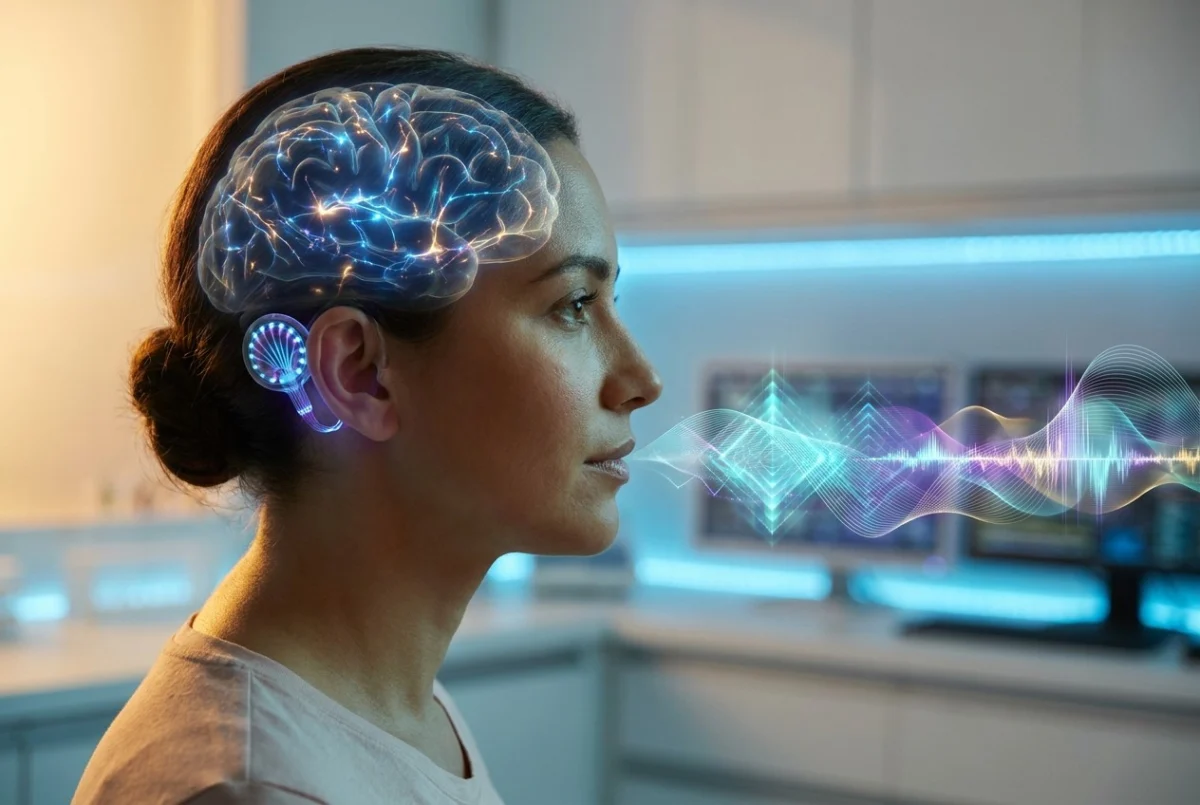
In a rapidly evolving field of medical technology, Neuralink has once again pushed the boundaries of what is possible at the intersection of neuroscience and artificial intelligence. The company recently released a compelling video featuring an unidentified clinical trial participant using the N1 brain implant to communicate through "imagined speech." This milestone marks a significant step forward in the company’s VOICE program, an ambitious effort to restore the ability to communicate for individuals suffering from severe motor neuron diseases.
While the footage offers a glimpse into a future where paralysis may no longer equate to silence, it also highlights the profound technical, ethical, and regulatory hurdles that remain. As Neuralink continues its investigational trials, the global medical community is watching closely, weighing the promise of restored autonomy against the risks of invasive neural surgery and the emerging concerns regarding mental privacy.
The VOICE Study: Translating Thought into Action
At the core of Neuralink’s latest demonstration is the N1 implant, a coin-sized device equipped with ultra-fine electrode threads that penetrate the brain’s surface. Unlike earlier, bulkier iterations of brain-computer interfaces (BCIs), the N1 is designed to be wireless and unobtrusive.
The VOICE study is specifically engineered to test whether the device can accurately interpret neural signals associated with intended speech and convert them into text or audible synthetic output. During a demonstration earlier this year, a participant known as Kenneth—who was diagnosed with Amyotrophic Lateral Sclerosis (ALS) in 2024—provided a moving testament to the technology’s potential. "There we go. I’m talking to you with my mind," Kenneth stated, illustrating the real-time translation of mental effort into digital communication.
However, the company maintains a cautious stance. Neuralink has emphasized that its devices are strictly investigational and have not received approval from the U.S. Food and Drug Administration (FDA) or other global regulatory bodies for commercial use. The technology currently relies on the user performing a "trained mental action"—such as imagining speech or physical movement—rather than the device "reading" thoughts indiscriminately.
A Chronology of Neural Decoding
The quest to bridge the brain-to-digital divide did not begin with Neuralink. The field has seen a steady progression of breakthroughs over the last decade, moving from basic cursor control to complex sentence construction.
- 2021: Researchers at the University of California, San Francisco (UCSF) achieved a historic milestone by translating brain activity into full, readable sentences. This work utilized digital avatars to mimic facial expressions and synthetic speech, providing a proof-of-concept for the field.
- 2023: A Stanford University team pushed the limits of speed and accuracy, achieving 62 words per minute in a participant with motor neuron disease. This study underscored the importance of high-bandwidth neural data acquisition.
- 2025: Researchers demonstrated the real-time decoding of "inner speech." While the results were revolutionary, the accuracy remained inconsistent, and the studies were limited to a small cohort of volunteers.
- 2026: Neuralink’s ongoing VOICE program continues to enroll participants. With over 10,000 individuals globally having expressed interest in the study, the scale of human experimentation is set to accelerate significantly.
Technical Foundations and the "Neural Architecture"
The mechanism behind these interfaces involves sophisticated electrophysiology. As described by researchers like Benjamin H. Brinkmann and Mark R. Bower in the Journal of Neuroscience Methods, the process is a multi-stage operation: acquisition, compression, encryption, and storage of neural data.
The hardware required for this is equally complex. Accurate electrode positioning is achieved through feedback-controlled microdrives, which ensure the sensors remain in constant, stable contact with neurons. This is critical because, as the brain adapts to the implant—a process known as neuroplasticity—the surrounding tissue may shift. Ensuring that the device remains reliable over years of use remains one of the primary engineering challenges.
Stephen M. Fleming, author of Know Thyself, has noted that the human brain possesses an innate plasticity that allows it to incorporate external devices into its sensory and motor maps. "There is nothing in principle to stop humans from hooking up self-awareness to other devices," Fleming observes, suggesting that in the future, these interfaces might feel less like "tools" and more like an extension of the self.
The Visionary and the Skeptic: Musk’s Ambitions
Elon Musk, the driving force behind Neuralink, has long viewed the company’s mission through a transformative lens. In past presentations, Musk has framed the technology as a means to "save the human brain," drawing parallels to gaming where one might store or back up memories. His vision extends beyond medical rehabilitation to "conceptual telepathy"—the idea that humans could eventually communicate complex ideas without the need for language.
However, this optimism is met with significant skepticism. MIT scientists and various ethicists have frequently challenged the feasibility of Musk’s grander claims. Critics point to the immense difficulty of ensuring long-term hardware reliability, particularly regarding battery safety and the risk of infection or seizures associated with invasive surgery. Furthermore, the company has faced internal scrutiny regarding its animal testing protocols, with allegations of rushed procedures leading to unnecessary harm, raising questions about the company’s culture of safety.
Ethical Implications: Privacy and the "Neural Dust"
Perhaps the most pressing concern for the public is the erosion of mental privacy. The Australian Human Rights Commission has issued warnings regarding the potential for neural data to be harvested and sold. A recent review of 30 consumer neurotechnology companies found that the vast majority had policies that could allow for the monetization of a user’s neural patterns.
While Neuralink’s clinical trials currently operate under strict medical oversight, the precedent is set for a future where personal neural data could become a valuable commodity. Experts like Willow Tohi have raised concerns about whether thoughts can remain truly private once they are digitized. Additionally, researchers like Elana Freeland have highlighted the rise of "neural smart dust" and NEMS (Nano-Electro-Mechanical Systems) sensors, which function as microscopic MRIs. These technologies, while potentially revolutionary for diagnostic medicine, provide a glimpse into a world where the interior of the human mind could become subject to unprecedented levels of surveillance.
Global Competition and Regulatory Landscapes
While Neuralink is the most visible player, it is not the only one. The race to achieve a commercially viable BCI is global. In a major development, China has already moved toward the commercialization of its own brain-computer interface. The "NEO" device, developed by Tsinghua University and Neuracle Technology, has been implanted in a patient to allow for the control of a robotic glove. Unlike Neuralink’s invasive approach, this device sits between the skull and the brain, capturing signals through the dura mater.
Other firms are taking different routes entirely. Neurable is focusing on non-invasive, wearable BCIs that aim to bring "mind-reading" capabilities to the consumer market, while Science Corporation—led by Neuralink co-founder Max Hodak—has raised $230 million in Series C funding. With these diverse approaches, the industry is entering a phase of rapid fragmentation and intense competition.
Conclusion: The Path Forward
The video released by Neuralink serves as a powerful reminder of the potential for technology to restore what illness has taken away. For the participant known as Kenneth, the ability to say, "I’m talking to you with my mind," represents a triumph of human ingenuity.
Yet, as we stand on the precipice of this new era, the path forward must be paved with more than just engineering breakthroughs. It requires a robust regulatory framework that prioritizes the patient’s long-term health and, equally, the sanctity of their inner life. Whether Neuralink and its competitors can balance the urgent need for medical innovation with the necessary safeguards against privacy erosion will define the next decade of neurotechnology. As the technology moves from the laboratory into the public consciousness, the question is no longer just what the brain can do, but what we should allow technology to do with the brain.