











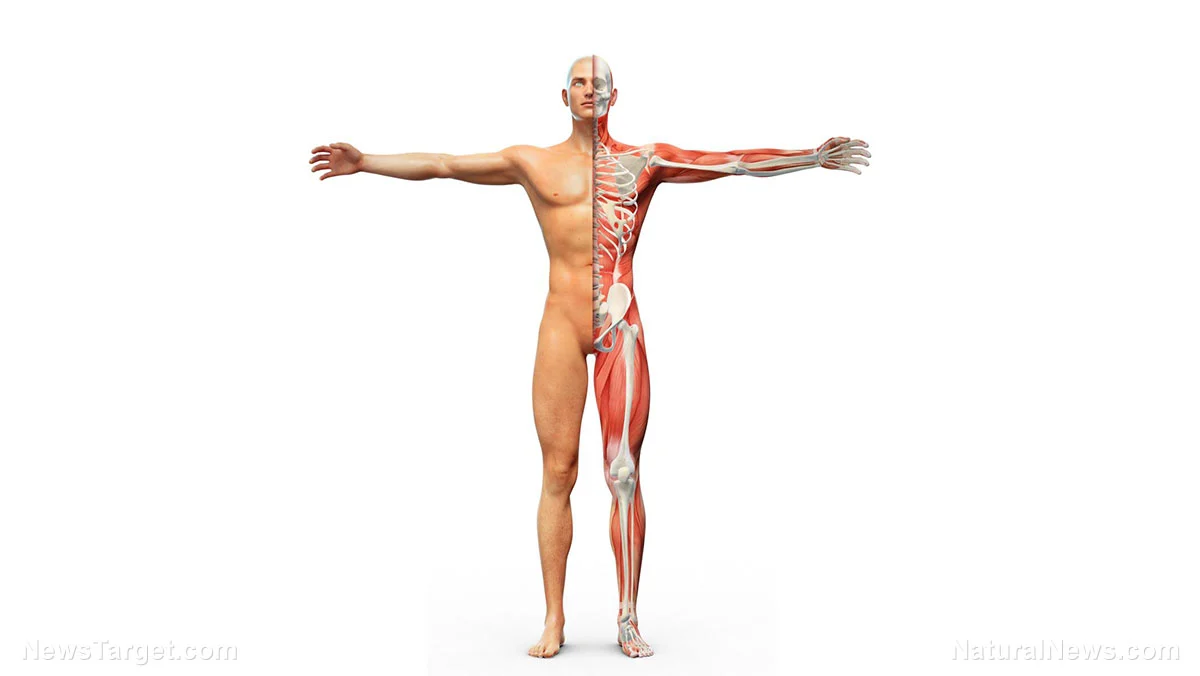
In an era where the divide between conventional medicine and holistic wellness continues to narrow, Dr. Alphonzo Monzo is charting a provocative new territory. Through his ongoing series, the “ATB Personal Restoration Class” hosted on BrightU, Dr. Monzo is systematically decoding what he calls the Aleph-Tav Body (ATB) system—a framework that posits a direct, functional, and symbolic link between the ancient Hebrew alphabet and the intricate biological systems of the human anatomy.
In the latest milestone of this series, Episode 8, which premiered on August 15, Dr. Monzo transitioned his audience into the “second cycle.” If the first cycle served as the introductory curriculum for understanding this bio-energetic map, the second cycle represents a deepening of that knowledge, shifting the focus from surface-level anatomy to the profound, hidden systems that govern human equilibrium, emotional processing, and spiritual alignment.
A New Framework for Human Restoration
The second cycle is being presented as the longest and most comprehensive phase in the ATB curriculum. Unlike traditional anatomical studies that compartmentalize the body into isolated systems—skeletal, muscular, digestive—Dr. Monzo argues that the human body functions as an interconnected web. He posits that the dermis, fascia, digestive organs, reproductive systems, and even our emotional responses are all woven together by an underlying “balance” system.
At the heart of this cycle lies the root emotional attitude of sadness and grief. By identifying these heavy emotional states as the starting point for the second cycle, Monzo invites his viewers to look beyond physiological symptoms. He suggests that physical ailments are often outward manifestations of internal disharmony, and that by addressing the emotional and spiritual components of these specific “points,” one can foster a more holistic recovery.
The Chronology of Discovery: Navigating Points Five through Nine
The progression of the second cycle is mapped out through a series of designated points, each carrying its own unique frequency, location, and application. In Episode 8, Dr. Monzo provided a rigorous breakdown of points five through nine, creating a roadmap that spans from the core of our biological life to the extremities of our physical foundation.
Point Five: The Engine of Vitality
Point five is described as a critical junction for the body’s metabolic and reproductive health. Dr. Monzo links this point to the liver, gallbladder, pancreas, and reproductive organs. More intriguingly, he connects this area to the fundamental building blocks of cellular life: blood, cardiovascular function, and the mitochondria. By treating point five, Monzo suggests that one is essentially engaging with the “powerhouse” of the body, potentially influencing how the body produces energy at the cellular level.
Point Six: The “Secure Soul” and the Architecture of Balance
Perhaps the most significant revelation in the second cycle is the introduction of point six, located along the arch of the foot. Monzo labels this point the “Secure Soul.” In his analysis, the foot is not merely a mechanical apparatus for locomotion, but a spiritual and physiological anchor.
The sixth point is subdivided into three distinct applications:
- The Forward Six: Associated with general energetic flow.
- The Middle Six: Focused on respiratory function and the grounding polarity of the body to the Earth.
- The Deep Six: Centered specifically on physical equilibrium, dizziness, and the correction of balance-related issues.
By linking the arch of the foot to the thyroid, adrenal glands, and immune system, Monzo elevates the role of the foot to that of a primary control center for systemic homeostasis.
Point Seven: The Revelation of Zayin
As the series progresses into point seven, or Zayin, the focus shifts from the visceral to the cerebral. Named for “spiritual revelation,” the seventh point is associated with the neurological center of the brain. Monzo interprets the Hebrew letter Zayin as a narrative of the Creator taking on physical form, suggesting that this point serves as a conduit for intuition, hormonal regulation, and spiritual insight.
Point Eight: The Covenant of Rest
Located behind the knee, point eight is dubbed the “covenant of rest.” In a culture defined by constant motion and chronic stress, Monzo’s emphasis here is on the deliberate act of relaxation. By targeting this area, practitioners are encouraged to address muscle tension and pelvic alignment. A sub-variation, the “low eight,” is utilized specifically for tonifying weak muscles, offering a nuanced approach to strength training that prioritizes recovery and structural integrity over brute force.
Supporting Data: The Intersection of Anatomy and Symbolism
To understand the weight of Dr. Monzo’s claims, one must examine the intersection of his three primary pillars: biblical interpretation, bio-energetic science, and philosophy. Throughout the 31-hour curriculum, the "ATB Personal Restoration Class" moves away from the reductionist view of the human body as a machine. Instead, it proposes a model where the human frame is an “alphabetical” structure.
The ATB theory suggests that the 22 letters of the Hebrew alphabet correspond to specific energetic frequencies that the body utilizes to maintain order. When these frequencies are disrupted—whether by injury, trauma, or illness—the body experiences “dis-ease.” By applying touch-therapy techniques at the specific points mapped out in the second cycle, Monzo argues that individuals can "re-tune" their system, effectively restoring the natural balance between the physical and the metaphysical.
Official Perspectives and Educational Methodology
While the medical establishment often remains skeptical of non-traditional energetic therapies, the BrightU platform has seen a significant surge in interest from those seeking alternatives to standard wellness models. The “ATB Personal Restoration Class” is designed as a structured educational course rather than a quick-fix tutorial. It requires a commitment to understanding the theoretical foundations before attempting the physical applications.
BrightU’s commitment to this series reflects a growing market demand for “self-help” modalities that empower the individual. Dr. Monzo’s role is that of a guide, providing the documentation and technical instruction necessary for viewers to conduct their own “personal restoration.” The educational resources include not just video content, but also BrightLearn books and step-by-step guides that allow for a comprehensive, immersive learning experience.
The Implications: A New Way of “Walking in Life”
The most profound implication of the second cycle is the blurring of lines between the physical and the spiritual. By asserting that “any problems with balance, equilibrium, or dizziness” can be addressed through the arch of the foot—a structure linked to the concept of “security”—Monzo is making a bold claim: that our physical instability is a reflection of our spiritual or emotional state.
This paradigm shift suggests that health is not merely the absence of disease, but a state of alignment. If the “Secure Soul” point can stabilize the physical body, it serves as a powerful metaphor for the broader ATB philosophy: that by securing our internal foundations, we can navigate the external world with greater grace and stability.
For those curious about the practical application, the implications are vast. If, as Monzo suggests, we can influence our endocrine system, neurological functions, and muscular tension through these targeted touch points, the ATB system could potentially serve as a valuable, low-cost, and non-invasive tool for personal health maintenance.
Conclusion: Taking the Next Step
As the "ATB Personal Restoration Class" continues to unfold, it remains a focal point for those interested in the nexus of ancient wisdom and modern wellness. Whether one views Dr. Monzo’s theories as a revolutionary discovery in human biology or a profound spiritual framework, the results—as reported by his growing student base—suggest that there is a tangible benefit to exploring these pathways.
For readers interested in pursuing this journey, the BrightU platform offers full access to the 14-part series, providing the foundational knowledge required to navigate the complexities of the Aleph-Tav Body. By delving into the second cycle, students are not just learning about their anatomy; they are learning a new language of self-restoration, one that begins with the very ground they walk on.
For those looking to get started, the "ATB Personal Restoration Class" package provides a structured entry point into this unique framework, offering the tools to explore these connections firsthand. As Dr. Monzo concludes in his latest sessions, the journey of restoration is an ongoing cycle—one that requires patience, study, and a willingness to see the human body as far more than the sum of its parts.