











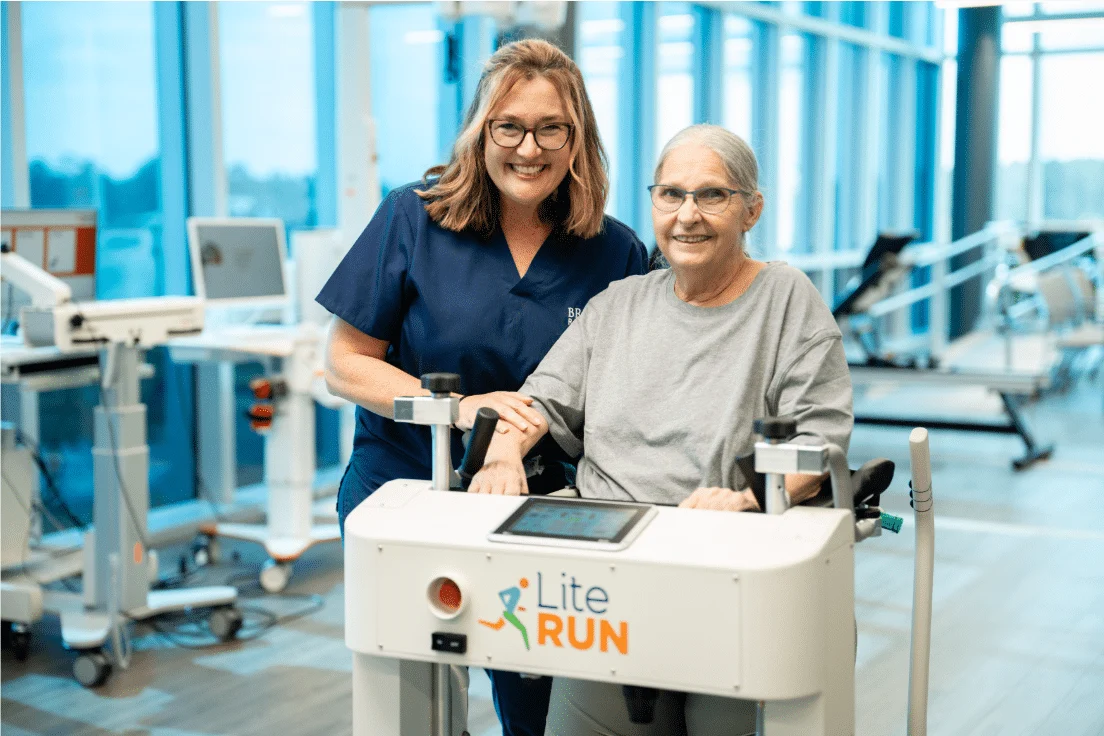
Jacksonville, FL – In a landmark move poised to redefine the landscape of inpatient rehabilitation, Brooks Rehabilitation, a nationally recognized leader in physical rehabilitation, has become the first nationwide inpatient rehabilitation hospital to integrate Lite Run™’s FDA-registered anti-gravity mobility technology. This groundbreaking adoption marks a significant leap forward in patient care, enabling earlier and safer mobilization for individuals recovering from a diverse range of complex conditions, while simultaneously alleviating the substantial physical demands placed on clinical staff.
The strategic integration of Lite Run’s innovative platform underscores Brooks Rehabilitation’s unwavering commitment to leveraging advanced technology to optimize patient outcomes and enhance the therapeutic environment. This pioneering step sets a new benchmark for rehabilitation facilities across the country, highlighting a critical shift towards innovative solutions that prioritize patient well-being, accelerate recovery timelines, and support the invaluable work of healthcare professionals.
Main Facts: A Paradigm Shift in Rehabilitation
Brooks Rehabilitation, renowned for its top-tier physical rehabilitation services and its proactive Center for Innovation, has officially announced the successful implementation of Lite Run Inc.’s FDA-registered anti-gravity mobilization technology. This revolutionary system, designed to safely offload patient body weight, facilitates earlier engagement in functional therapy, a critical factor in mitigating complications associated with immobility and fostering quicker recovery.
The significance of this adoption cannot be overstated. By becoming the inaugural inpatient rehabilitation hospital nationwide to deploy Lite Run, Brooks Rehabilitation is not merely enhancing its own capabilities; it is establishing a new standard of care for the entire industry. The technology addresses two pressing challenges in modern rehabilitation: the imperative for early patient mobilization and the increasing need to reduce the physical burden on therapists. Patients, often facing severe mobility impairments due to conditions like stroke, spinal cord injury, traumatic brain injury, neurological disorders, and orthopedic trauma, can now experience a safer, more comfortable, and more effective pathway to regaining independence.
The Lite Run system utilizes a patented wearable Exosuit coupled with low-pressure air technology to precisely offload up to 150 pounds of a patient’s body weight. This controlled buoyancy allows patients to stand, walk, and perform therapeutic exercises with reduced risk of falls, promoting confidence and active participation in their recovery journey. For clinicians, the technology translates into reduced physical strain, enabling them to focus more on therapeutic guidance and less on manual support, ultimately enhancing efficiency and safety within the clinical setting.
Chronology: The Journey to Innovation
The decision to integrate Lite Run technology into Brooks Rehabilitation’s extensive network was not made lightly. It was the culmination of a rigorous, months-long evaluation process spearheaded by the organization’s esteemed Center for Innovation. This dedicated center is tasked with continually assessing new and emerging technologies, scrutinizing their potential to elevate patient outcomes and streamline clinical operations.
A Rigorous Evaluation Process:
Mark Bowden, PhD, PT, Vice President for Clinical Integration and Research at Brooks Rehabilitation, elaborated on the meticulous nature of this assessment. "Through our Center for Innovation, Brooks evaluates and tests new and emerging technologies to determine their potential benefits for improving patient outcomes," Dr. Bowden stated. "After a months-long evaluation, Brooks was able to make an educated decision and determine that Lite Run filled a gap in helping specific patients safely and comfortably mobilize earlier with less staff assistance." This thorough vetting process ensured that the chosen technology was not only cutting-edge but also demonstrably effective and aligned with Brooks’ patient-centered philosophy. The evaluation encompassed clinical trials, therapist feedback, and careful analysis of patient progress and comfort levels.
Strategic Deployment Across Key Facilities:
Following the successful evaluation, Brooks Rehabilitation made a strategic investment, acquiring three Lite Run devices. These units have been thoughtfully distributed to maximize their impact across Brooks’ expanding national footprint. Two devices are currently operational at Brooks’ flagship hospitals in Jacksonville, Florida, where they are already transforming the rehabilitation experience for numerous patients. The third unit is earmarked for Brooks’ newest and highly anticipated facility in Phoenix, Arizona, situated on the prestigious Mayo Clinic campus. This strategic placement ensures that the benefits of anti-gravity mobility will be available to a broad spectrum of patients in key geographical regions, reinforcing Brooks’ national leadership in rehabilitation innovation.
The implementation timeline reflects a proactive approach to adopting beneficial technologies. From initial evaluation to procurement and deployment, Brooks Rehabilitation demonstrated agility and foresight, recognizing the immediate and long-term advantages Lite Run could offer. This swift yet deliberate action underscores the organization’s commitment to staying at the forefront of medical advancements and delivering the highest possible standard of care.
Supporting Data: Unpacking the Benefits and Context
The integration of Lite Run technology by Brooks Rehabilitation represents a multifaceted improvement for patients, clinicians, and the broader healthcare system. Its impact reverberates across several critical areas of rehabilitation, offering solutions to long-standing challenges.
Unlocking Earlier Mobilization: Patient-Centric Advantages
One of the most profound benefits of the Lite Run system is its capacity to facilitate earlier patient mobilization. For individuals recovering from severe injuries or neurological events, the ability to stand and move often comes weeks or even months into their recovery. Lite Run dramatically shortens this timeline, offering significant advantages:
- Reduced Complications of Immobility: Prolonged bed rest and inactivity are associated with a host of adverse health outcomes, including muscle atrophy, bone demineralization, deep vein thrombosis (DVT), pressure ulcers, respiratory complications (like pneumonia), and diminished cardiovascular function. By enabling patients to become upright and mobile earlier, Lite Run actively combats these debilitating secondary complications, fostering a healthier and more robust recovery environment.
- Accelerated Functional Recovery: Early weight-bearing and movement stimulate neurological and musculoskeletal systems, promoting neuroplasticity and faster motor recovery. This is particularly crucial for patients recovering from stroke or spinal cord injuries, where timely intervention can significantly impact long-term functional independence. Patients can engage in walking, balance training, weight shifting, and strengthening exercises much sooner, leading to more rapid restoration of function.
- Improved Endurance and Confidence: The anti-gravity support allows patients to practice movements for longer durations without excessive fatigue or fear of falling. This builds physical endurance and, critically, psychological confidence. The ability to move independently, even with support, empowers patients and reduces feelings of helplessness, fostering a more positive and engaged mindset towards therapy.
- Versatile and Natural Movement: Unlike traditional body-weight support systems that might restrict movement to a treadmill, Lite Run’s platform is designed for overground therapy. This enables patients to practice walking in a more natural environment, navigating varied terrains and performing real-world activities within the clinical setting. Kathryn Swanson, PT, DPT, NCS, Inpatient Clinical Technology and Programmatics Coordinator at Brooks Rehabilitation, highlighted this benefit: "Patients appreciated the comfort and ability to use the technology in multiple, overground therapies without being confined to a treadmill." This flexibility ensures that therapy is more functional and directly transferable to daily life.
- Dignity and Comfort: The Exosuit and low-pressure air system offer a comfortable and dignified experience for patients. It reduces the sensation of being physically handled or supported by multiple therapists, allowing for a more autonomous and empowering therapeutic interaction.
Empowering Clinicians and Optimizing Operations
The benefits extend far beyond the patient, significantly impacting the clinical staff and the overall efficiency of healthcare operations:
- Reduced Physical Burden on Therapists: Manual assistance for patient mobilization is physically demanding and poses a high risk of musculoskeletal injuries for therapists. Lite Run offloads a substantial portion of the patient’s weight, dramatically reducing the physical strain on clinicians. This not only enhances therapist safety and well-being but also helps in retaining skilled staff in a profession known for its physical challenges. Gregg Smith, CEO of Lite Run, emphasized this point: "Our technology was specifically designed to help therapists divide and conquer in safely supporting specific patients earlier in their recovery. Lite Run reduces the physical burden on clinicians to help more patients each day in ways not possible before."
- Increased Clinical Efficiency and Productivity: With less physical exertion required for support, therapists can focus more on the quality of movement, providing precise cues, and engaging patients in more complex therapeutic tasks. This allows for more effective use of therapy time and potentially enables therapists to manage a higher caseload or dedicate more individualized attention to complex cases.
- Enhanced Safety and Confidence: The anti-gravity system provides a secure environment, significantly reducing the risk of patient falls during therapy. This enhanced safety not only protects patients but also instills greater confidence in therapists when working with individuals who have severe balance impairments or weakness.
- Addressing Staffing Constraints: In an era of increasing healthcare demands and persistent staffing shortages, technologies that amplify the capabilities of existing staff are invaluable. Lite Run acts as an force multiplier, allowing therapists to safely mobilize patients who might otherwise require the assistance of two or three clinicians, thus optimizing staff allocation.
Healthcare System Benefits and Future Outlook
The broader implications for the healthcare system are equally significant:
- Reduced Hospital Lengths of Stay: Earlier and more effective mobilization often translates to faster achievement of rehabilitation goals, leading to shorter hospital stays. This is particularly critical for managing healthcare costs and optimizing bed utilization in a strained system.
- Improved Outcomes and Reduced Readmissions: Patients who achieve better functional outcomes and regain independence more quickly are less likely to experience complications requiring readmission. This contributes to overall healthcare quality and cost-effectiveness.
- Setting a New Standard of Care: As Smith highlighted, "As hospitals, inpatient rehabilitation facilities, and other providers manage staffing constraints and increasingly complex patient populations, technologies that support safer, earlier mobility will become a standard of care." Brooks Rehabilitation’s adoption paves the way for this future, encouraging other institutions to explore similar innovations.
Official Responses: Voices from the Front Lines
The enthusiasm and strategic rationale behind Brooks Rehabilitation’s adoption of Lite Run are clearly articulated by its leadership and clinical experts, as well as by the technology provider itself.
Mark Bowden, PhD, PT, Vice President for Clinical Integration and Research, Brooks Rehabilitation:
Dr. Bowden’s perspective underscores the methodical and evidence-based approach taken by Brooks. His comments highlight the role of the Center for Innovation not merely as an evaluator but as a strategic arm that identifies and integrates solutions addressing specific clinical needs. "After a months-long evaluation, Brooks was able to make an educated decision and determine that Lite Run filled a gap in helping specific patients safely and comfortably mobilize earlier with less staff assistance," he reiterated. This statement is crucial as it positions Lite Run not as a general enhancement but as a targeted solution to a previously identified clinical challenge, particularly in the context of patient safety and staff efficiency.
Kathryn Swanson, PT, DPT, NCS, Inpatient Clinical Technology and Programmatics Coordinator, Brooks Rehabilitation:
Ms. Swanson, deeply embedded in the clinical application of such technologies, offered insights from the therapist’s and patient’s point of view. Her comments reveal the tangible benefits experienced on the ground. "After a lengthy evaluation period, Brooks Rehabilitation continues to add advanced technologies for patient recovery with the Lite Run platform, which opens many possibilities for our patients and our clinicians as we expand nationwide," she stated. This indicates a long-term vision where Lite Run is not an isolated acquisition but an integral part of Brooks’ ongoing technological advancement strategy. Her observation that "Our therapy teams gain an additional tool to safely mobilize patients earlier. Patients appreciated the comfort and ability to use the technology in multiple, overground therapies without being confined to a treadmill" provides a powerful dual endorsement, emphasizing both clinician empowerment and enhanced patient experience.
Gregg Smith, CEO, Lite Run:
From the perspective of the technology provider, Gregg Smith articulated the market need that Lite Run was designed to meet. His comments acknowledge the systemic pressures faced by rehabilitation providers. "We know that rehabilitation providers face increasing pressure to improve outcomes, mobilize patients earlier and support those more medically complex conditions with fewer clinical staff," Smith observed. This contextualization validates Lite Run’s role as a solution addressing critical operational and clinical demands. His conviction that "Our technology was specifically designed to help therapists divide and conquer in safely supporting specific patients earlier in their recovery. Lite Run reduces the physical burden on clinicians to help more patients each day in ways not possible before" speaks to the core value proposition of the system: enabling more efficient and safer care delivery in a resource-constrained environment.
Implications: A Glimpse into the Future of Rehabilitation
The adoption of Lite Run by Brooks Rehabilitation is more than just an organizational achievement; it carries profound implications for the entire rehabilitation industry, patient care globally, and the future trajectory of healthcare technology.
Reinforcing Leadership and Setting New Benchmarks
For Brooks Rehabilitation, this move solidifies its position as a national leader and innovator in physical rehabilitation. By being the first nationwide inpatient facility to embrace this technology, Brooks not only enhances its own patient care offerings but also serves as a critical thought leader and early adopter, encouraging other institutions to follow suit. This commitment to pioneering technology aligns perfectly with its ongoing national expansion, exemplified by the upcoming Phoenix facility, ensuring that its advanced care models are replicated across new markets.
Transforming Rehabilitation Practices Nationwide
The ripple effect of Brooks’ decision is expected to be substantial. As the success of Lite Run within Brooks’ facilities becomes evident, it is likely to accelerate the adoption of similar anti-gravity and body-weight support technologies across the country. This could lead to a significant transformation in standard rehabilitation practices, with early and safe mobilization becoming a universally accepted and technologically supported imperative rather than an aspirational goal. This shift will benefit countless patients by improving their access to state-of-the-art recovery methods.
Elevating Patient Quality of Life and Independence
Ultimately, the most significant implication lies with the patient. For individuals recovering from devastating injuries or illnesses, the promise of earlier mobility, reduced pain, increased confidence, and a faster return to independence is immeasurable. The ability to walk, balance, and participate actively in life’s daily functions sooner means a profound improvement in their overall quality of life and their capacity to reintegrate into their communities. Lite Run offers a pathway to not just recovery, but to a more complete and dignified recovery.
Addressing Systemic Healthcare Challenges
In an era defined by increasing healthcare costs, an aging population with complex medical needs, and persistent staffing shortages, technologies like Lite Run offer a crucial part of the solution. By reducing lengths of stay, preventing complications, and optimizing clinician efficiency, such innovations contribute to a more sustainable and effective healthcare system. They allow facilities to do more with their existing resources, ensuring that high-quality care remains accessible and affordable.
The Dawn of Integrated Technology in Care
This adoption also underscores a broader trend: the increasing integration of advanced robotics, wearable technology, and anti-gravity systems into mainstream medical care. As these technologies become more sophisticated, accessible, and evidence-based, they will play an ever-larger role in supplementing human expertise, pushing the boundaries of what is possible in patient recovery, and ushering in a new era where technology and human touch synergize for optimal health outcomes.
Brooks Rehabilitation’s pioneering step with Lite Run is more than an upgrade; it is a vision for the future of rehabilitation – a future where innovation, safety, and patient-centered care converge to unlock unprecedented recovery potential.
Featured image: A Brooks Rehabilitation therapist guides a patient in using Lite Run to walk for the first time in three years. Photo: Brooks Rehabilitation