








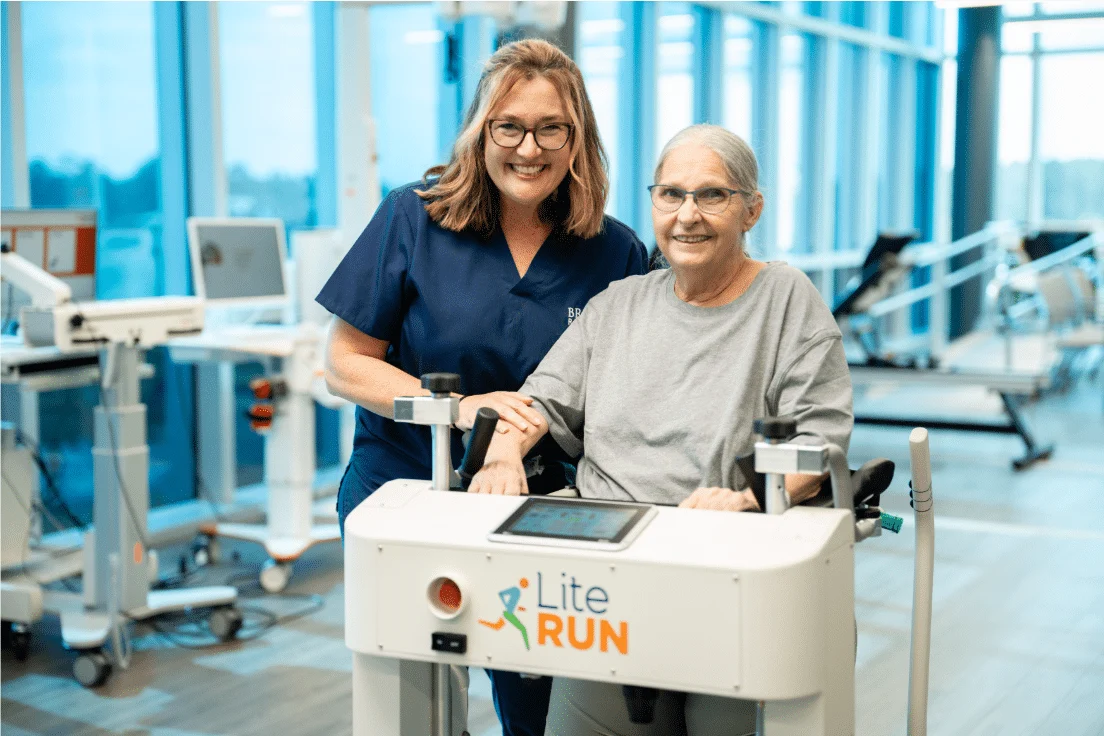
Jacksonville, FL – [Insert Date Here] – In a landmark move poised to redefine the landscape of inpatient rehabilitation, Brooks Rehabilitation, a nationally recognized leader in physical rehabilitation, has announced its pioneering adoption of Lite Run™’s FDA-registered anti-gravity mobility technology. This strategic integration makes Brooks Rehabilitation the first nationwide inpatient rehabilitation hospital to offer this cutting-edge system, promising earlier, safer patient mobilization while significantly reducing the physical demands on clinical staff.
The announcement marks a pivotal moment in rehabilitation medicine, underscoring Brooks’ commitment to leveraging advanced technology to enhance patient outcomes and improve the working conditions for its dedicated therapists. The Lite Run system, utilizing a patented wearable Exosuit and low-pressure air technology, allows patients to experience partial weight-bearing therapy in a safe, controlled, and comfortable environment, thereby accelerating recovery trajectories for individuals facing a spectrum of complex mobility impairments.
Main Facts: A New Era of Rehabilitation
Brooks Rehabilitation, renowned for its top-tier physical rehabilitation services and its proactive approach to innovation, has officially integrated Lite Run Inc.’s anti-gravity mobilization technology into its patient care protocols. This significant development positions Brooks as the inaugural inpatient rehabilitation facility nationwide to implement this specific FDA-registered system on a comprehensive scale.
The core of this innovation lies in its ability to facilitate early and safe patient mobilization. Traditionally, mobilizing patients with significant weakness, balance deficits, or pain can be a laborious and high-risk endeavor, often requiring multiple clinicians and presenting a risk of falls for the patient and injury for the staff. Lite Run’s technology directly addresses these challenges by offloading a significant portion of a patient’s body weight – up to 150 pounds – allowing them to engage in upright, functional therapy much sooner than previously possible.
The immediate benefits are multi-faceted:
- Enhanced Patient Safety: By minimizing fall risk, patients can confidently engage in movement therapies.
- Accelerated Recovery: Earlier mobilization is strongly linked to improved patient endurance, reduced complications associated with immobility, and faster restoration of independence.
- Reduced Clinician Strain: The technology significantly lessens the physical burden on therapists, enabling them to focus more on therapeutic interventions rather than manual support.
- Wider Accessibility: Patients recovering from conditions such as stroke, spinal cord injury, traumatic brain injury, neurological conditions, and complex orthopedic injuries can now access advanced overground mobility therapy.
Brooks Rehabilitation has acquired three Lite Run devices, strategically deploying one each at its two Jacksonville, Florida, hospitals. A third unit is slated for installation at its newest facility opening in Phoenix, Arizona, situated on the Mayo Clinic campus, signaling a consistent integration of this technology across its expanding national footprint.
Chronology: From Evaluation to Nationwide Implementation
The journey to adopting Lite Run technology was not one of haste but of meticulous evaluation and strategic foresight, characteristic of Brooks Rehabilitation’s approach to innovation. As a leading institution, Brooks operates a dedicated Center for Innovation, a hub where emerging technologies and novel therapeutic approaches are rigorously assessed for their potential to elevate patient care and outcomes.
Mark Bowden, PhD, PT, Vice President for Clinical Integration and Research at Brooks Rehabilitation, elaborated on this comprehensive process: “Through our Center for Innovation, Brooks evaluates and tests new and emerging technologies to determine their potential benefits for improving patient outcomes. After a months-long evaluation, Brooks was able to make an educated decision and determine that Lite Run filled a gap in helping specific patients safely and comfortably mobilize earlier with less staff assistance.”
This extensive evaluation period involved a multi-disciplinary team, including physical therapists, occupational therapists, physicians, and rehabilitation engineers. The process likely included:
- Pilot Programs: Implementing the Lite Run system with a select group of patients across various diagnostic categories to observe real-world efficacy and patient response.
- Data Collection and Analysis: Measuring key performance indicators such as patient comfort levels, fall prevention rates, time to mobilization, improvements in gait and balance, and overall therapy engagement.
- Clinician Feedback: Gathering detailed input from therapists on the usability, safety features, impact on workflow, and reduction of physical exertion. This feedback was critical in assessing the system’s practical benefits and identifying any potential challenges.
- Cost-Benefit Analysis: Evaluating the long-term financial implications, including potential reductions in length of stay, prevention of secondary complications, and improved staff retention due to reduced physical strain.
The decision to purchase three Lite Run devices underscores the success of this evaluation phase and Brooks’ confidence in the technology’s transformative potential. The phased deployment, starting in Florida and expanding to Arizona, reflects a deliberate strategy to integrate the system seamlessly into existing and new clinical environments, ensuring widespread access for patients across its network. This methodical approach ensures that the technology not only meets clinical needs but also aligns with Brooks’ operational and strategic objectives.
Supporting Data: The Science Behind Anti-Gravity Mobility and Early Intervention
The efficacy of Lite Run technology is rooted in sound biomechanical principles and the well-established benefits of early mobilization in rehabilitation. The device employs a patented wearable Exosuit that connects to a low-pressure air technology system. This innovative combination allows for precise body weight support, effectively offloading up to 150 pounds of a patient’s weight. This partial weight-bearing capability is crucial for patients who are unable to fully support their own body weight due to injury, weakness, or pain.
Unlike traditional methods that might involve overhead harnesses, treadmills with bodyweight support, or intensive manual assistance, the Lite Run system is designed for "overground" mobility. This means patients can walk, balance, and perform functional tasks in a more natural, unrestricted environment, moving freely within the clinical setting alongside their therapist. This freedom of movement is paramount for replicating real-world scenarios and facilitating true functional recovery.
Key features and their benefits:
- Patented Wearable Exosuit: This custom-fit garment integrates seamlessly with the air pressure system, providing consistent and comfortable support without restricting natural movement patterns. Its design ensures dignity and comfort for the patient, encouraging greater participation in therapy.
- Low-Pressure Air Technology: This precise system allows therapists to adjust the amount of body weight offload in real-time, tailoring the support to the patient’s evolving capabilities and therapeutic goals. This dynamic adjustability is critical for progressive loading and strengthening.
- Fall Prevention: The inherent stability provided by the system drastically reduces the risk of falls, a significant concern for both patients and clinicians during early mobilization. This safety net empowers patients to challenge themselves more during therapy.
- Upright Posture and Engagement: By maintaining an upright posture, Lite Run facilitates more active engagement in therapy. It promotes cardiovascular conditioning, improves circulation, and supports psychological well-being by allowing patients to move independently.
The critical role of early mobilization:
Medical literature overwhelmingly supports the benefits of early mobilization in rehabilitation and post-acute care. Immobility, even for short periods, can lead to a cascade of debilitating complications, including:
- Muscle Atrophy and Weakness: Rapid loss of muscle mass and strength, prolonging recovery.
- Cardiovascular Deconditioning: Reduced heart and lung function.
- Deep Vein Thrombosis (DVT) and Pulmonary Embolism (PE): Life-threatening blood clots.
- Pressure Injuries (Bed Sores): Painful and difficult-to-treat skin lesions.
- Joint Contractures: Stiffness and reduced range of motion.
- Pneumonia: Increased risk of respiratory infections.
- Psychological Impact: Depression, anxiety, and feelings of helplessness due to prolonged bed rest.
By enabling earlier mobilization, Lite Run directly counters these complications. Patients can regain endurance, improve balance, strengthen core muscles, and restore independence faster. This is particularly vital for aging populations, individuals with complex neurological conditions (e.g., stroke, spinal cord injury, traumatic brain injury), and those recovering from extensive orthopedic injuries where prolonged bed rest could severely impede progress. The system supports a wide range of therapeutic activities, including walking, balance training, weight shifting exercises, strengthening protocols, and endurance building, all crucial components of a holistic rehabilitation program.
Official Responses: Voices of Innovation and Empowerment
The adoption of Lite Run has been met with enthusiasm from leadership at both Brooks Rehabilitation and Lite Run Inc., highlighting the shared vision for advancing rehabilitation practices.
Kathryn Swanson, PT, DPT, NCS, Inpatient Clinical Technology and Programmatics Coordinator at Brooks Rehabilitation, emphasized the dual benefits for both patients and clinicians. “After a lengthy evaluation period, Brooks Rehabilitation continues to add advanced technologies for patient recovery with the Lite Run platform, which opens many possibilities for our patients and our clinicians as we expand nationwide,” Swanson stated. She further elaborated on the direct impact: “Our therapy teams gain an additional tool to safely mobilize patients earlier. Patients appreciated the comfort and ability to use the technology in multiple, overground therapies without being confined to a treadmill.” This quote succinctly captures the essence of the innovation – empowerment for both the recipient and the provider of care. The emphasis on overground therapy, as opposed to treadmill confinement, speaks to a more natural and functional rehabilitation experience, which can significantly boost patient morale and engagement.
Gregg Smith, CEO of Lite Run, articulated the broader industry challenges that his technology aims to address. “We know that rehabilitation providers face increasing pressure to improve outcomes, mobilize patients earlier and support those more medically complex conditions with fewer clinical staff,” Smith acknowledged. He positioned Lite Run as a direct solution to these systemic issues: “Our technology was specifically designed to help therapists divide and conquer in safely supporting specific patients earlier in their recovery. Lite Run reduces the physical burden on clinicians to help more patients each day in ways not possible before.” Smith’s perspective underscores the economic and operational realities facing healthcare providers today, where technological solutions can bridge gaps created by staffing constraints and the rising complexity of patient needs. The ability to "divide and conquer" implies that one therapist, safely assisted by the Lite Run device, can manage tasks that might otherwise require two or more clinicians, thereby optimizing staffing resources.
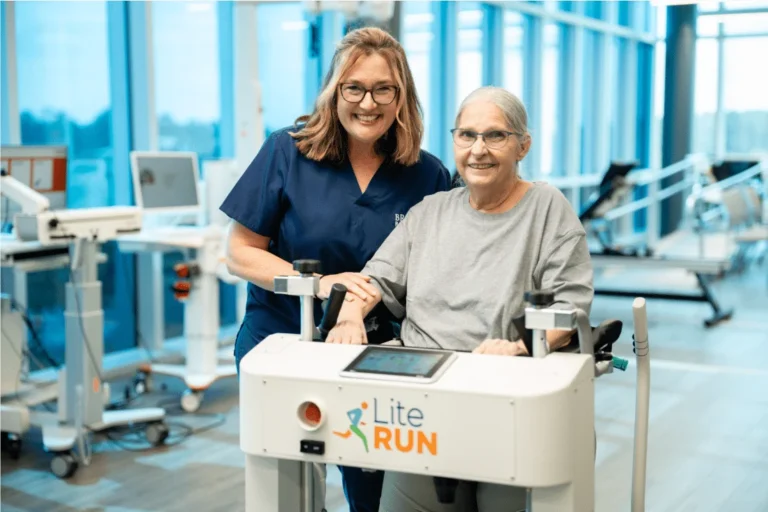
The feature image accompanying the original article powerfully illustrates this impact: "A Brooks Rehabilitation therapist guides a patient in using Lite Run to walk for the first time in three years." This anecdote transcends mere technical specifications, speaking directly to the profound human impact of this technology. For patients who have endured prolonged immobility, the ability to stand and walk again, even with assistance, represents a monumental step towards regaining their quality of life and independence.
Implications: Reshaping the Future of Rehabilitation
The integration of Lite Run technology by Brooks Rehabilitation carries profound implications, not only for its own facilities and patients but for the broader rehabilitation industry, clinicians, and the future trajectory of patient care.
Impact on Patients:
For patients, the implications are transformative. The opportunity for earlier, safer mobilization means:
- Faster Return to Function: Reducing the time spent immobile directly correlates with quicker recovery of strength, balance, and gait.
- Improved Quality of Life: Regaining mobility earlier fosters independence, restores dignity, and significantly enhances psychological well-being, counteracting the depression and isolation often associated with long-term disability.
- Reduced Secondary Complications: By preventing issues like pressure sores, muscle atrophy, and cardiovascular deconditioning, patients can focus solely on their primary rehabilitation goals.
- Personalized Therapy: The adjustable nature of Lite Run allows therapists to tailor support levels precisely to individual patient needs, optimizing each therapy session.
Impact on Clinicians and Rehabilitation Facilities:
The benefits for therapists and the institutions they serve are equally significant:
- Enhanced Safety and Ergonomics: Reducing the physical strain on clinicians can lead to fewer work-related injuries, lower workers’ compensation claims, and a more sustainable career for therapists.
- Increased Efficiency and Productivity: With less physical burden, therapists can manage more patients or dedicate more focused attention to each individual, potentially improving overall clinic throughput.
- Empowerment and Confidence: Therapists gain a powerful tool that allows them to confidently mobilize even the most medically complex patients, expanding their therapeutic capabilities.
- Addressing Staffing Shortages: In an era of increasing healthcare workforce challenges, technologies that augment human capabilities become invaluable, allowing existing staff to achieve more.
- Competitive Advantage: For facilities like Brooks, being at the forefront of technological adoption enhances their reputation, attracts top talent, and draws patients seeking the most advanced care.
Broader Industry and Future Trends:
Brooks Rehabilitation’s pioneering move sets a new benchmark for inpatient rehabilitation facilities nationwide. This adoption is likely to accelerate a broader trend within the industry:
- Technological Integration as Standard of Care: As Gregg Smith noted, technologies that support safer, earlier mobility are poised to become a standard of care. This will drive other rehabilitation centers to evaluate and adopt similar systems to remain competitive and provide optimal care.
- Focus on Patient-Centered Care: The ability to mobilize patients more comfortably and effectively aligns perfectly with the principles of patient-centered care, where individual needs and experiences are prioritized.
- Research and Development: The real-world application of Lite Run will generate invaluable data, potentially leading to further advancements in anti-gravity technology and rehabilitation protocols. This could spur more innovation in wearable robotics, AI-driven therapy, and remote monitoring.
- Economic Impact: Reduced hospital lengths of stay, fewer readmissions due to complications, and improved functional outcomes can lead to significant cost savings for healthcare systems and payers.
- Expanding Scope of Rehabilitation: Such technologies could allow rehabilitation to reach patient populations previously deemed too frail or complex for aggressive early mobilization, thereby expanding access to life-changing therapy.
As hospitals and inpatient rehabilitation facilities grapple with the dual pressures of managing staffing constraints and caring for increasingly complex patient populations, solutions like Lite Run become not just an enhancement but a necessity. Brooks Rehabilitation, through its foresight and commitment to innovation, is not just adopting a new device; it is actively shaping the future of recovery, demonstrating how technology can serve as a powerful ally in the pursuit of restored independence and enhanced quality of life for patients across the nation. This bold step reinforces Brooks’ position as a vanguard in rehabilitative medicine, leading the charge towards a more efficient, safer, and ultimately more effective patient recovery journey.