











Most of us can vividly recall our earliest educational milestones: the rhythmic cadence of the alphabet, the foundational building blocks of language that allowed us to interpret the world. We were taught how to translate symbols into meaning and thoughts into communication. Yet, as we navigate the complex landscape of adulthood, there is a profound gap in our collective education—a missing curriculum on how to navigate the internal landscape of our own emotions. Specifically, we lack a formal framework for understanding anxiety, a physiological survival mechanism that, while designed to protect us, often hinders our modern quality of life.
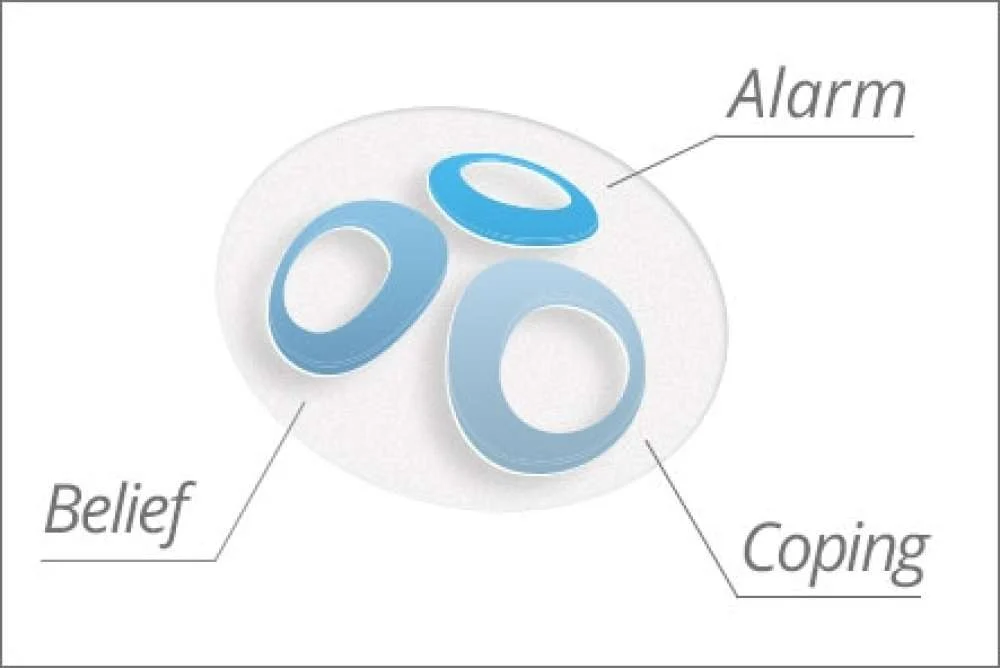
When anxiety strikes, the absence of an emotional "literacy" leaves many feeling defenseless. We treat anxiety as an abstract monster rather than a systematic process. To bridge this gap, health professionals are increasingly turning to a cognitive-behavioral framework known as the ABCtracker™. By breaking down the complex experience of fear into three manageable components—Alarm, Belief, and Coping—individuals are finding a structured path toward emotional regulation.
The Chronology of an Anxiety Cycle
To understand the utility of the ABCtracker™, one must first understand the involuntary timeline of an anxiety response. Anxiety is not merely a "feeling"; it is a sequential physiological and psychological event.
Phase 1: The Alarm (The Biological Trigger)
The process begins with the "Alarm." Evolutionarily, this is our body’s most sophisticated defensive tool. Much like the sensor on a high-end security system, the human body is wired to detect threats. When our ancestors encountered a predator, the amygdala would fire, flooding the system with adrenaline and cortisol. In the modern era, however, the "predator" is often a looming deadline, a social interaction, or an email. For those with generalized anxiety or panic disorders, this alarm system often suffers from a calibration error. It becomes hypersensitive, sounding the siren at the slightest hint of discomfort, often confusing a benign situation with a life-threatening emergency.
Phase 2: The Belief (The Cognitive Appraisal)
Once the alarm sounds, the brain does not remain passive. It immediately attempts to interpret the signal—this is the "Belief" phase. The brain performs a rapid, split-second risk assessment. For an individual without anxiety, the belief might be, "I am nervous about this presentation, but I am prepared." For those struggling with pervasive anxiety, the cognitive appraisal is frequently distorted. The brain assumes the worst, transforming a minor stressor into a catastrophic narrative. These beliefs act as a feedback loop; by incorrectly interpreting the alarm as a sign of imminent doom, the individual validates the anxiety, which in turn causes the alarm to sound louder and more frequently.
Phase 3: The Coping (The Behavioral Response)
The final step in the sequence is "Coping." Once the alarm has sounded and the belief has been cemented, the individual takes action. Coping is an instinctive pursuit of safety. However, not all safety-seeking behaviors are created equal. Adaptive coping strategies—such as deep breathing, cognitive reframing, or seeking professional support—help resolve the stressor. Conversely, maladaptive strategies—such as avoidance, substance use, or chronic reassurance-seeking—provide a fleeting sense of relief while ultimately reinforcing the anxiety, making the individual more susceptible to future alarms.
Supporting Data: Why Standardized Tools Matter
The efficacy of the ABCtracker™ lies in its ability to transform subjective suffering into objective data. In clinical settings, patients often describe their anxiety as an "all-consuming cloud." By utilizing a tracker to log the Alarm, Belief, and Coping mechanism of each episode, the experience shifts from an amorphous feeling to a trackable behavioral pattern.
Psychological research consistently indicates that "labeling" an emotion—a process known in clinical psychology as "affect labeling"—reduces activity in the amygdala. When a patient can look at their notes and identify that their "Alarm" was triggered by a specific social cue, and that their "Belief" was a cognitive distortion regarding social rejection, they regain a sense of agency. They move from being a victim of their biology to being an observer of their psychology.
Furthermore, longitudinal studies on Cognitive Behavioral Therapy (CBT) have shown that individuals who maintain a structured record of their emotional triggers are 40% more likely to implement adaptive coping strategies successfully. The ABCtracker™ serves as the external hard drive for this process, providing the healthcare provider with a clear map of the patient’s psychological terrain during their next session.
Official Responses and Clinical Perspectives
Mental health professionals have long championed the importance of psychoeducation. Dr. Aris Thorne, a clinical psychologist specializing in anxiety disorders, notes that "the greatest barrier to recovery is the feeling of powerlessness. When we provide a patient with the ABC framework, we are essentially giving them a toolkit. They stop asking ‘Why am I broken?’ and start asking ‘How can I recalibrate my response?’"
Healthcare institutions have begun integrating similar models into standard care plans. The consensus among professionals is that the ABCtracker™ is not a "cure-all," but rather a foundational literacy tool. It is intended to be used in conjunction with professional therapy. By bringing a record of their ABCs to a psychiatrist or therapist, patients can bypass the generic "how are you feeling?" conversation and dive directly into the mechanics of their specific triggers. This increases the efficiency of therapy, allowing for more precise interventions, whether those involve medication management or targeted exposure therapy.
Implications for Daily Living
The long-term implications of adopting the ABCtracker™ model are significant. Beyond the immediate relief of a panic attack, this framework promotes "emotional intelligence," a skill set that serves individuals in every facet of life, from professional environments to personal relationships.
Breaking the Cycle of Avoidance
Perhaps the most damaging effect of unmanaged anxiety is the tendency to avoid the things that trigger the alarm. This shrinks a person’s world. By documenting the "B" (Belief), individuals can start to challenge the validity of their fears. Is it true that the worst-case scenario is inevitable? Or is the belief a byproduct of a misfiring alarm? Challenging these beliefs is the cornerstone of resilience.
Developing Adaptive Coping Mechanisms
As users become more adept at identifying their maladaptive habits, they can consciously replace them with healthier alternatives. Instead of avoiding a stressful situation (maladaptive), the user might learn to use the alarm as a cue to practice mindfulness (adaptive). Over time, this rewires the brain’s response to stress. It is a process of neuroplasticity—by consistently practicing a new response, the neural pathways associated with calm and logical assessment grow stronger, while the pathways associated with panic begin to atrophy.
Empowerment Through Literacy
The ultimate goal of the ABCtracker™ is self-sufficiency. While the journey through anxiety often begins with clinical guidance, the end goal is for the individual to internalize these ABCs. Eventually, the process becomes second nature. A person hears the alarm, recognizes the cognitive bias, and chooses a coping strategy in real-time, effectively managing their internal state before the anxiety can escalate into a full-blown crisis.
Conclusion
We spend our formative years learning the alphabet so that we might read the books of others. It is only logical that we spend our adult years learning the "Anxiety ABCs" so that we might read the story of our own minds. Anxiety is a normal, albeit uncomfortable, part of the human experience. It is a protective mechanism that has gone rogue in an increasingly complex world.
By utilizing the ABCtracker™—monitoring the Alarm, questioning the Belief, and choosing the Coping strategy—we can reclaim our agency. We move away from the paralysis of the unknown and toward a life of informed, intentional action. While the process requires patience, self-reflection, and professional support, it offers a tangible path forward. In a world that often feels overwhelming, the power to define our own emotional reality is perhaps the most valuable tool we can possess. It is time to treat emotional literacy with the same importance as any other foundational skill, ensuring that we are not just surviving our anxieties, but mastering them.