










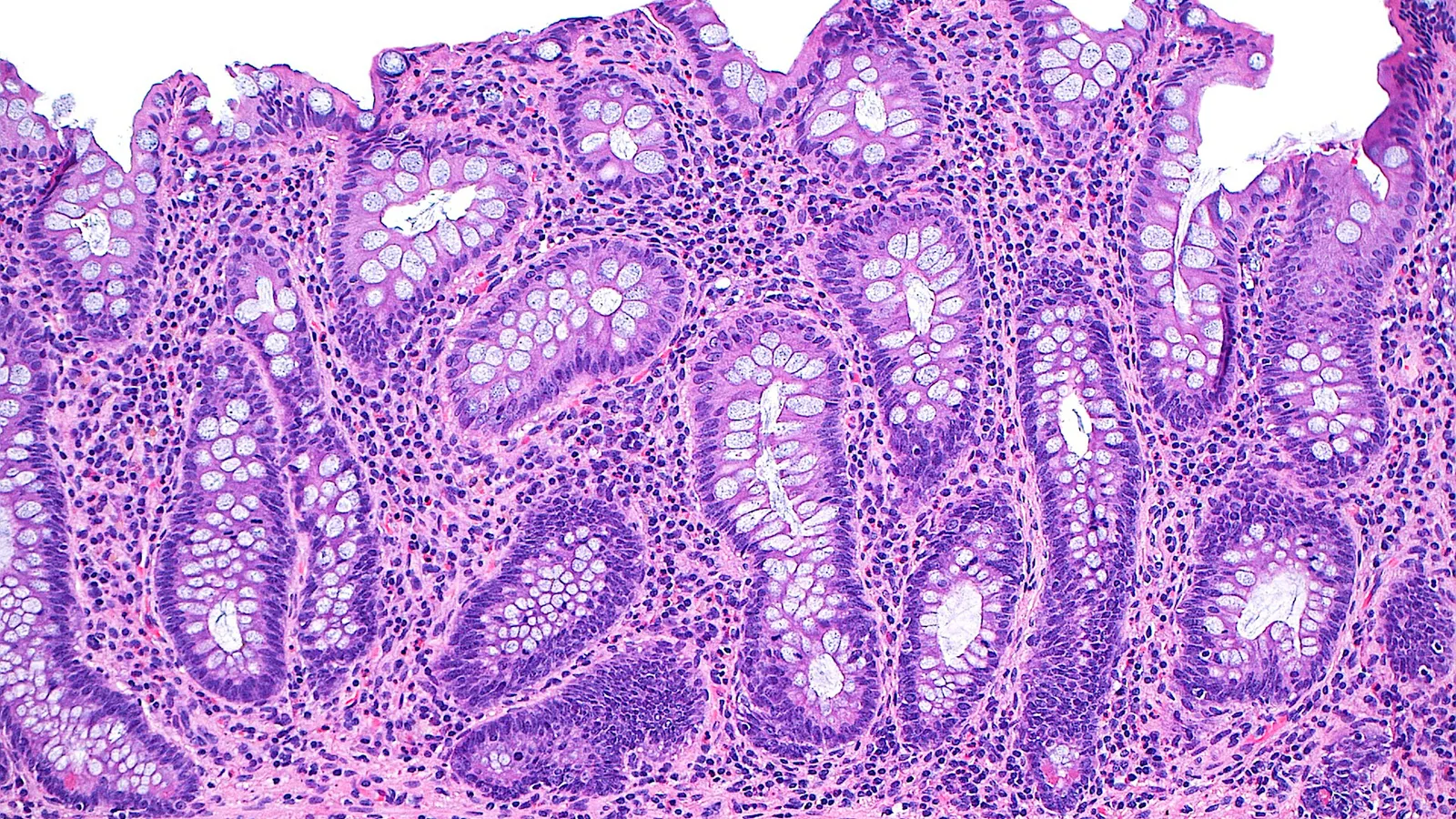
In a significant move for the gastrointestinal therapeutic space, California-based startup cAMPfield Therapeutics officially launched on June 18, 2026, backed by a formidable $180 million Series A financing round. The company aims to challenge the dominance of biologic therapies like Humira and Entyvio by advancing an oral, highly selective anti-inflammatory candidate for inflammatory bowel disease (IBD).
With a leadership team comprised of veterans from industry giants like Takeda, AbbVie, and Bristol Myers Squibb, cAMPfield is positioning its lead asset, prifemilast, as a potential "best-in-class" solution to the safety and efficacy limitations that have historically hampered phosphodiesterase-4 (PDE4) inhibitors in the treatment of Crohn’s disease and ulcerative colitis.
The Core Innovation: Solving the PDE4 Paradox
For decades, the PDE4 enzyme family has been a validated target for inflammatory conditions, most notably in dermatology (psoriasis) and pulmonology (COPD). However, the therapeutic potential of these inhibitors in gastrointestinal disease has long been stifled by a persistent side-effect profile, primarily nausea and gastrointestinal distress, which often led to patient non-compliance.
The scientific hurdle lies in the complexity of the PDE4 enzyme, which exists in several subtypes. Traditional inhibitors were often broad-spectrum, affecting both PDE4B—which mediates the desired anti-inflammatory response—and PDE4D, which is strongly associated with dose-limiting adverse events.
cAMPfield’s approach centers on the high selectivity of prifemilast. By focusing its inhibitory action specifically on the PDE4B subtype, the company believes it can decouple the potent anti-inflammatory benefits from the systemic side effects that plagued previous generations of PDE4 inhibitors. Early data in psoriasis trials suggest that prifemilast maintains robust efficacy while exhibiting a tolerability profile comparable to placebos, a breakthrough that the company hopes to translate directly into the IBD clinic.
Chronology: The Path to Prifemilast
The journey of prifemilast has been a decade-long saga of international licensing and strategic pivots:
- 2018: The drug candidate originates from the pipeline of vTv Therapeutics, a company specializing in small-molecule drug discovery.
- 2018 (Post-Discovery): vTv enters a landmark licensing agreement with Newsoara Biopharma, granting the latter development and commercialization rights for China, South Korea, and various Southeast Asian nations.
- 2023–2024: As clinical data from early-stage trials begins to signal the potential for high selectivity, vTv Therapeutics moves to amend the licensing agreement, expanding Newsoara’s scope to include worldwide rights.
- 2026 (Pre-Launch): cAMPfield Therapeutics is established with the express intent of securing these rights outside of China.
- June 18, 2026: cAMPfield officially emerges from stealth mode, announcing the closure of a $180 million Series A round led by Frazier Life Sciences.
A Heavyweight Leadership Roster
The confidence of the venture capital community in cAMPfield is largely attributed to the caliber of its founding team. The company has assembled a "who’s who" of gastroenterology and immunology commercialization:
- Bill Gerhart (CEO): Steering the company’s vision and long-term strategy.
- Asit Parikh: A former Takeda executive who played a pivotal role in the development and successful launch of Entyvio, one of the most widely used biologics for IBD.
- Keith Usiskin: Bringing deep expertise from Celgene and Bristol Myers Squibb, where he was instrumental in advancing Otezla (an existing PDE4 inhibitor) and Zeposia for IBD indications.
- Mark Stenhouse: A former AbbVie sales and marketing vice president whose experience with Humira—a drug that fundamentally transformed the IBD treatment landscape—provides a roadmap for commercial success.
This synthesis of clinical development expertise and commercial scaling is designed to ensure that if prifemilast succeeds in late-stage trials, the company will be prepared to navigate the complexities of the global pharmaceutical market.
Supporting Data: Why IBD Needs New Modalities
The inflammatory bowel disease market is currently characterized by a "plateau" in patient outcomes. While biologics like Humira (adalimumab) and Entyvio (vedolizumab) have changed lives, they are not universal solutions.
The Clinical Gap
As CEO Bill Gerhart noted in the company’s launch statement, "Despite the availability of more than a dozen approved therapies for IBD, most patients fail to achieve deep and durable remission, while others discontinue or switch treatments because of limitations in safety or long-term effectiveness."

Market Dynamics
The intensity of the current investment landscape reflects the urgency of this unmet need. In recent months, significant capital has flowed into the space:
- Abivax and Spyre Therapeutics: Both firms have garnered significant attention for their novel approaches to ulcerative colitis.
- Blackstone/Teva/Sanofi: In a massive validation of the market’s growth potential, Blackstone committed $400 million to a development deal with Teva and Sanofi for the investigational drug duvakitug.
cAMPfield enters this crowded field with a distinct differentiation: while its competitors are largely exploring biologics or complex antibodies, cAMPfield offers an oral small molecule. The convenience of an oral pill over an injectable or infused biologic represents a major factor in long-term patient adherence.
Implications for the Future of IBD Care
The success of cAMPfield’s $180 million raise—supported by a syndicate including Deep Track Capital, Forbion, Abingworth, Venrock, Longitude Capital, Novo Holdings, and RA Capital—signals that investors remain hungry for "next-generation" oral drugs that can compete with the efficacy of biologics.
Competitive Positioning
If prifemilast demonstrates efficacy in upcoming trials that mirrors its performance in psoriasis studies, it could drastically shift the treatment paradigm. Physicians often reserve biologics for later lines of therapy due to cost, delivery methods, and safety monitoring. An oral, safer PDE4B inhibitor could potentially move earlier in the treatment algorithm, serving as a primary therapeutic intervention for newly diagnosed patients.
Risk and Reward
The primary risk remains the clinical translation from psoriasis to IBD. While the two conditions share inflammatory markers, the gut microbiome and the physiological environment of the bowel present unique challenges. However, the company’s focus on the PDE4B/PDE4D selectivity ratio provides a clear, scientifically defensible strategy to mitigate the historic failure of this drug class.

Looking Ahead
As cAMPfield transitions from a startup to a clinical-stage entity, the eyes of the pharmaceutical industry will be on the execution of their upcoming trials. The company has secured the capital and the human talent; now, it must navigate the rigorous regulatory pathway to prove that its selective inhibition strategy is the key to unlocking the full potential of PDE4 inhibition.
Should they succeed, the implications for patients are profound. Moving from a life of periodic infusions or injections to a daily, targeted oral therapy could represent the most significant quality-of-life improvement in the IBD landscape since the introduction of the first anti-TNF agents.
The launch of cAMPfield is not just the story of a new biotech firm; it is a signal that the era of "one-size-fits-all" anti-inflammatory treatment is fading, replaced by a new, more granular focus on enzyme-specific precision medicine. Whether prifemilast becomes the standard-bearer for this new era remains to be seen, but the initial foundation is, by all accounts, exceptionally strong.